bounce — to move quickly up, back, or away from a surface after hitting it
Part of speech: VERB
Definition: to move quickly up, back, or away from a surface after hitting it
Pronunciation (IPA): /baʊns/
Example Sentences
- My dog loves to bounce on the bed like it's a trampoline.
- She managed to bounce back from her failure quickly.
- The rubber ball bounced so high it almost hit the ceiling.
bounce
VERB[/baʊns/]
to move quickly up, back, or away from a surface after hitting it
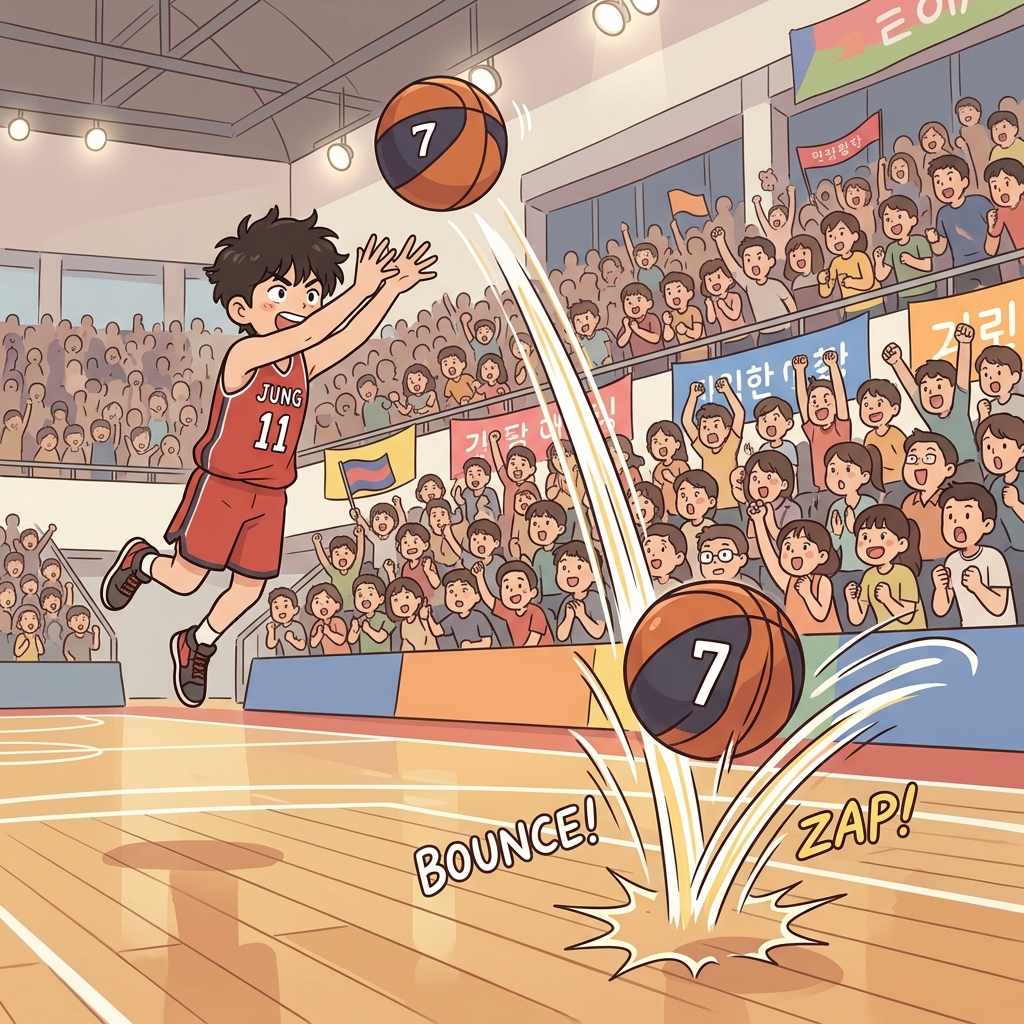
The basketball bounces high off the court during the championship game.
Got the picture? Now let's practice.
🎤Pronunciation
🌳Etymology
Origin
Bounce emerged in Middle English around the mid-13th century, likely derived from onomatopoeia imitating the sound of something rebounding or springing back. The word originally denoted the action of suddenly jumping or leaping, with its phonetic form reflecting the bouncing sound itself.
Breakdown
The word is primarily onomatopoetic in origin, with no distinct morphological components. The 'b' and 'ounce' combination mimics the sound of elastic rebound, rather than deriving from separable prefixes or suffixes.
🎵Rhyme
🔗Collocations
📝Examples
“My dog loves to bounce on the bed like it's a trampoline.”
“She managed to bounce back from her failure quickly.”
“The rubber ball bounced so high it almost hit the ceiling.”
“Let me bounce this crazy idea off you - what if we painted the office purple?”
“The email bounced back because the address was incorrect.”
📚Related Words
Synonyms
Antonyms
Related
Want to master 19,000+ words?
Sign up free for flashcards & quizzes.