babysitter — a person who takes care of a child or children while the parents are out
Part of speech: NOUN
Definition: a person who takes care of a child or children while the parents are out
Pronunciation (IPA): /ˈbeɪbiˌsɪtər/
Example Sentences
- The babysitter fell asleep and the kids threw a pizza party in the living room.
- Our babysitter charges extra if she has to deal with tantrums or homework.
- She works as a babysitter on weekends to earn extra money for college.
babysitter
NOUN[/ˈbeɪbiˌsɪtər/]
a person who takes care of a child or children while the parents are out
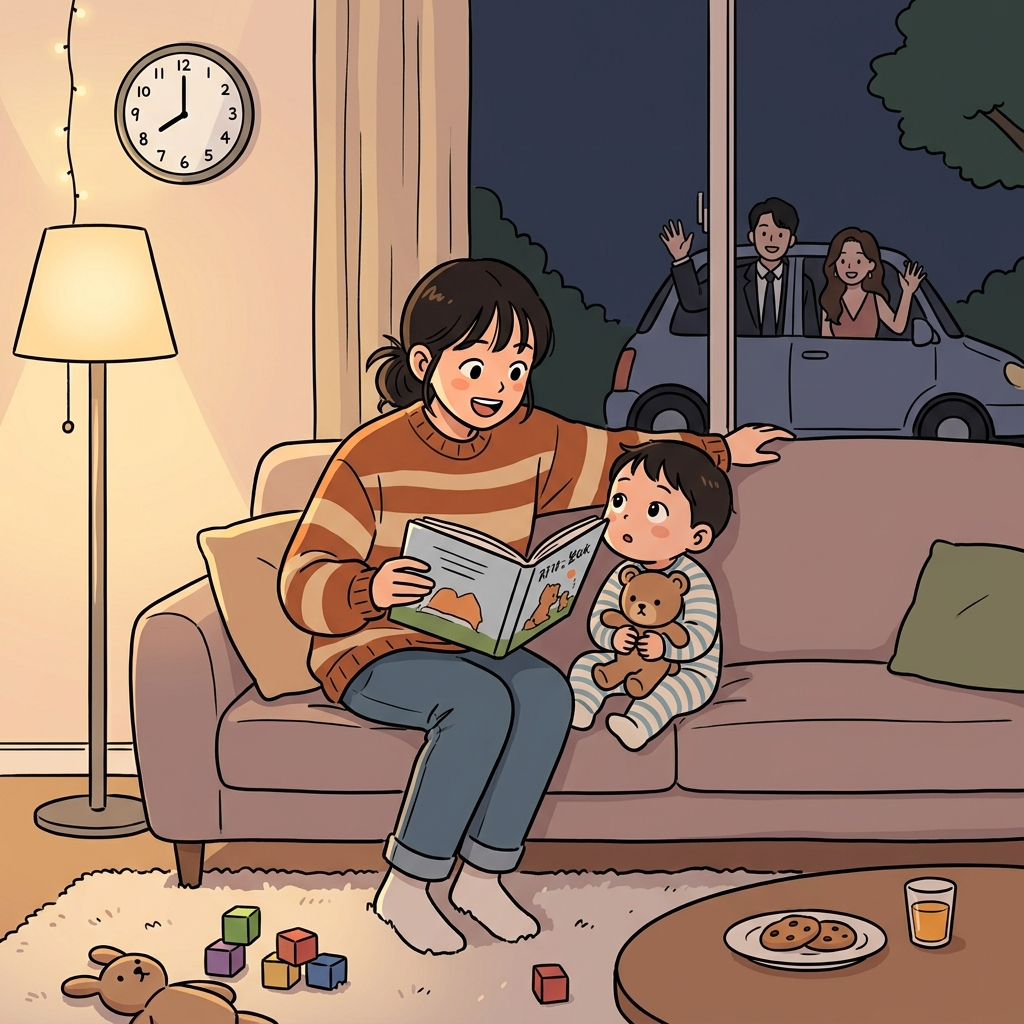
The babysitter reads a bedtime story while the parents enjoy a night out.
Got the picture? Now let's practice.
🎤Pronunciation
🌳Etymology
Origin
A compound word created in 1930s America, combining 'baby' and 'sit'. The term originally referred to the literal act of sitting with a baby, but evolved to mean caring for a child in the parents' absence.
Breakdown
baby (infant) + sit (to remain in one place) + -er (one who does), literally 'one who sits with a baby'.
🎵Rhyme
🔗Collocations
📝Examples
“The babysitter fell asleep and the kids threw a pizza party in the living room.”
“Our babysitter charges extra if she has to deal with tantrums or homework.”
“She works as a babysitter on weekends to earn extra money for college.”
“The babysitter taught the kids how to make paper airplanes and now they're obsessed.”
📚Related Words
Synonyms
Antonyms
Related
Want to master 19,000+ words?
Sign up free for flashcards & quizzes.