corpse — a dead body, especially of a human being
Part of speech: NOUN
Definition: a dead body, especially of a human being
Pronunciation (IPA): /kɔːrps/
Example Sentences
- The vampire complained that the corpse was too cold for a midnight snack.
- The forensic team arrived to examine the corpse at the crime scene.
- In zombie movies, every corpse has the potential to become a walking nightmare.
corpse
NOUN[/kɔːrps/]
a dead body, especially of a human being
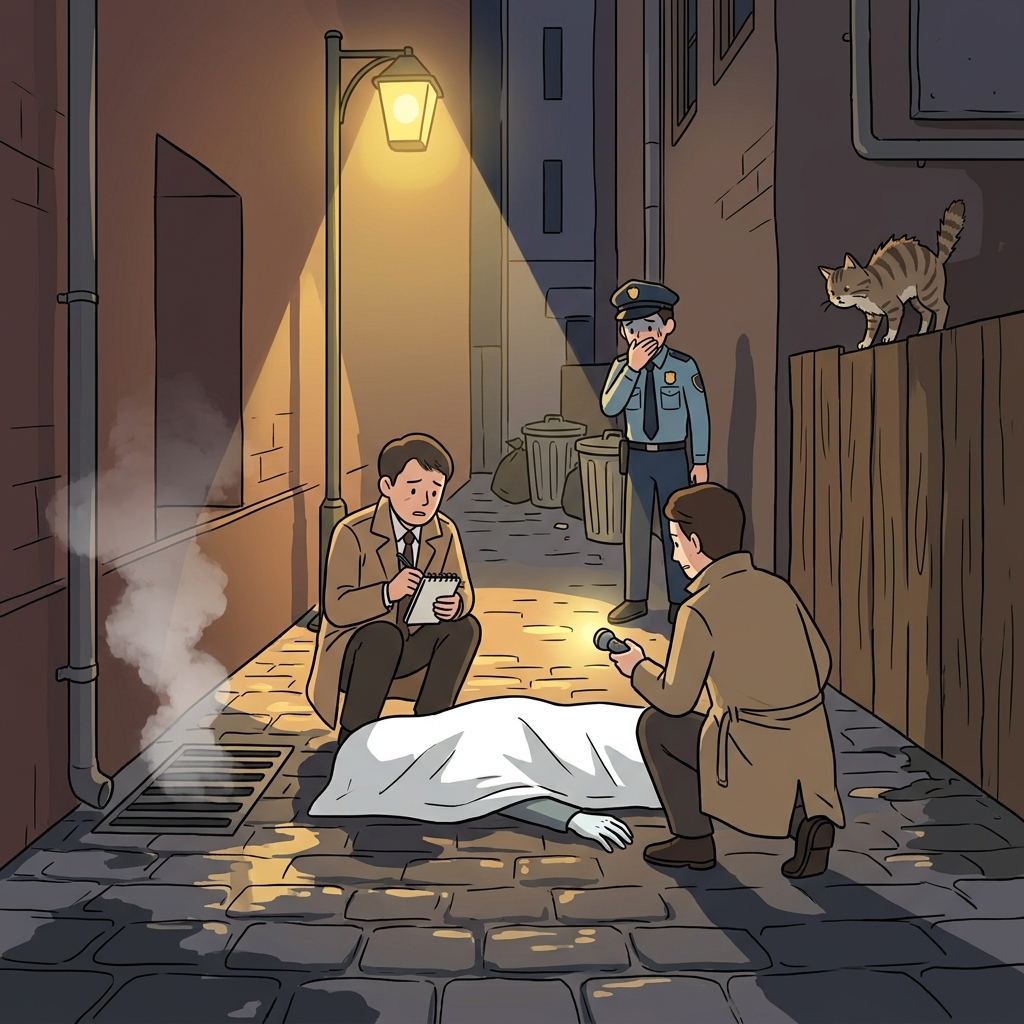
Detectives examine a corpse discovered in the moonlit alley behind the theater.

Light warps around the corpse as shadow morphs!
Got the picture? Now let's practice.
🎤Pronunciation
🌳Etymology
Origin
From Latin 'corpus' meaning 'body.' The word evolved through Old French to refer specifically to a dead body, as opposed to a living one.
Breakdown
corpus (Latin root meaning 'body') → corpse (dead body)
🎵Rhyme
🔗Collocations
📝Examples
“The vampire complained that the corpse was too cold for a midnight snack.”
“The forensic team arrived to examine the corpse at the crime scene.”
“In zombie movies, every corpse has the potential to become a walking nightmare.”
“The corpse in the haunted house turned out to be a very realistic mannequin.”
📚Related Words
Synonyms
Antonyms
Related
Want to master 19,000+ words?
Sign up free for flashcards & quizzes.