synchronize — to cause to occur or operate at the same time or rate
Part of speech: VERB
Definition: to cause to occur or operate at the same time or rate
Pronunciation (IPA): /ˈsɪŋkrəˌnaɪz/
Example Sentences
- My phone and laptop refuse to synchronize - they're having a digital argument!
- The swimming team synchronized their dives so well, they looked like human dominoes.
- We need to synchronize our project schedules to avoid conflicts.
synchronize
VERB[/ˈsɪŋkrəˌnaɪz/]
to cause to occur or operate at the same time or rate
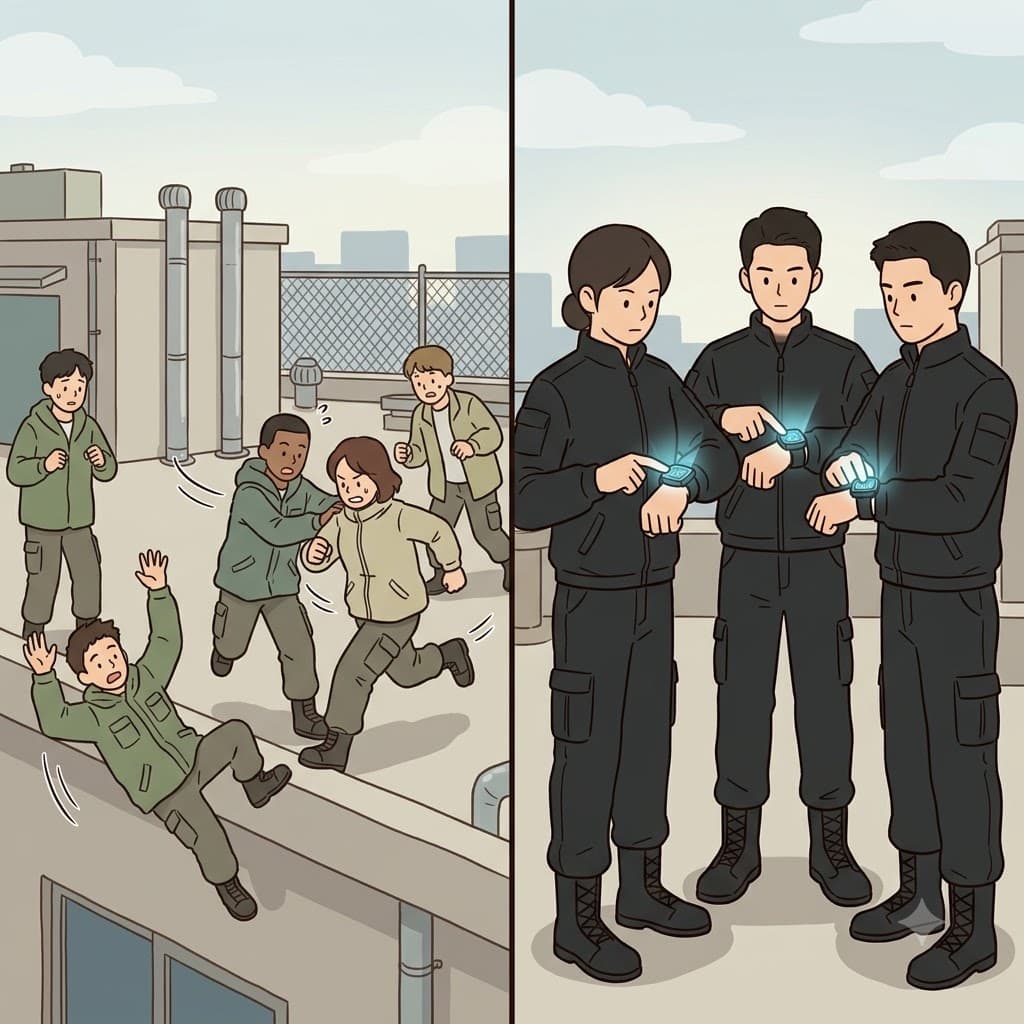
While the recruits attacked at completely random times, the elite agents perfectly synchronized their watches for a simultaneous strike.

SYN(together) + CHRON(time) + IZE(make) — deciding to IZE(make) the CHRON(time) flow SYN(together), the engineer managed to synchronize the giant gears.

After taking a moment to clearly recognize the conductor's signal, the orchestra managed to beautifully synchronize their music.
Got the picture? Now let's practice.
🎤Pronunciation
🌳Etymology
Origin
Derived from Greek, combining syn (together) and chronos (time). The word emerged to describe the act of coordinating events or actions to occur at the same time, reflecting the Greek concern with temporal alignment and simultaneity.
Breakdown
syn- (together) + chronos (time) + -ize (to make or cause to be). The suffix -ize was added during the Modern English period to form a verb meaning 'to cause to occur at the same time.'
🎵Rhyme
🔗Collocations
📝Examples
“My phone and laptop refuse to synchronize - they're having a digital argument!”
“The swimming team synchronized their dives so well, they looked like human dominoes.”
“We need to synchronize our project schedules to avoid conflicts.”
“The orchestra conductor helped synchronize all the instruments perfectly.”
📚Related Words
Want to master 27,000+ words?
Sign up free for flashcards & quizzes.