ruminant — An even-toed ungulate mammal that chews the cud regurgitated from its rumen
Part of speech: NOUN
Definition: An even-toed ungulate mammal that chews the cud regurgitated from its rumen
Pronunciation (IPA): /ˈruːmɪnənt/
Example Sentences
- My professor is so ruminant that he paused for ten minutes just to think about the word 'maybe'.
- Sheep, goats, and cattle are all ruminants with four-chambered stomachs.
- The old man's ruminant nature made dinner conversations last until midnight.
ruminant
NOUN[/ˈruːmɪnənt/]
An even-toed ungulate mammal that chews the cud regurgitated from its rumen
💡 Concept
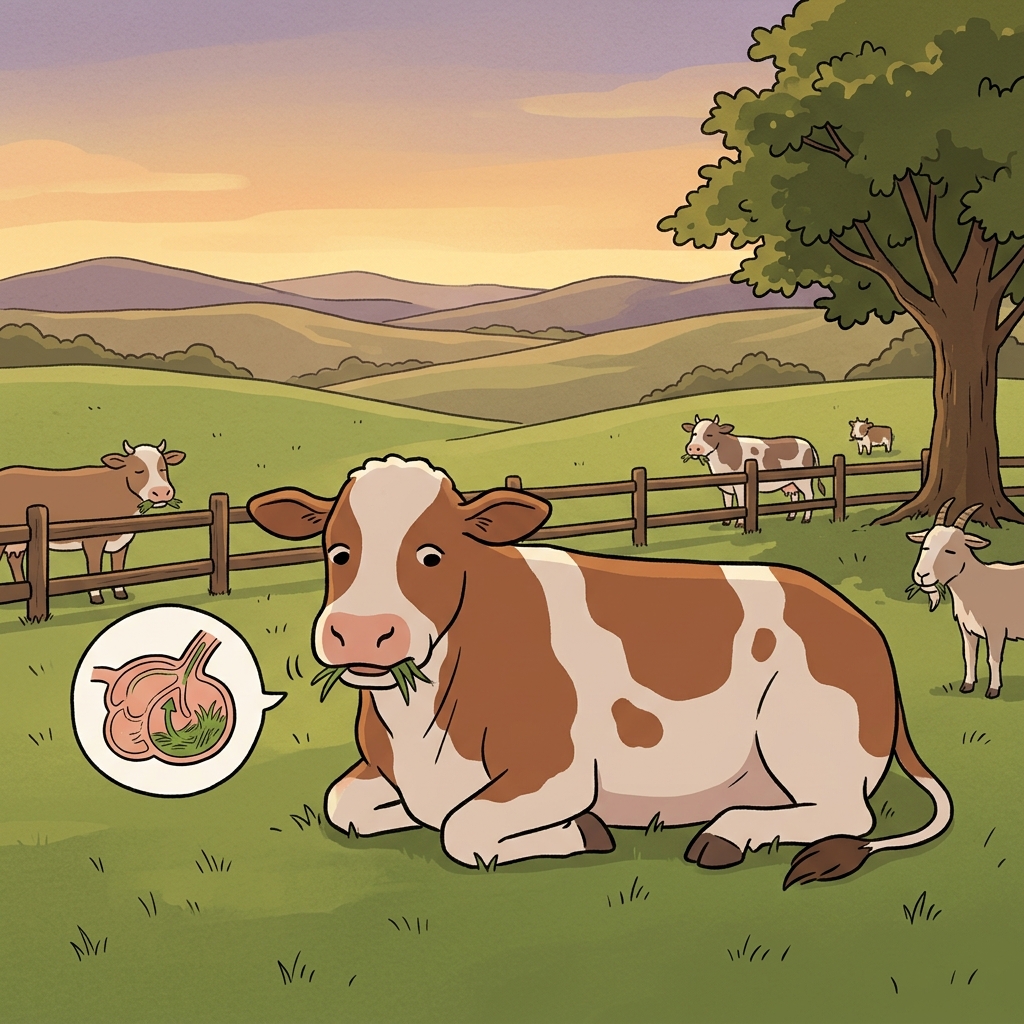
The ruminant chews slowly under the afternoon sun, completely unhurried.
Got the picture? Now let's practice.
🎤Pronunciation
🇺🇸 US/ˈruːmɪnənt/
🇬🇧 UK/ˈruːmɪnənt/
🌳Etymology
Rootrumin-
Suffix--ant
🎵Rhyme
dominantprominentconsonant
dominant
prominent
consonant
🔗Collocations
ruminant animals
ruminant digestion
ruminant behavior
wild ruminants
large ruminants
ruminant species
📝Examples
😄 Fun example
“My professor is so ruminant that he paused for ten minutes just to think about the word 'maybe'.”
“Sheep, goats, and cattle are all ruminants with four-chambered stomachs.”
“The old man's ruminant nature made dinner conversations last until midnight.”
“Farmers prefer ruminants because they can digest grass that humans can't eat.”
📚Related Words
Synonyms
contemplativereflectivemeditativepensivethoughtful
Antonyms
impulsivehastyunreflective
Related
herbivoreungulategrazercontemplationreflection
Want to master 19,000+ words?
Sign up free for flashcards & quizzes.