evil — profoundly immoral and wicked
Part of speech: ADJECTIVE
Definition: profoundly immoral and wicked
Pronunciation (IPA): /ˈiːvəl/
Example Sentences
- My phone battery dies at the most evil moments, like right before an important call.
- The villain's evil laugh echoed through the castle.
- Monday mornings are pure evil, especially after a fun weekend.
evil
ADJECTIVE[/ˈiːvəl/]
profoundly immoral and wicked
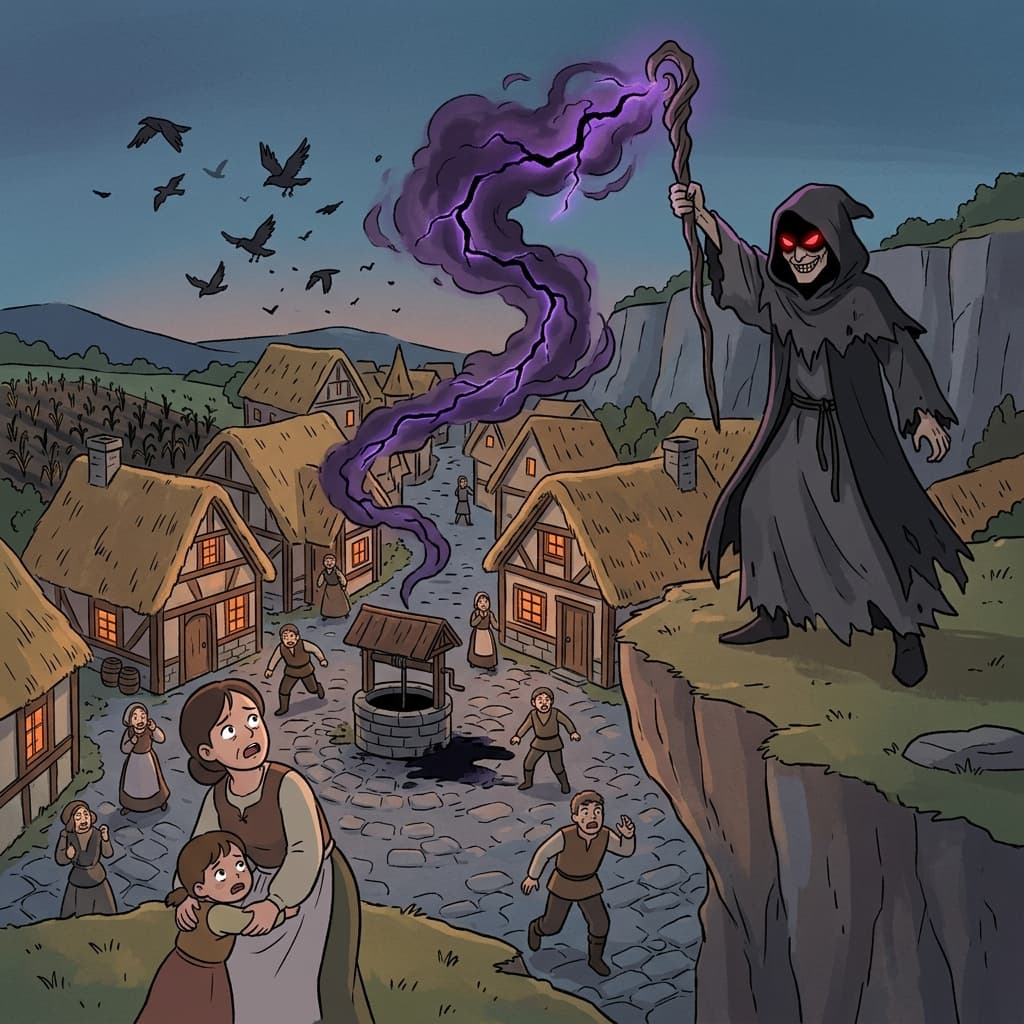
The evil sorcerer unleashes dark magic upon the peaceful village.
Got the picture? Now let's practice.
🎤Pronunciation
🌳Etymology
Origin
Derived from Old English 'yfel', the word traces back to a common Germanic root. Originally meaning 'exceeding or going beyond', it evolved to signify 'overstepping normal bounds', which came to denote moral badness or wickedness.
Breakdown
Old English 'yfel' (exceeding, abnormal) developed directly into modern English 'evil' through sound changes in Middle English, with the -l ending preserved from its Germanic ancestry.
🎵Rhyme
🔗Collocations
📝Examples
“My phone battery dies at the most evil moments, like right before an important call.”
“The villain's evil laugh echoed through the castle.”
“Monday mornings are pure evil, especially after a fun weekend.”
“The committee discussed the problem of evil in modern society.”
📚Related Words
Want to master 27,000+ words?
Sign up free for flashcards & quizzes.