discriminate — to treat someone unfairly because of their race, sex, religion, etc.
Part of speech: VERB
Definition: to treat someone unfairly because of their race, sex, religion, etc.
Pronunciation (IPA): /dɪˈskrɪməˌneɪt/
Example Sentences
- The restaurant was sued for discriminating against customers who wore sneakers.
- My cat can discriminate between the sound of a can opener and a blender.
- Companies should not discriminate against employees based on their personal beliefs.
discriminate
VERB[/dɪˈskrɪməˌneɪt/]
to treat someone unfairly because of their race, sex, religion, etc.

They had the same qualifications — but only one was discriminated against for reasons that had nothing to do with the job.
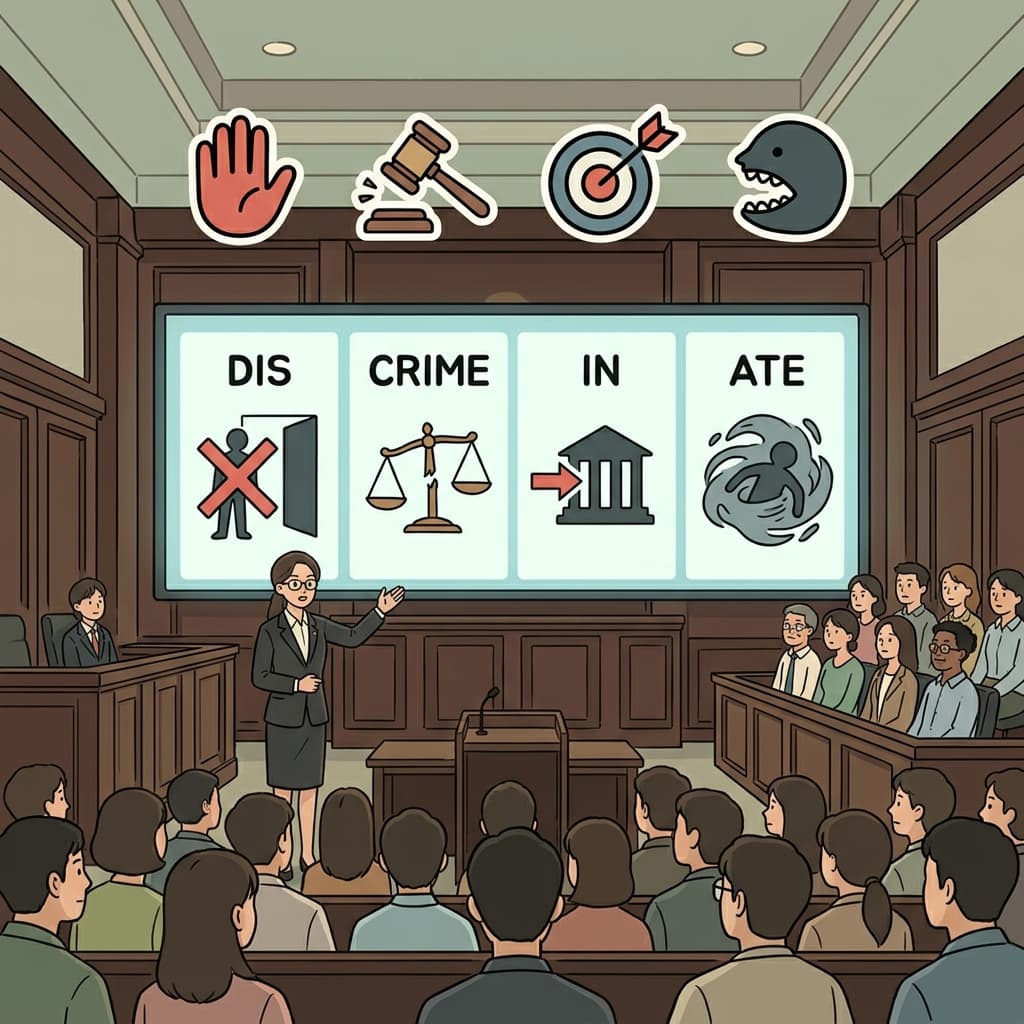
DIS the CRIME — IN hate, they discriminate.

Discriminate to eliminate — until one group tries to dominate.
Got the picture? Now let's practice.
🎤Pronunciation
🌳Etymology
Origin
From Latin 'discriminare' meaning 'to separate' or 'to distinguish,' derived from 'discrimen' (distinction, difference). The word entered English in the 17th century with the sense of making distinctions, later acquiring the negative sense of unfair treatment.
Breakdown
dis- (apart, away) + crimin- (from Latin crimen, meaning distinction/difference) + -ate (verb suffix) = discriminate (to distinguish or separate, often unfairly)
🎵Rhyme
🔗Collocations
📝Examples
“The restaurant was sued for discriminating against customers who wore sneakers.”
“My cat can discriminate between the sound of a can opener and a blender.”
“Companies should not discriminate against employees based on their personal beliefs.”
“She has learned to discriminate between genuine compliments and flattery.”
📚Related Words
Want to master 27,000+ words?
Sign up free for flashcards & quizzes.