out of breath — breathing with difficulty, especially from exertion
Part of speech: ADJECTIVE
Definition: breathing with difficulty, especially from exertion
Pronunciation (IPA): /aʊt əv breθ/
Example Sentences
- My grandmother gets out of breath just watching action movies on TV.
- The tour guide was out of breath from explaining the same thing to tourists all day.
- After chasing the bus for three blocks, Sarah arrived at work out of breath.
out of breath
ADJECTIVE[/aʊt əv breθ/]
breathing with difficulty, especially from exertion
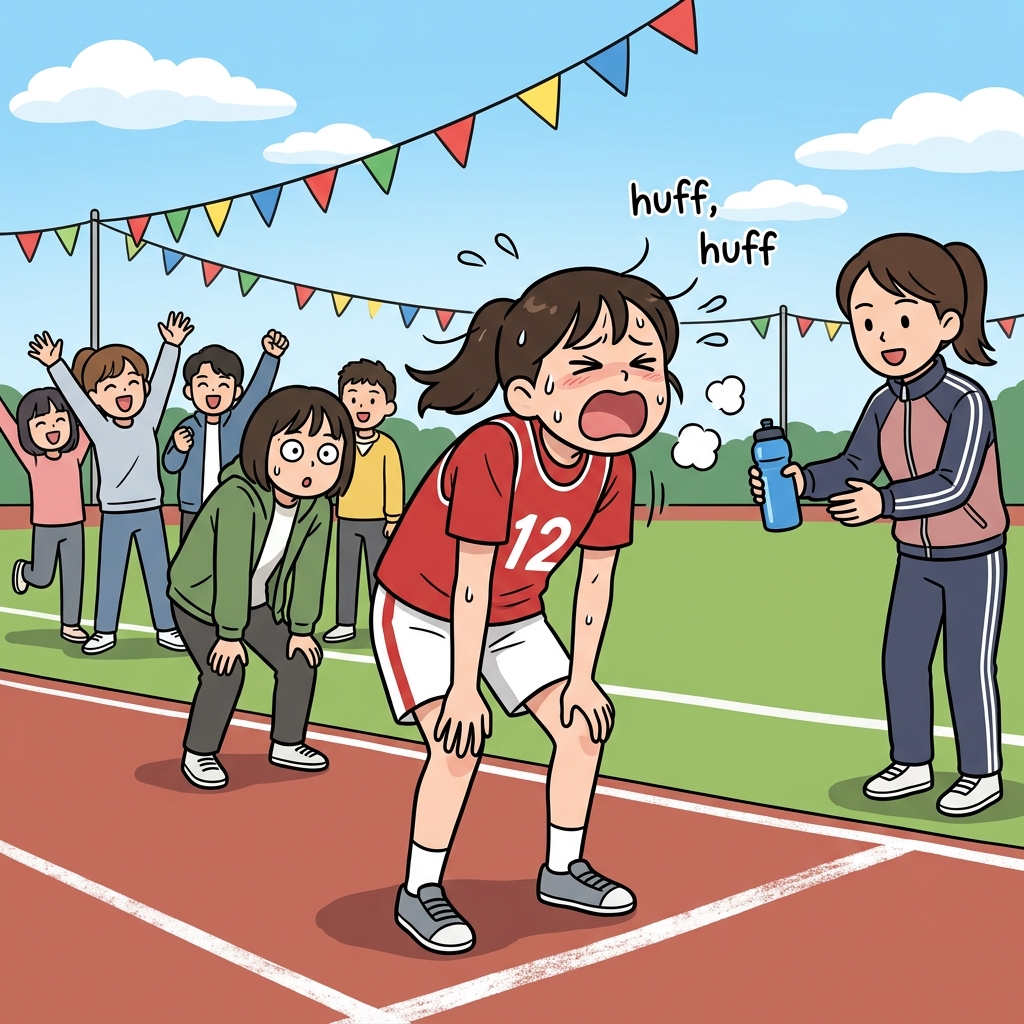
She finished the race completely out of breath, hands on her knees.

Out of breath, but dodged death!
Got the picture? Now let's practice.
🎤Pronunciation
🌳Etymology
Origin
The phrase 'out of breath' combines 'breath' from Proto-Germanic 'breatham', meaning the air inhaled and exhaled during respiration, with the prepositional phrase 'out of', denoting departure or absence from a normal state. The compound phrase emerged to describe a condition where breathing deviates from normal rhythm, typically due to exertion or exhaustion.
Breakdown
out (away, departure) + of (from, indicating separation) + breath (respiration, from Proto-Germanic 'breatham'). The construction literally means 'away from normal breathing', metaphorically describing the physiological state of breathlessness after strenuous activity.
🎵Rhyme
🔗Collocations
📝Examples
“My grandmother gets out of breath just watching action movies on TV.”
“The tour guide was out of breath from explaining the same thing to tourists all day.”
“After chasing the bus for three blocks, Sarah arrived at work out of breath.”
“The altitude made him out of breath even while sitting still.”
📚Related Words
Synonyms
Antonyms
Related
Want to master 19,000+ words?
Sign up free for flashcards & quizzes.