bore — to make someone feel weary and uninterested by being dull or tedious
Part of speech: VERB
Definition: to make someone feel weary and uninterested by being dull or tedious
Pronunciation (IPA): /bɔːr/
Example Sentences
- My math teacher can bore a rock to sleep with his monotone voice.
- The carpenter will bore several holes in the wooden plank.
- Don't be such a bore and tell us something interesting!
bore
VERB[/bɔːr/]
to make someone feel weary and uninterested by being dull or tedious
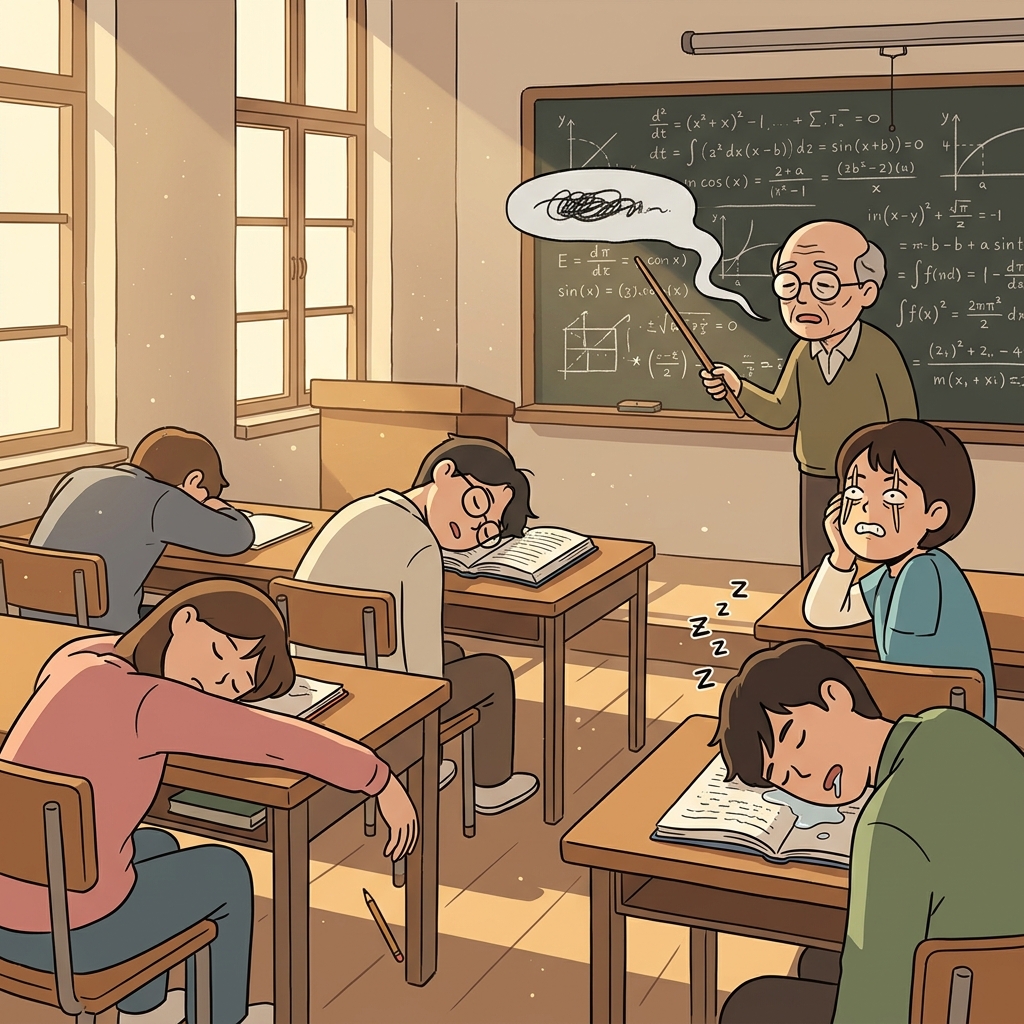
The long lecture began to bore every student in the dusty classroom.
Got the picture? Now let's practice.
🎤Pronunciation
🌳Etymology
Origin
The word derives from Old English 'borian', meaning 'to pierce' or 'to perforate'. By the 18th century, a metaphorical sense developed meaning 'to make weary or dull', conceptualized as drilling holes through the mind or spirit.
Breakdown
Old English 'borian' (to pierce, drill) is the root form. The figurative meaning 'to bore (tire)' emerged from the metaphor of a tool boring through material, applied to mental fatigue or tedium.
🎵Rhyme
🔗Collocations
📝Examples
“My math teacher can bore a rock to sleep with his monotone voice.”
“The carpenter will bore several holes in the wooden plank.”
“Don't be such a bore and tell us something interesting!”
“The documentary about paint drying managed to bore even the insomniac to sleep.”
📚Related Words
Synonyms
Antonyms
Related
Want to master 19,000+ words?
Sign up free for flashcards & quizzes.