placebo — a substance given to patients that has no medical effect but may help them feel better because they believe it will help them
Part of speech: NOUN
Definition: a substance given to patients that has no medical effect but may help them feel better because they believe it will help them
Pronunciation (IPA): /pləˈsiːboʊ/
Example Sentences
- Half the patients received the real medicine, while the other half got a placebo made of sugar pills.
- My grandmother swears that her 'magic' tea cures everything, but I think it's just a placebo effect.
- The company's promise of immediate salary increases turned out to be just a placebo to keep employees from quitting.
placebo
NOUN[/pləˈsiːboʊ/]
a substance given to patients that has no medical effect but may help them feel better because they believe it will help them
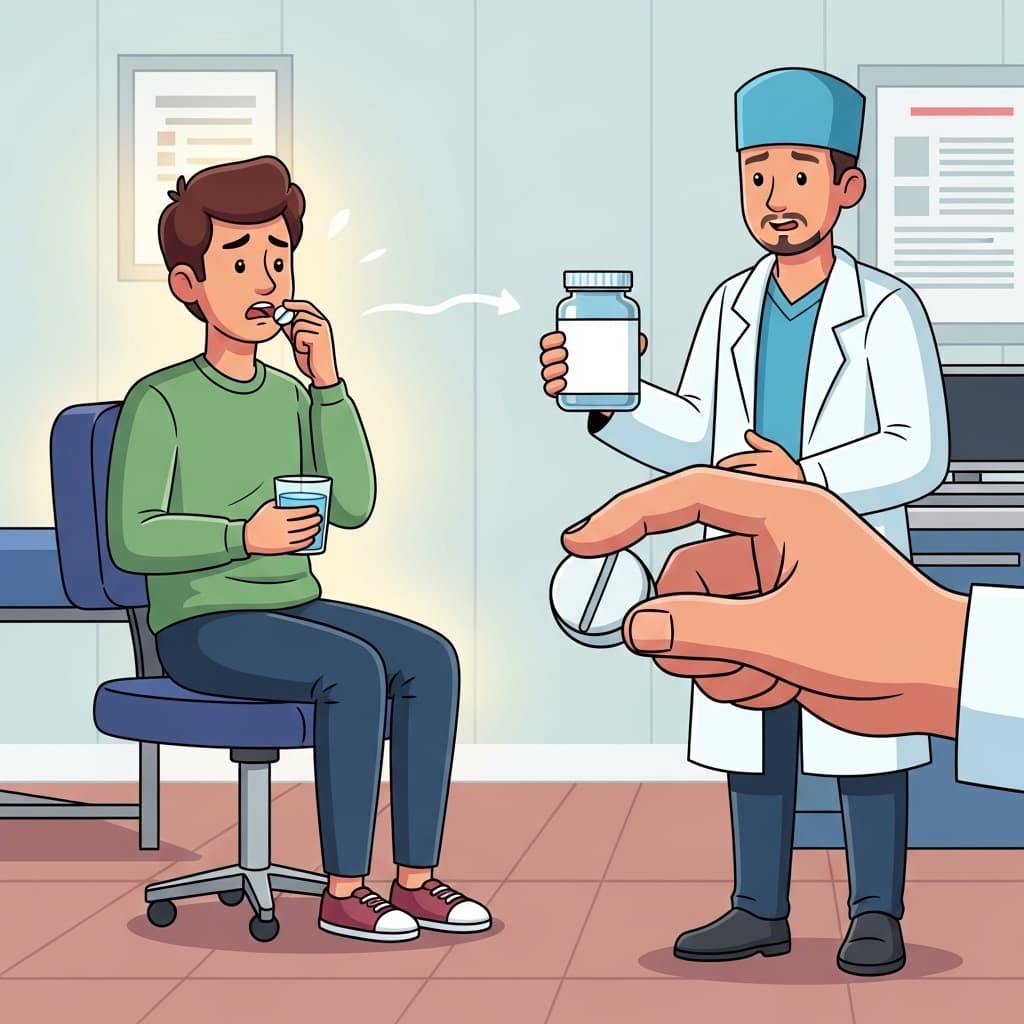
The placebo makes him feel better simply because he believes it will.

"A placebo can trick what you know — believe and the healing will flow."
Got the picture? Now let's practice.
🎤Pronunciation
🌳Etymology
Origin
From Latin 'placebo,' the first-person singular future tense of 'placere' meaning 'to please.' The word was adopted in medical contexts because placebos were believed to 'please' or satisfy patients through psychological effect.
Breakdown
placebo (Latin: 'I shall please') from placere (to please) = placebo
🎵Rhyme
🔗Collocations
📝Examples
“Half the patients received the real medicine, while the other half got a placebo made of sugar pills.”
“My grandmother swears that her 'magic' tea cures everything, but I think it's just a placebo effect.”
“The company's promise of immediate salary increases turned out to be just a placebo to keep employees from quitting.”
“Clinical trials must include a placebo group to test whether the new drug actually works.”
📚Related Words
Want to master 27,000+ words?
Sign up free for flashcards & quizzes.