democracy — a system of government by the whole population or all the eligible members of a state, typically through elected representatives
Part of speech: NOUN
Definition: a system of government by the whole population or all the eligible members of a state, typically through elected representatives
Pronunciation (IPA): /dɪˈmɑːkrəsi/
Example Sentences
- In a true democracy, even politicians have to wait in line to vote like everyone else.
- The foundation of democracy is the belief that people can govern themselves.
- Democracy is like a group project where everyone gets to vote on who does the work.
democracy
NOUN[/dɪˈmɑːkrəsi/]
a system of government by the whole population or all the eligible members of a state, typically through elected representatives
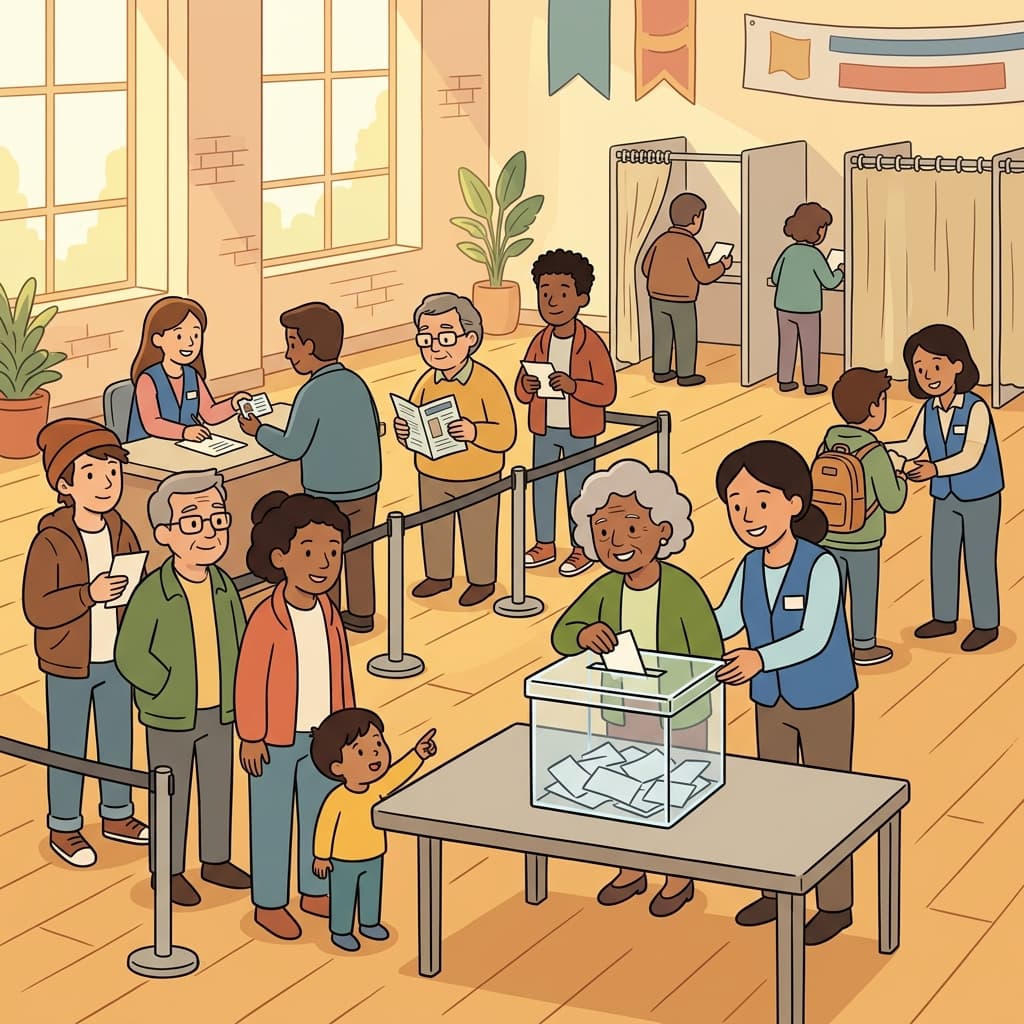
Democracy allows people to choose their leaders through elections.
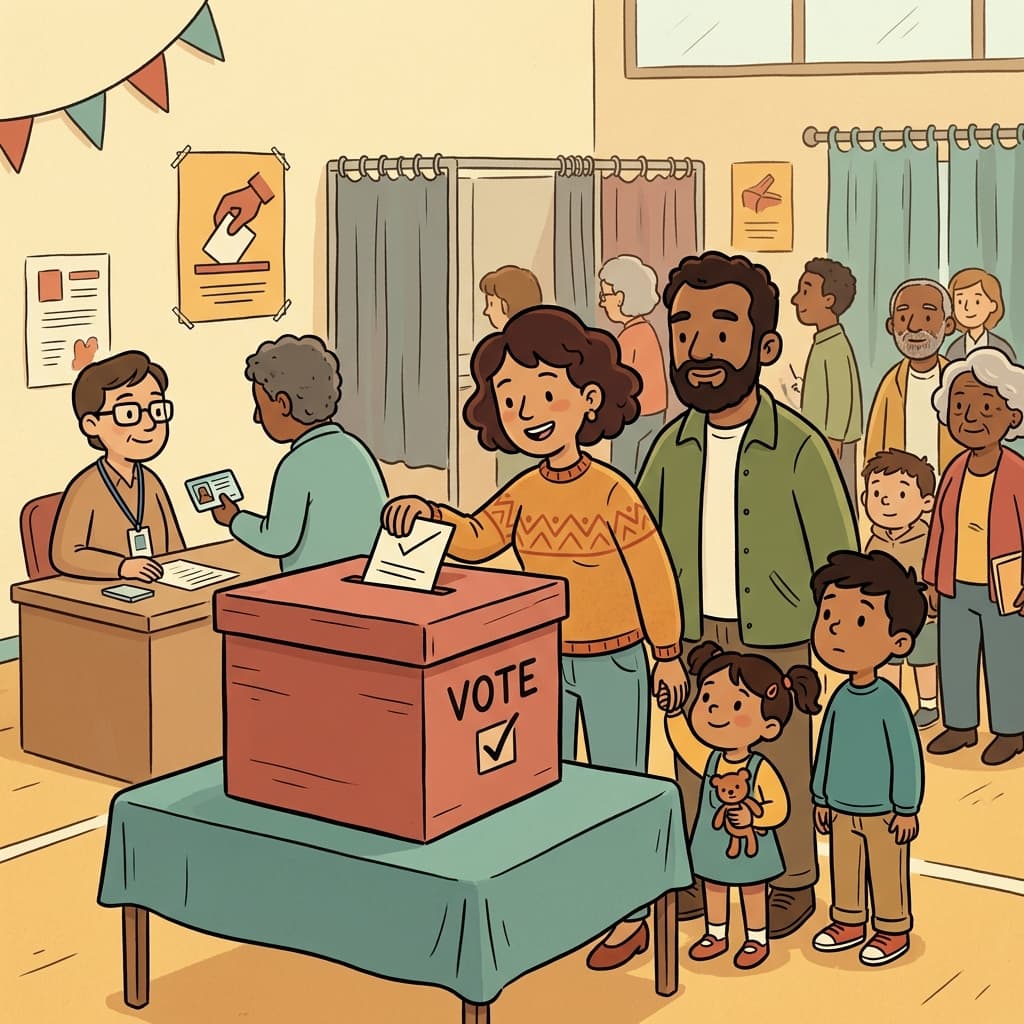
In a democracy, the people choose their leader by voting. (DEMO + PEOPLE'S CHOICE → people choose their leaders by voting)
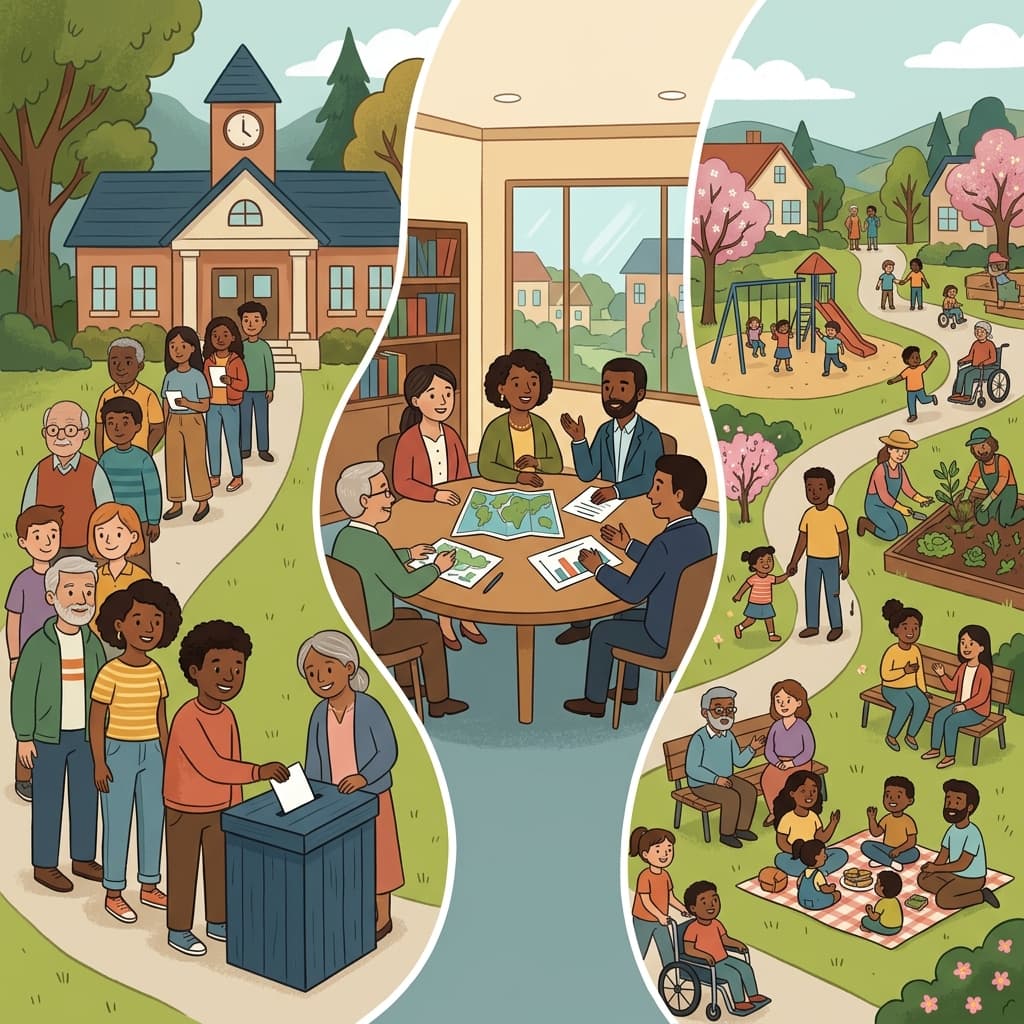
Democracy encouraged fair policy and greater equality for everyone.
Got the picture? Now let's practice.
🎤Pronunciation
🌳Etymology
Origin
The word derives from ancient Athens, where citizens gathered in public assemblies to participate directly in governance. It combines Greek demos (people) and kratos (power), literally meaning 'rule by the people'.
Breakdown
demos (people) + -kratia (rule, power); -kratia derives from kratos (strength, power), with the suffix -ia forming the noun denoting a system of government.
🎵Rhyme
🔗Collocations
📝Examples
“In a true democracy, even politicians have to wait in line to vote like everyone else.”
“The foundation of democracy is the belief that people can govern themselves.”
“Democracy is like a group project where everyone gets to vote on who does the work.”
“Many countries around the world are still fighting for democracy and human rights.”
📚Related Words
Want to master 27,000+ words?
Sign up free for flashcards & quizzes.