satire — the use of humor, irony, or exaggeration to criticize people's vices or foolishness
Part of speech: NOUN
Definition: the use of humor, irony, or exaggeration to criticize people's vices or foolishness
Pronunciation (IPA): /ˈsætaɪər/
Example Sentences
- The comedian's satire about social media addiction had everyone laughing and thinking.
- Swift's 'A Modest Proposal' is a famous example of satirical writing.
- The movie uses satire to expose the absurdity of modern office culture.
satire
NOUN[/ˈsætaɪər/]
the use of humor, irony, or exaggeration to criticize people's vices or foolishness
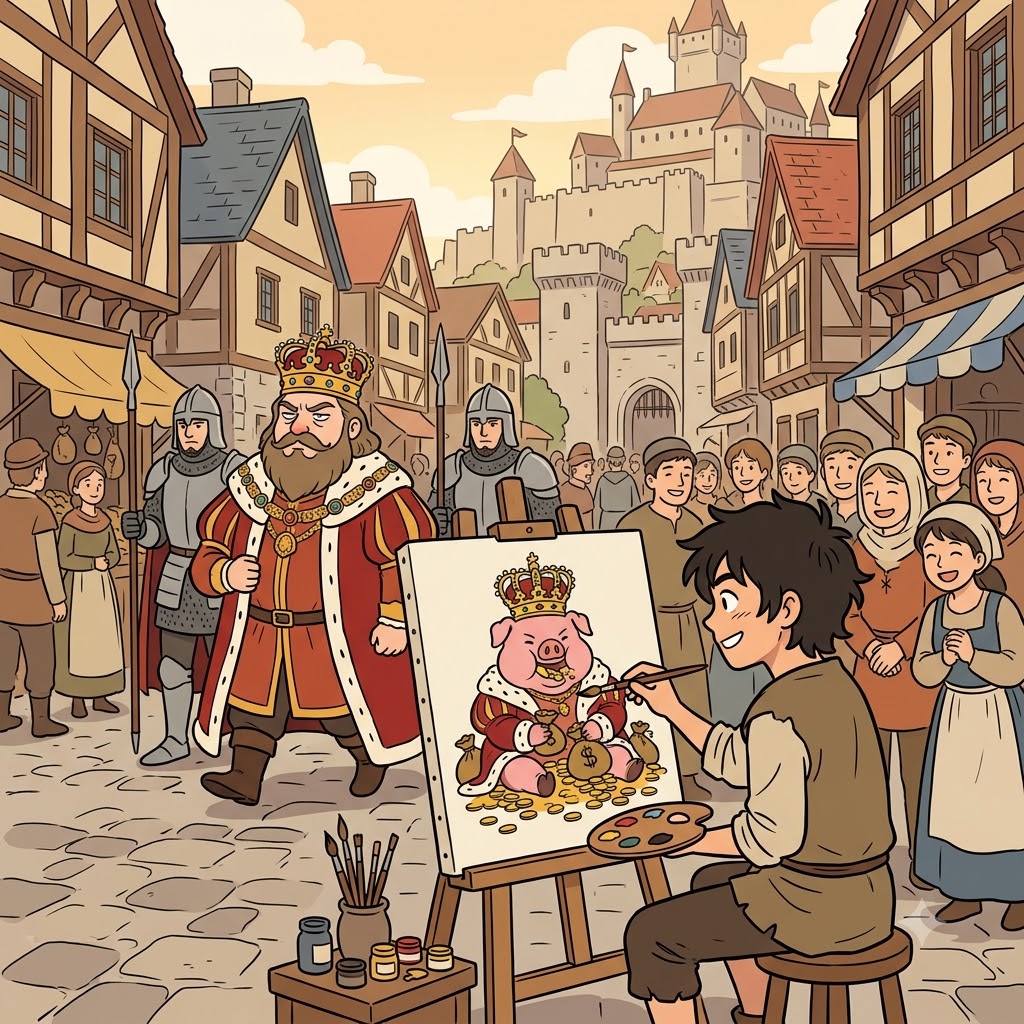
While the real king walked proudly, the street artist painted him as a greedy pig, creating a sharp satire.
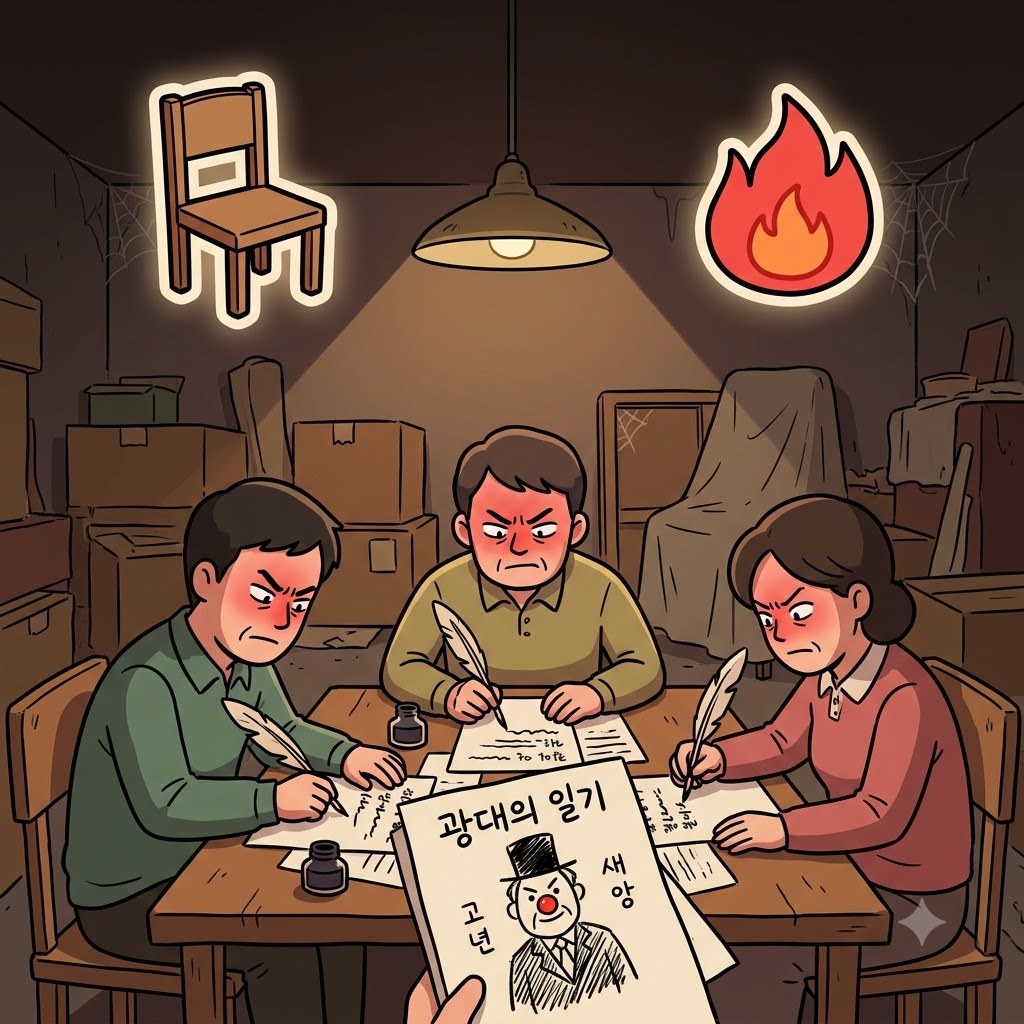
SAT TIRE judges everyone - sharp satire never tires!

By dressing a silly monkey in royal attire, the clown created a brilliant satire.
Got the picture? Now let's practice.
🎤Pronunciation
🌳Etymology
Origin
From Latin 'satura', originally meaning a dish filled with various ingredients or a poetic medley. The term evolved to describe a literary genre combining various satirical elements used for social criticism.
Breakdown
Latin 'satura' (a full dish, medley) → Old French 'satire' → English 'satire' (noun meaning satirical work or the practice of satirizing)
🎵Rhyme
🔗Collocations
📝Examples
“The comedian's satire about social media addiction had everyone laughing and thinking.”
“Swift's 'A Modest Proposal' is a famous example of satirical writing.”
“The movie uses satire to expose the absurdity of modern office culture.”
“His satirical tweet about coffee prices went viral overnight.”
📚Related Words
Synonyms
Antonyms
Related
Want to master 19,000+ words?
Sign up free for flashcards & quizzes.