frog — a small amphibian that typically lives both in water and on land, has smooth moist skin, and long hind legs for jumping
Part of speech: NOUN
Definition: a small amphibian that typically lives both in water and on land, has smooth moist skin, and long hind legs for jumping
Pronunciation (IPA): /frɔːɡ/
Example Sentences
- The programmer felt like a frog when he had to debug his frog detection program.
- Children love to catch frogs in the summer.
- The princess kissed the frog, hoping it would turn into a prince.
frog
NOUN[/frɔːɡ/]
a small amphibian that typically lives both in water and on land, has smooth moist skin, and long hind legs for jumping
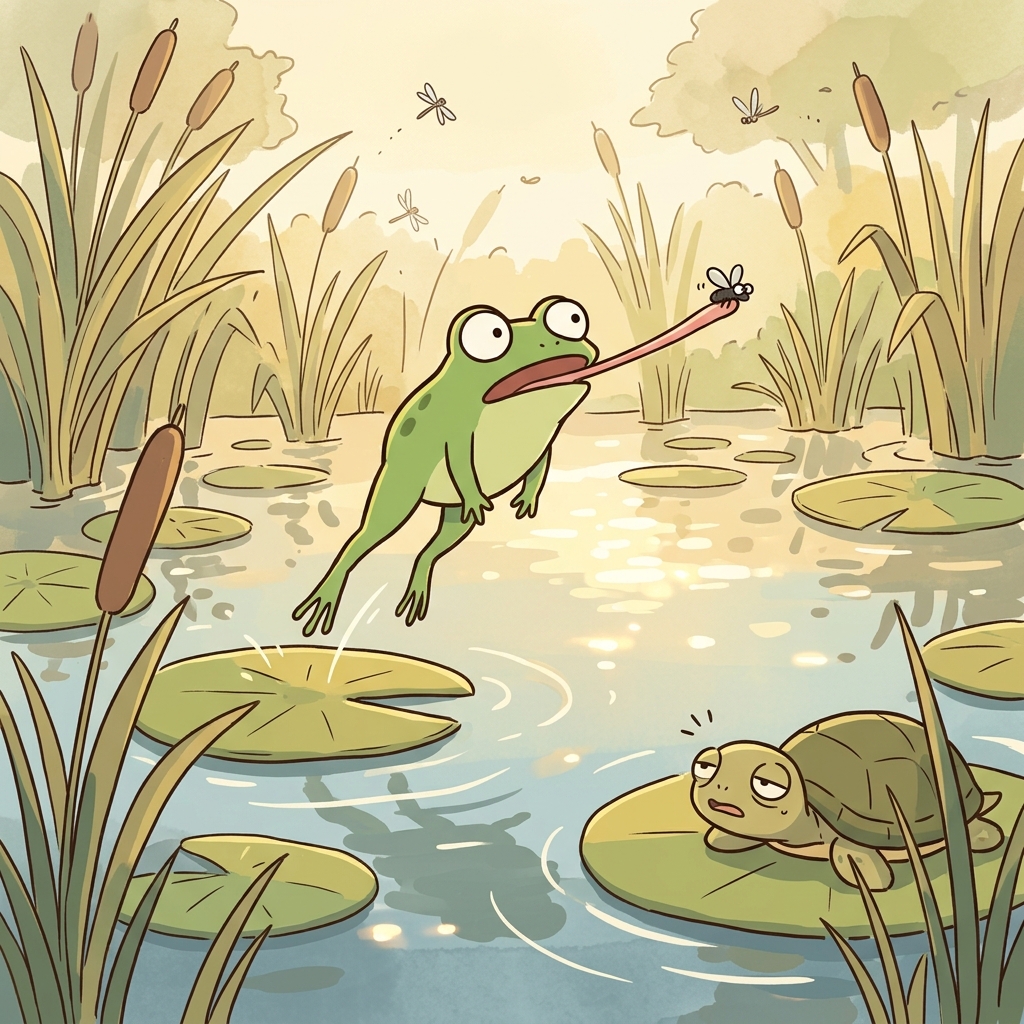
A green frog leaps off a lily pad and snatches a fly mid-air.
Got the picture? Now let's practice.
🎤Pronunciation
🌳Etymology
Origin
The word 'frog' derives from Old English 'frogga,' a term of onomatopoetic origin that mimics the croaking sound made by the amphibian. This sound-imitative etymology is common across many languages, where frog names frequently relate to their characteristic vocalizations.
Breakdown
frogga (Old English) → frog; the root 'frog-' is believed to be onomatopoetic, representing the creature's croak or call, with the diminutive or agent suffix '-ga' characteristic of Old English noun formation.
🎵Rhyme
🔗Collocations
📝Examples
“The programmer felt like a frog when he had to debug his frog detection program.”
“Children love to catch frogs in the summer.”
“The princess kissed the frog, hoping it would turn into a prince.”
“He had a frog in his throat during the important presentation.”
📚Related Words
Synonyms
Related
Want to master 19,000+ words?
Sign up free for flashcards & quizzes.