stand up for — to defend or support someone or something, especially when they are being criticized or attacked
Part of speech: VERB
Definition: to defend or support someone or something, especially when they are being criticized or attacked
Pronunciation (IPA): /stænd ʌp fɔːr/
Example Sentences
- My dog always stands up for me when the mailman comes - he thinks letters are dangerous enemies!
- You need to stand up for your rights in the workplace.
- The superhero's job is to stand up for innocent people, but he can't even stand up to his mother-in-law.
stand up for
VERB[/stænd ʌp fɔːr/]
to defend or support someone or something, especially when they are being criticized or attacked
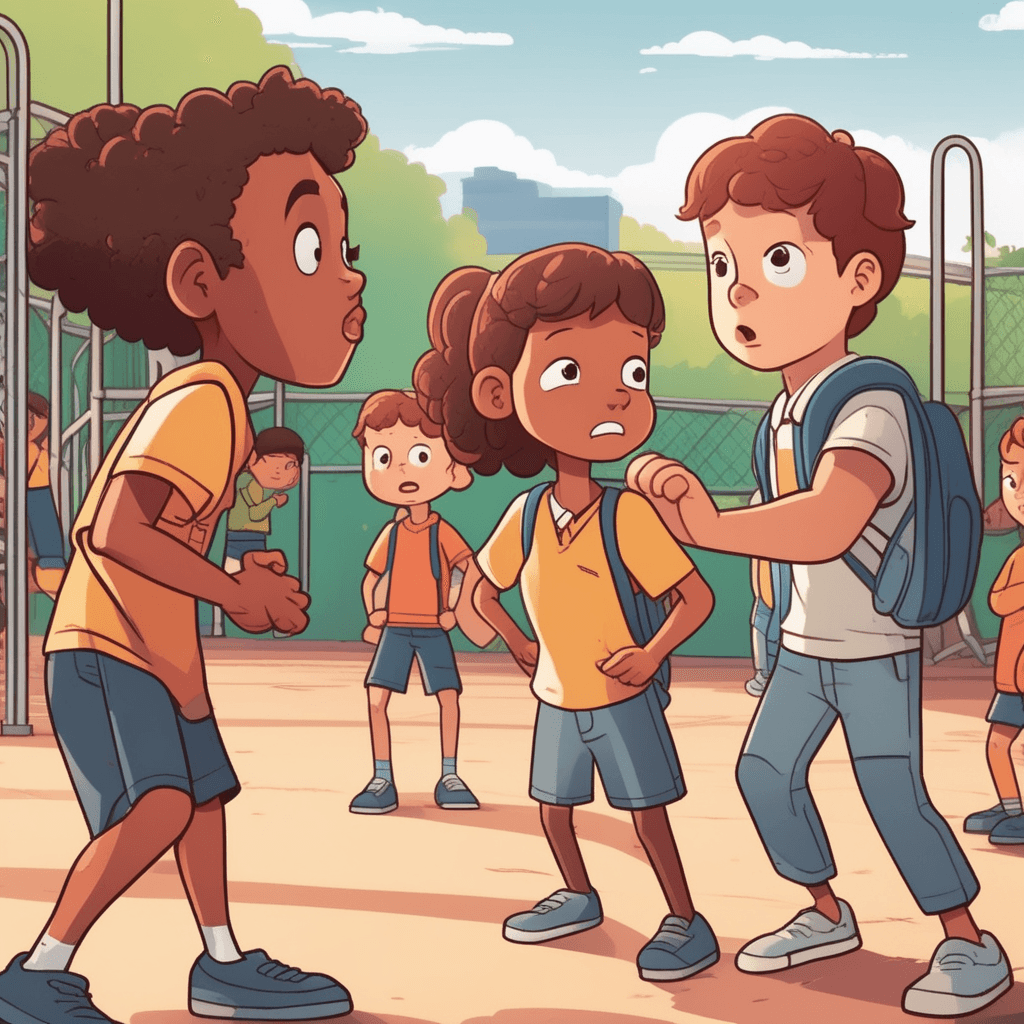
a brave student steps between a bully and a smaller child being teased. The defender holds out their arm protectively while facing the aggressor with determination. The bully was pointing and laughing at the smaller child's appearance. Now the bully steps back with surprise as the defender intervenes confidently. The smaller child behind looks relieved and grateful for the protection. Other playground children gather around watching the brave intervention unfold. someone defending and supporting another person when they are being attacked or criticized

Hand up high, friends band up - together they stand up for what's right!
Got the picture? Now let's practice.
🎤Pronunciation
🌳Etymology
Origin
This phrasal verb combines three Germanic elements: 'stand' (to be upright), 'up' (upward direction), and 'for' (in support of). The expression evolved from its literal physical sense of rising to one's feet to advocate for someone, developing the figurative meaning of defending or supporting a person or cause.
Breakdown
stand (to be upright, from Old English 'standan') + up (upward direction, from Old English 'up') + for (in support of, from Old English 'for'), together forming 'to rise and support someone's position or rights'.
🎵Rhyme
🔗Collocations
📝Examples
“My dog always stands up for me when the mailman comes - he thinks letters are dangerous enemies!”
“You need to stand up for your rights in the workplace.”
“The superhero's job is to stand up for innocent people, but he can't even stand up to his mother-in-law.”
“Teachers should stand up for students who are being bullied.”
📚Related Words
Want to master 27,000+ words?
Sign up free for flashcards & quizzes.