lay off — to dismiss workers temporarily or permanently due to lack of work or economic reasons
Part of speech: VERB
Definition: to dismiss workers temporarily or permanently due to lack of work or economic reasons
Pronunciation (IPA): /leɪ ɔːf/
Example Sentences
- My boss told me to lay off the office donuts, but they're just too tempting!
- The factory will lay off half its workforce next month.
- Lay off the jokes during the meeting - the CEO has no sense of humor.
lay off
VERB[/leɪ ɔːf/]
to dismiss workers temporarily or permanently due to lack of work or economic reasons

The factory had to lay off dozens of workers when orders dried up.
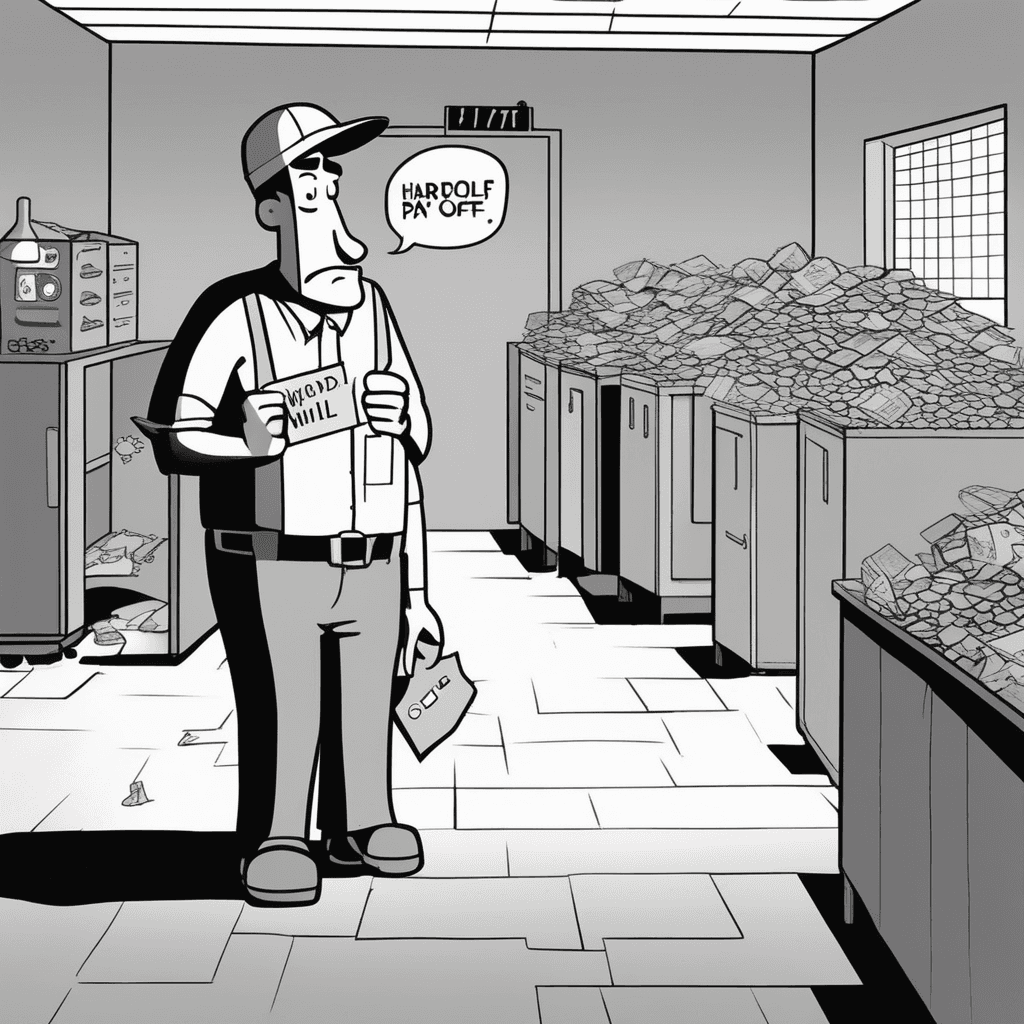
They lay off workers though hard work should pay off, but fair treatment seems way off
Got the picture? Now let's practice.
🎤Pronunciation
🌳Etymology
Origin
The phrase 'lay off' originates from Old English, combining 'lay' (meaning 'to place' or 'to put down') with 'off' (meaning 'away' or 'separate'). The metaphorical sense of dismissing workers evolved from the literal concept of 'putting away' or setting aside, eventually developing into its modern meaning of temporary or permanent termination of employment.
Breakdown
lay (to place, put down) + off (away, separate). The combination creates a phrasal verb where the particles together convey the sense of removing or setting aside, applied to employment contexts.
🎵Rhyme
🔗Collocations
📝Examples
“My boss told me to lay off the office donuts, but they're just too tempting!”
“The factory will lay off half its workforce next month.”
“Lay off the jokes during the meeting - the CEO has no sense of humor.”
“Due to automation, many companies are laying off manual workers.”
📚Related Words
Want to master 27,000+ words?
Sign up free for flashcards & quizzes.