microbiology — the scientific study of microscopic organisms, including bacteria, viruses, fungi, and parasites
Part of speech: NOUN
Definition: the scientific study of microscopic organisms, including bacteria, viruses, fungi, and parasites
Pronunciation (IPA): /ˌmaɪkroʊbaɪˈɑːlədʒi/
Example Sentences
- The microbiology professor warned students that even friendly bacteria could turn rebellious without proper lab conditions.
- Microbiology has revolutionized our understanding of infectious diseases and antibiotic resistance.
- After studying microbiology, she realized that humans are basically walking apartments for billions of tiny tenants.
microbiology
NOUN[/ˌmaɪkroʊbaɪˈɑːlədʒi/]
the scientific study of microscopic organisms, including bacteria, viruses, fungi, and parasites
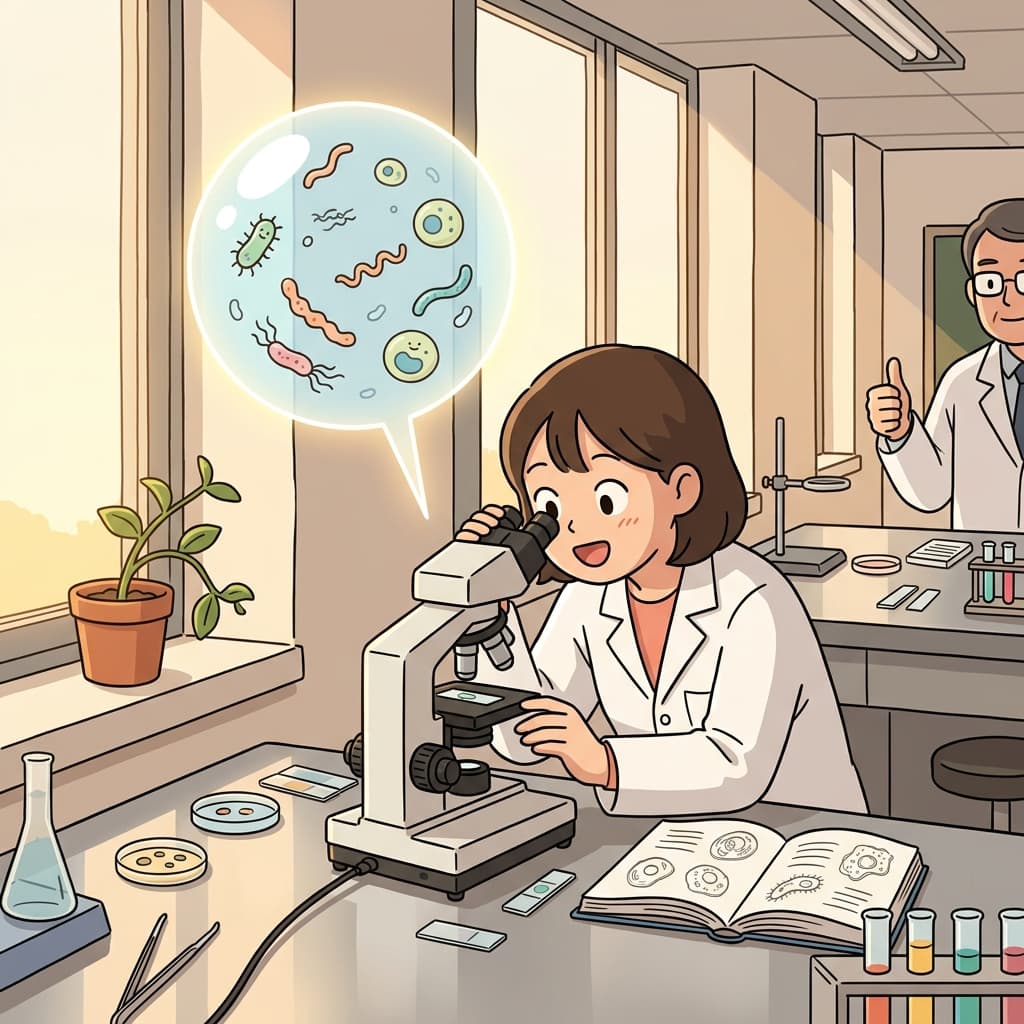
The student peers into a microscope, exploring microbiology one tiny cell at a time.

Microbiology meets biology through technology!
Got the picture? Now let's practice.
🎤Pronunciation
🌳Etymology
Origin
Microbiology is a compound of three Greek elements: mikros (small), bios (life), and logia (study of). The term emerged as a distinct scientific discipline following the invention of the microscope in the 17th century, when systematic study of invisible microscopic organisms became possible.
Breakdown
micro- (small, from Greek mikros) + bio- (life, from Greek bios) + -logy (study of, from Greek logia, the practice of discourse).
🎵Rhyme
🔗Collocations
📝Examples
“The microbiology professor warned students that even friendly bacteria could turn rebellious without proper lab conditions.”
“Microbiology has revolutionized our understanding of infectious diseases and antibiotic resistance.”
“After studying microbiology, she realized that humans are basically walking apartments for billions of tiny tenants.”
“The microbiology department received a grant to develop new methods for detecting pathogens in food.”
📚Related Words
Want to master 27,000+ words?
Sign up free for flashcards & quizzes.