tsunami — a very large ocean wave caused by an underwater earthquake or volcanic eruption
Part of speech: NOUN
Definition: a very large ocean wave caused by an underwater earthquake or volcanic eruption
Pronunciation (IPA): /tsuˈnɑːmi/
Example Sentences
- The surfer mistook the approaching tsunami for the perfect wave until he noticed all the fish swimming in the wrong direction.
- Scientists can detect tsunamis using underwater sensors and satellite technology.
- When the cafeteria announced free pizza, there was a tsunami of hungry students rushing to the counter.
tsunami
NOUN[/tsuˈnɑːmi/]
a very large ocean wave caused by an underwater earthquake or volcanic eruption
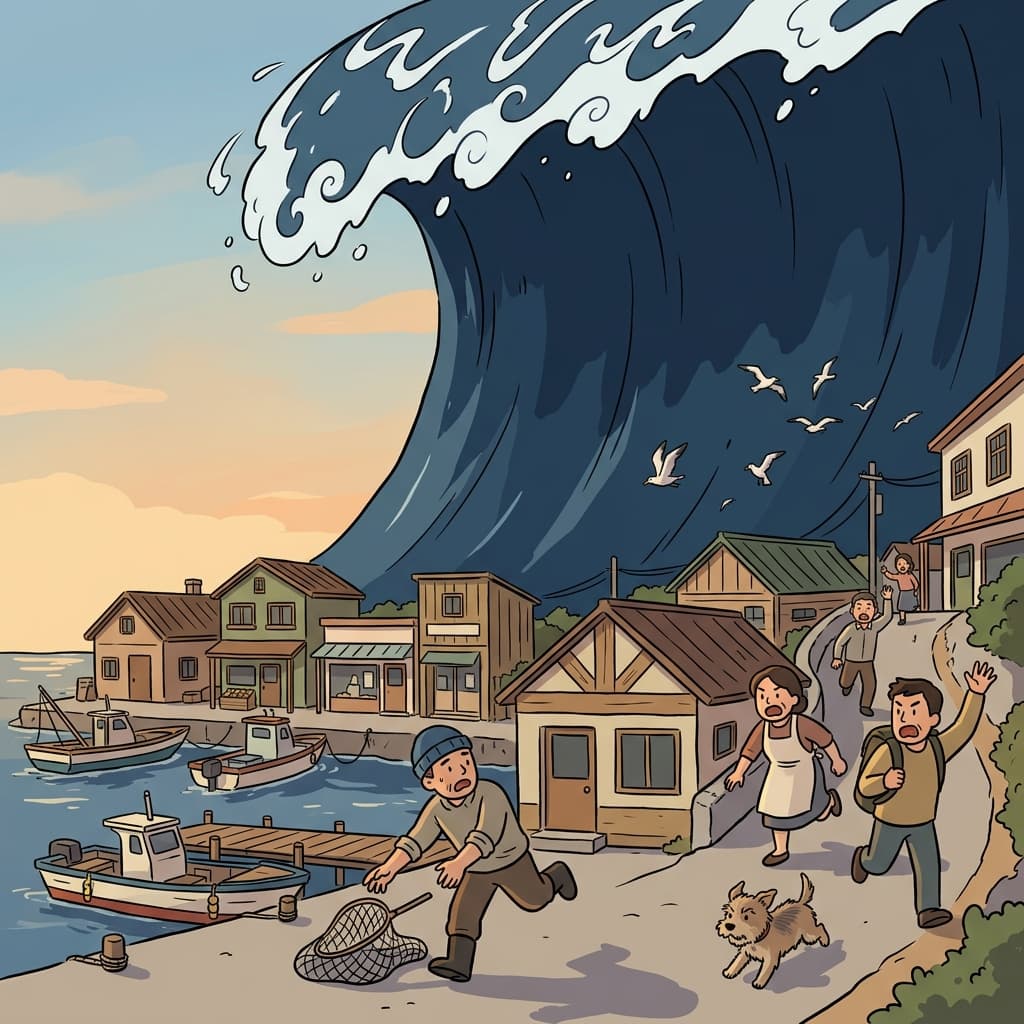
A massive tsunami wave towers over the fishing village as people flee uphill.

Mommy and army flee the tsunami!
Got the picture? Now let's practice.
🎤Pronunciation
🌳Etymology
Origin
Tsunami derives from Japanese, combining two elements: tsu (津), meaning 'harbor' or 'port,' and nami (波), meaning 'wave.' The term originated from observations by fishermen who, upon returning from the sea, found their harbors devastated by massive waves, leading to the compound designation 'harbor wave.'
Breakdown
tsu (津, harbor/port) + nami (波, wave). The compound literally translates to 'harbor wave,' describing the phenomenon of large seismic waves that devastate coastal ports and harbors.
🎵Rhyme
🔗Collocations
📝Examples
“The surfer mistook the approaching tsunami for the perfect wave until he noticed all the fish swimming in the wrong direction.”
“Scientists can detect tsunamis using underwater sensors and satellite technology.”
“When the cafeteria announced free pizza, there was a tsunami of hungry students rushing to the counter.”
“Coastal areas need effective tsunami preparedness plans to protect residents.”
📚Related Words
Want to master 27,000+ words?
Sign up free for flashcards & quizzes.