drawn-out — lasting for a longer time than necessary; excessively prolonged
Part of speech: ADJECTIVE
Definition: lasting for a longer time than necessary; excessively prolonged
Pronunciation (IPA): /ˈdrɔːn ˌaʊt/
Example Sentences
- The teacher's drawn-out explanation made half the class fall asleep.
- After a drawn-out legal battle, the company finally settled the case.
- My grandmother tells drawn-out stories that somehow always end up being about her cat.
drawn-out
ADJECTIVE[/ˈdrɔːn ˌaʊt/]
lasting for a longer time than necessary; excessively prolonged
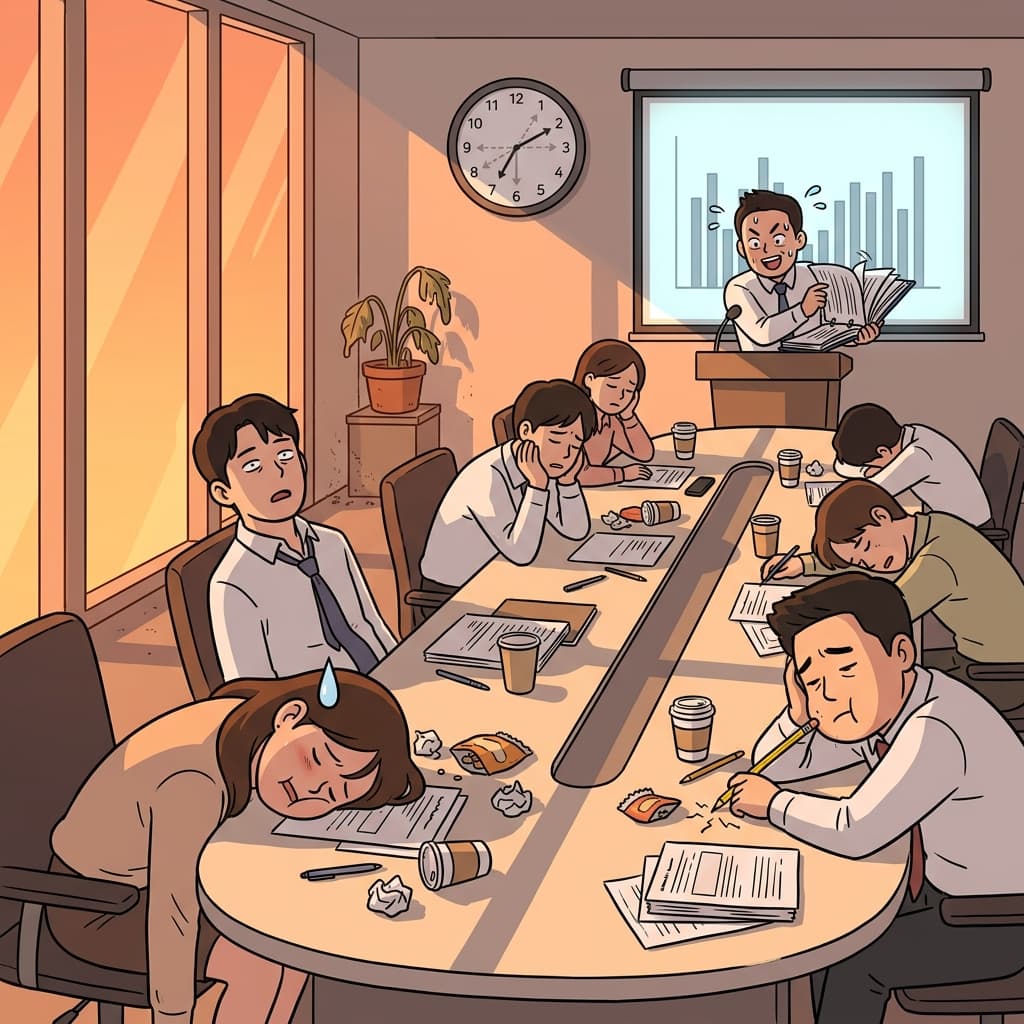
The drawn-out meeting stretched past sunset while everyone stared at the clock.
Got the picture? Now let's practice.
🎤Pronunciation
🌳Etymology
Origin
Drawn-out derives from the past participle of the phrasal verb 'draw out,' combining the Germanic root 'draw' (meaning to pull or drag) with the adverb 'out' (away or outward). The phrase evolved to describe the act of extending or prolonging something beyond its natural length, as if stretching an elastic material.
Breakdown
draw (to pull, drag; from Old English dragan) + out (away, outward; from Old English ut) = to pull outward or extend lengthwise, later applied figuratively to time and processes to mean 'prolonged' or 'tediously extended.'
🎵Rhyme
🔗Collocations
📝Examples
“The teacher's drawn-out explanation made half the class fall asleep.”
“After a drawn-out legal battle, the company finally settled the case.”
“My grandmother tells drawn-out stories that somehow always end up being about her cat.”
“The drawn-out silence after his joke was more painful than any laughter would have been.”
📚Related Words
Want to master 27,000+ words?
Sign up free for flashcards & quizzes.