detraction — the practice of criticizing someone or something in a way that reduces their reputation or importance
Part of speech: NOUN
Definition: the practice of criticizing someone or something in a way that reduces their reputation or importance
Pronunciation (IPA): /dɪˈtrækʃən/
Example Sentences
- The politician's campaign was full of detraction rather than promoting his own policies.
- She refused to participate in the detraction of her former boss, even though others were gossiping.
- His review was pure detraction - he spent more time criticizing the restaurant's decor than actually discussing the food.
detraction
NOUN[/dɪˈtrækʃən/]
the practice of criticizing someone or something in a way that reduces their reputation or importance

His detraction of her painting felt unfair to everyone at the gallery.
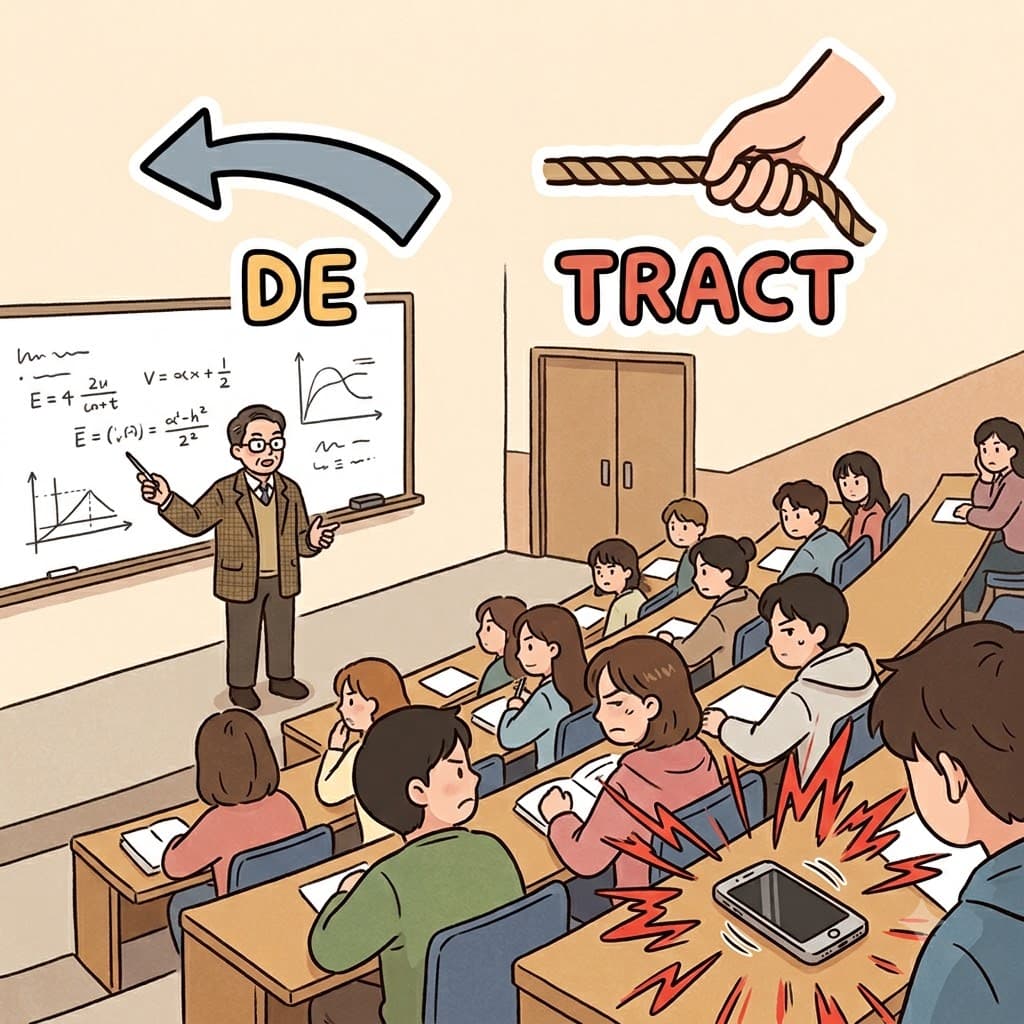
DE(away) + TRACT(pull) — the ringing phone became a major detraction from the brilliant lecture.

While the glowing neon sign was an attraction, the smelly garbage beside the door was a major detraction from the restaurant's appeal.
Got the picture? Now let's practice.
🎤Pronunciation
🌳Etymology
Origin
From Latin 'detractio', derived from 'detrahere' meaning 'to pull down or diminish', formed from the prefix 'de-' (down) and 'trahere' (to draw or pull).
Breakdown
de- (down, away) + tract (draw, pull) + -ion (noun suffix) = detraction
🎵Rhyme
🔗Collocations
📝Examples
“The politician's campaign was full of detraction rather than promoting his own policies.”
“She refused to participate in the detraction of her former boss, even though others were gossiping.”
“His review was pure detraction - he spent more time criticizing the restaurant's decor than actually discussing the food.”
📚Related Words
Want to master 27,000+ words?
Sign up free for flashcards & quizzes.