exile — the state of being barred from one's native country
Part of speech: NOUN
Definition: the state of being barred from one's native country
Pronunciation (IPA): /ˈeksaɪl/
Example Sentences
- The celebrity chef was exiled from the kitchen after burning water three times in a row.
- After the revolution, many nobles were sent into exile.
- He felt like an exile in his own home after his siblings redecorated his room.
exile
NOUN[/ˈeksaɪl/]
the state of being barred from one's native country

The defeated prince was sent into exile across the distant sea.
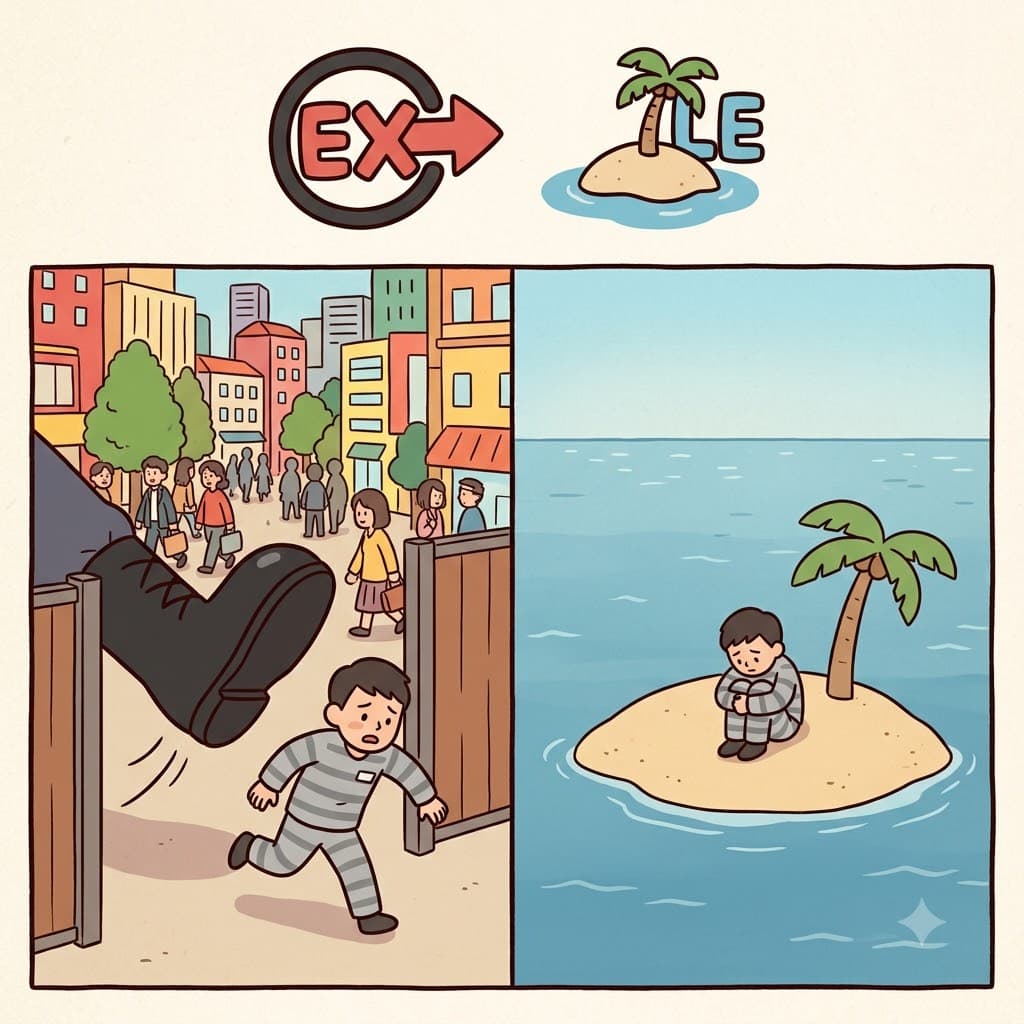
EX (out) + ILE (island) — by kicking the criminal EX (out) of the kingdom and sending him to a lonely ILE (island), the king finalized his exile.

After losing his strict court trial, he was forced to walk a thousand miles into endless exile.
Got the picture? Now let's practice.
🎤Pronunciation
🌳Etymology
Origin
From Latin 'exsilium' meaning banishment or exile, derived from the verb 'exsilire' meaning to leap out or spring forth.
Breakdown
ex- (out, away) + salire (to leap, jump) - literally 'to leap out' from one's homeland
🎵Rhyme
🔗Collocations
📝Examples
“The celebrity chef was exiled from the kitchen after burning water three times in a row.”
“After the revolution, many nobles were sent into exile.”
“He felt like an exile in his own home after his siblings redecorated his room.”
“The writer chose self-exile to focus on his masterpiece.”
📚Related Words
Want to master 27,000+ words?
Sign up free for flashcards & quizzes.