mitigate — to make something less harmful, unpleasant, or bad
Part of speech: VERB
Definition: to make something less harmful, unpleasant, or bad
Pronunciation (IPA): /ˈmɪtɪˌɡeɪt/
Example Sentences
- He tried to mitigate his boss's anger by bringing coffee and donuts to the Monday meeting.
- The government announced measures to mitigate the economic crisis.
- She wore sunglasses to mitigate the embarrassment of her terrible haircut.
mitigate
VERB[/ˈmɪtɪˌɡeɪt/]
to make something less harmful, unpleasant, or bad
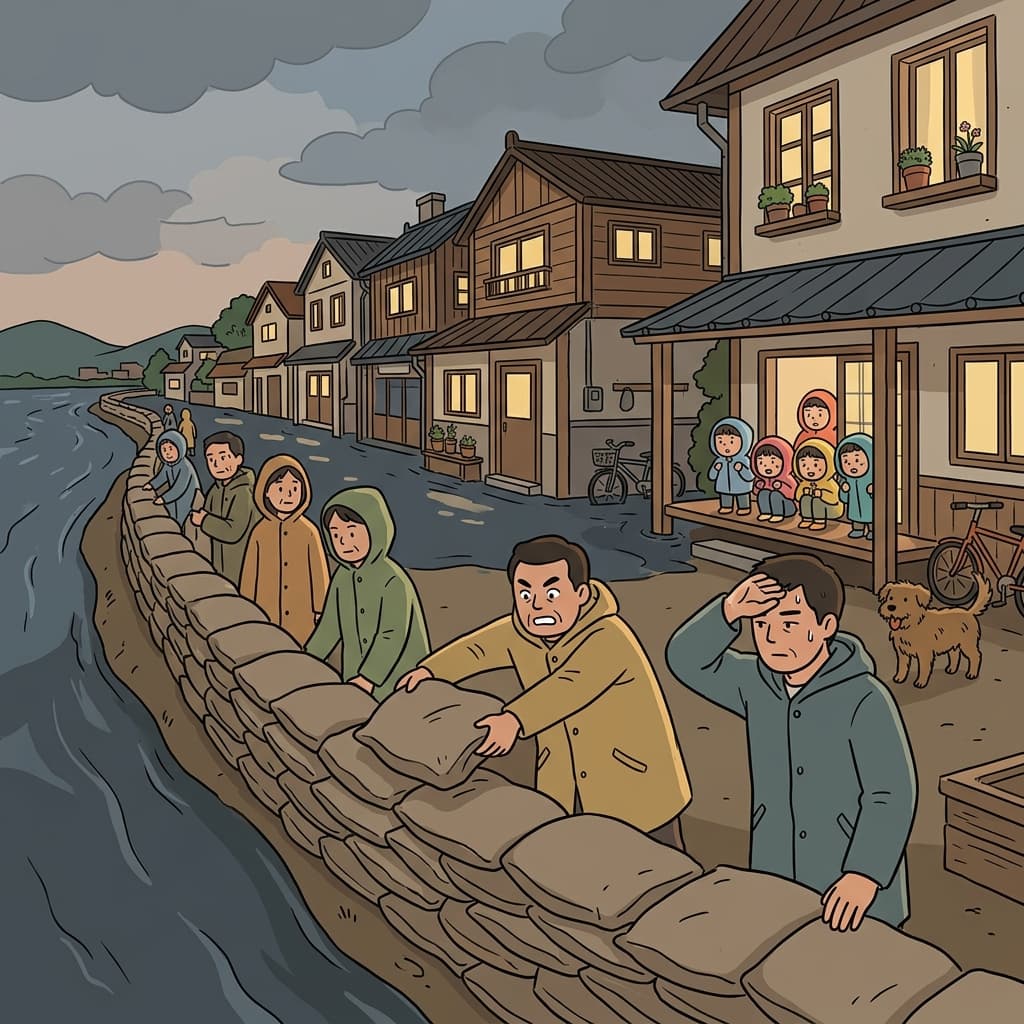
Sandbags mitigate the flood damage before it reaches the homes.

MITT(oven glove) + GATE(door) — wearing a thick oven MITT to grab the burning iron GATE managed to perfectly mitigate the heat.

Placing a thick, soft foam cushion under the heavy falling weight successfully managed to mitigate the damage to the wooden floor.
Got the picture? Now let's practice.
🎤Pronunciation
🌳Etymology
Origin
From Latin 'mitigare,' composed of 'mitis' (mild, soft) and 'agere' (to make or do). The word originally meant 'to make mild or soft' and evolved to mean 'to make less severe or harmful.'
Breakdown
mit- (mild, soft, from Latin mitis) + -ig- (connecting element) + -ate (verb suffix meaning 'to make or cause') = mitigate (to make less severe)
🎵Rhyme
🔗Collocations
📝Examples
“He tried to mitigate his boss's anger by bringing coffee and donuts to the Monday meeting.”
“The government announced measures to mitigate the economic crisis.”
“She wore sunglasses to mitigate the embarrassment of her terrible haircut.”
“Advanced technology can help mitigate natural disasters.”
📚Related Words
Want to master 27,000+ words?
Sign up free for flashcards & quizzes.