on the contrary — used to introduce a statement that contrasts with or seems to contradict something that has been said previously
Part of speech: ADVERB
Definition: used to introduce a statement that contrasts with or seems to contradict something that has been said previously
Pronunciation (IPA): /ɑːn ðə ˈkɑːntreri/
Example Sentences
- I expected the exam to be easy. On the contrary, it was the hardest test I've ever taken!
- My mom said cleaning my room would be boring. On the contrary, I found three missing socks and my old diary!
- People think learning English is stressful. On the contrary, it opens up a whole new world of opportunities.
on the contrary
ADVERB[/ɑːn ðə ˈkɑːntreri/]
used to introduce a statement that contrasts with or seems to contradict something that has been said previously
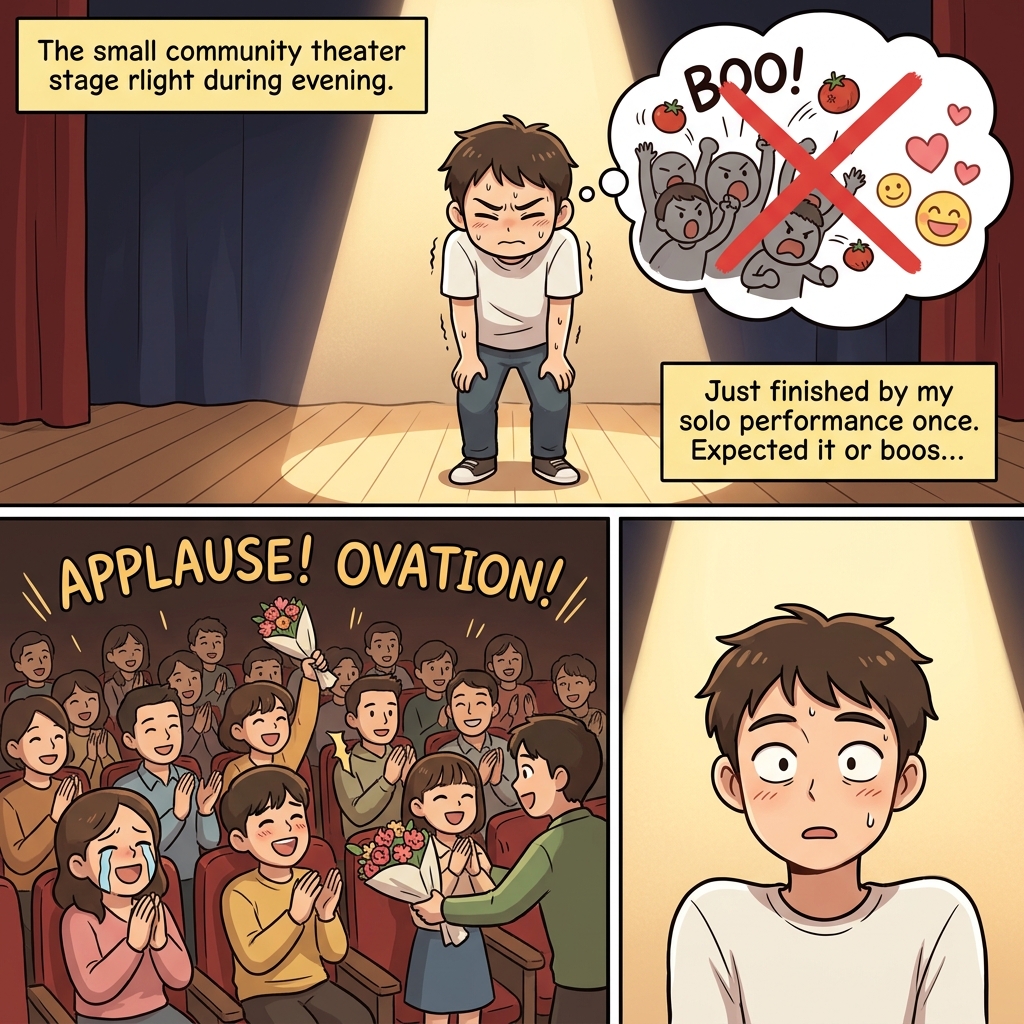
He expected boos, but on the contrary, the crowd cheered loudly.
Got the picture? Now let's practice.
🎤Pronunciation
🌳Etymology
Origin
From Old French 'contraire' meaning 'opposite,' derived from Latin 'contrarius' (against, opposite). The phrase combines 'on' (used to indicate position or basis) with 'contrary' (opposed in nature or direction).
Breakdown
on (preposition, indicating basis/position) + the (definite article) + contrary (from Latin contra- (against) + -arius (adjective suffix)) = on the contrary (used to contradict a previous statement)
🎵Rhyme
🔗Collocations
📝Examples
“I expected the exam to be easy. On the contrary, it was the hardest test I've ever taken!”
“My mom said cleaning my room would be boring. On the contrary, I found three missing socks and my old diary!”
“People think learning English is stressful. On the contrary, it opens up a whole new world of opportunities.”
“He thought his joke would make everyone laugh. On the contrary, everyone just stared at him in awkward silence.”
📚Related Words
Synonyms
Antonyms
Related
Want to master 19,000+ words?
Sign up free for flashcards & quizzes.