epitaph — an inscription on a tombstone or monument in memory of the person buried there
Part of speech: NOUN
Definition: an inscription on a tombstone or monument in memory of the person buried there
Pronunciation (IPA): /ˈepɪtæf/
Example Sentences
- His epitaph simply read: 'He always returned his library books on time.'
- The ancient epitaph was so worn that archaeologists could barely read it.
- She wrote her own epitaph: 'Finally, some peace and quiet!'
epitaph
NOUN[/ˈepɪtæf/]
an inscription on a tombstone or monument in memory of the person buried there
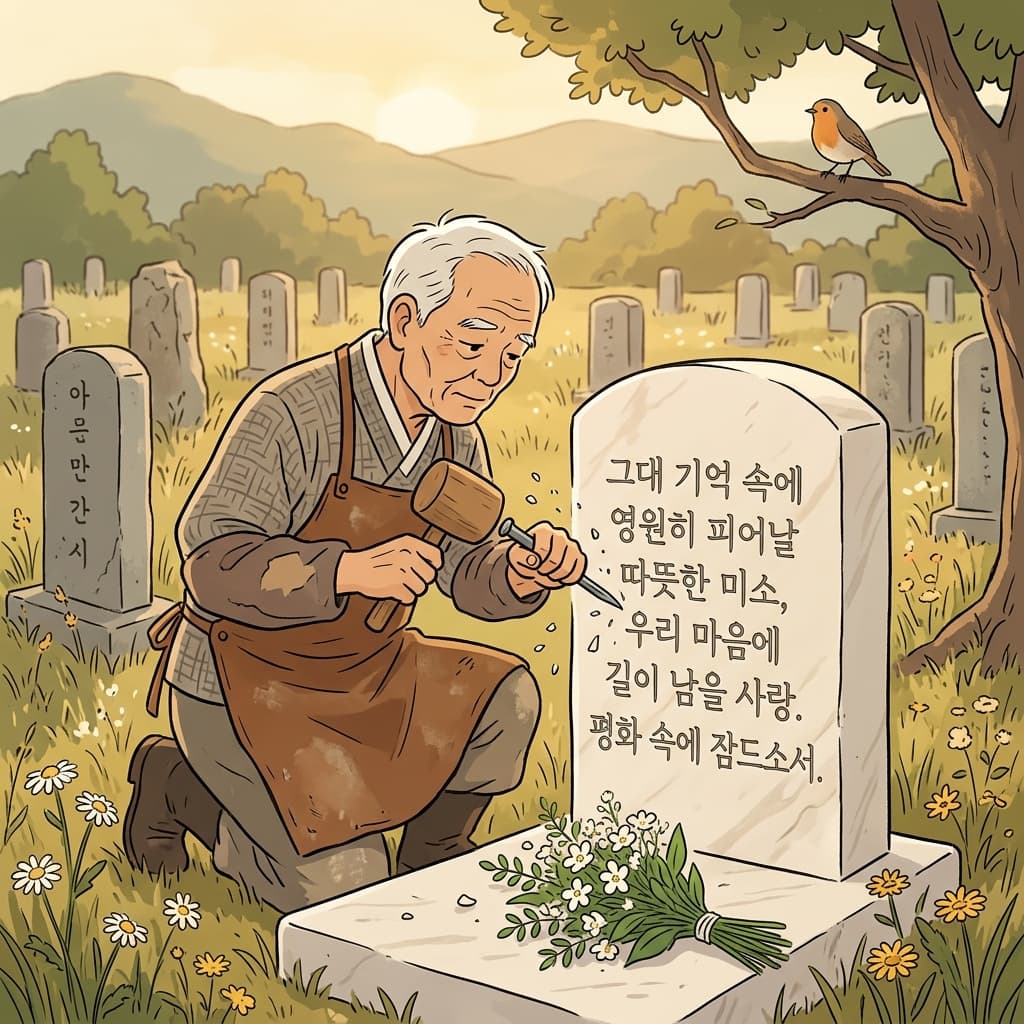
The stonemason carves a heartfelt epitaph onto the marble gravestone.

Epi was taff (tough) - the ultimate epitaph tribute!

Reading the epitaph with his staff, the old man couldn't help but laugh
Got the picture? Now let's practice.
🎤Pronunciation
🌳Etymology
Origin
From Greek 'epitaphios' meaning 'of or for a funeral,' derived from 'epi-' (upon) and 'taphos' (tomb). The word entered English via Latin and Old French, referring to inscriptions placed upon tombs.
Breakdown
epi- (upon) + taphos (tomb) = epitaph
🎵Rhyme
🔗Collocations
📝Examples
“His epitaph simply read: 'He always returned his library books on time.'”
“The ancient epitaph was so worn that archaeologists could barely read it.”
“She wrote her own epitaph: 'Finally, some peace and quiet!'”
“The poet's epitaph was written in beautiful verse.”
📚Related Words
Want to master 27,000+ words?
Sign up free for flashcards & quizzes.