reimburse — to pay back money to someone who has spent it for you or lost it because of you
Part of speech: VERB
Definition: to pay back money to someone who has spent it for you or lost it because of you
Pronunciation (IPA): /ˌriːɪmˈbɜːrs/
Example Sentences
- My mom said she'd reimburse me for the pizza if I shared it with my annoying little brother.
- The insurance company will reimburse you for the damaged phone within 30 days.
- I accidentally used my own credit card for the team dinner, but the boss promised to reimburse me before I go bankrupt.
reimburse
VERB[/ˌriːɪmˈbɜːrs/]
to pay back money to someone who has spent it for you or lost it because of you

After the employee paid for the hotel himself, the company reimbursed him for the full amount.

RE(back) + IM(into) + BURS(purse) — the company put the spent money back into his wallet and agreed to reimburse him.
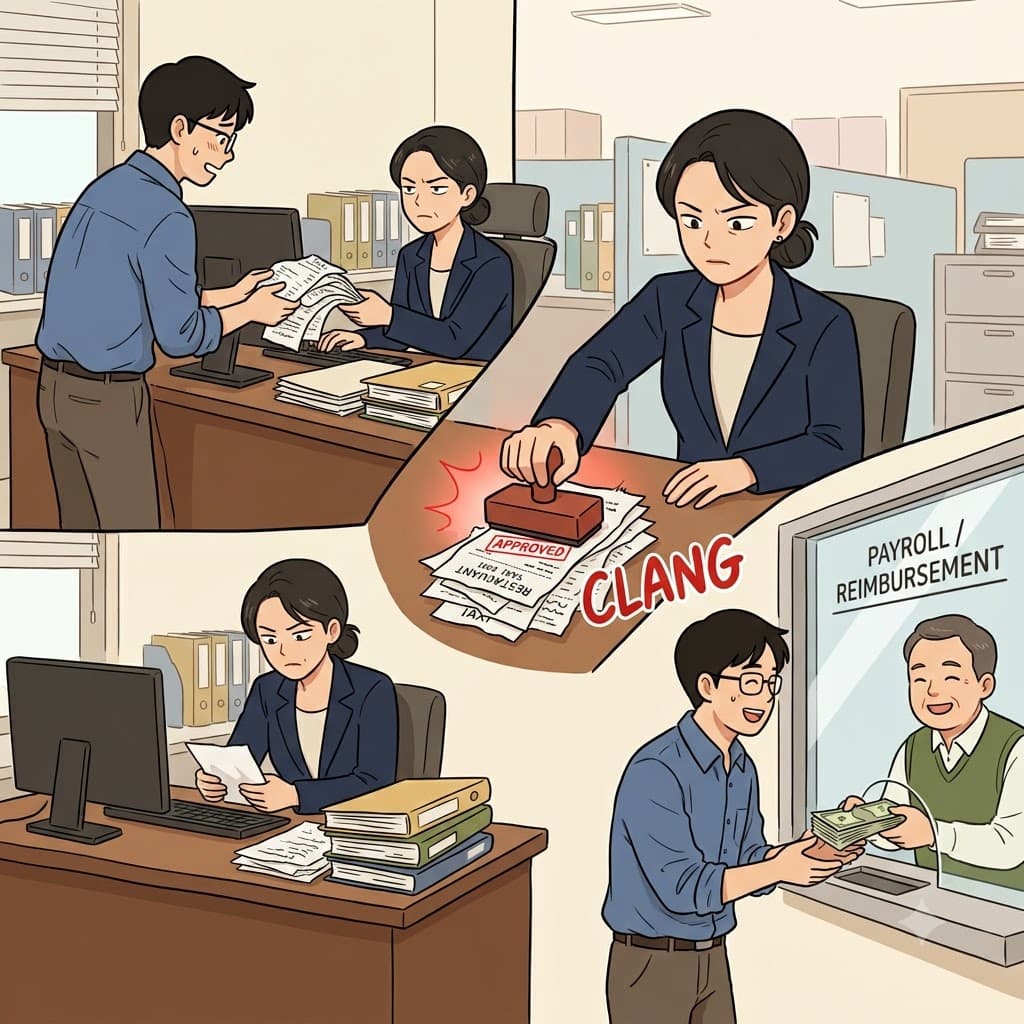
After the manager's official endorsement, the company agreed to reimburse the worker for his expenses.
Got the picture? Now let's practice.
🎤Pronunciation
🌳Etymology
Origin
From Middle French 'rembourser', combining the prefix 're-' (back) with 'bourse' (purse), which comes from Latin 'bursa' meaning purse or money bag. The word originally meant to put money back into a purse.
Breakdown
re- (back) + imburse (from bourse, purse/money) = reimburse (to pay back money to someone)
🎵Rhyme
🔗Collocations
📝Examples
“My mom said she'd reimburse me for the pizza if I shared it with my annoying little brother.”
“The insurance company will reimburse you for the damaged phone within 30 days.”
“I accidentally used my own credit card for the team dinner, but the boss promised to reimburse me before I go bankrupt.”
“The university reimburses students for textbook costs if they maintain a GPA above 3.5.”
📚Related Words
Want to master 27,000+ words?
Sign up free for flashcards & quizzes.