circadian clock — The internal biological mechanism in living organisms that regulates physical, mental, and behavioral changes over a roughly 24-hour cycle.
Part of speech: NOUN
Definition: The internal biological mechanism in living organisms that regulates physical, mental, and behavioral changes over a roughly 24-hour cycle.
Pronunciation (IPA): /sɚˈkeɪdiən klɑːk/
Example Sentences
- My circadian clock is so precise that I wake up at 6 a.m. even without an alarm—unless I stayed up watching dramas until 3.
- Jet lag happens when your circadian clock is out of sync with the local time zone.
- Scientists study the circadian clock to understand how light affects our sleep patterns.
circadian clock
NOUN[/sɚˈkeɪdiən klɑːk/]
The internal biological mechanism in living organisms that regulates physical, mental, and behavioral changes over a roughly 24-hour cycle.
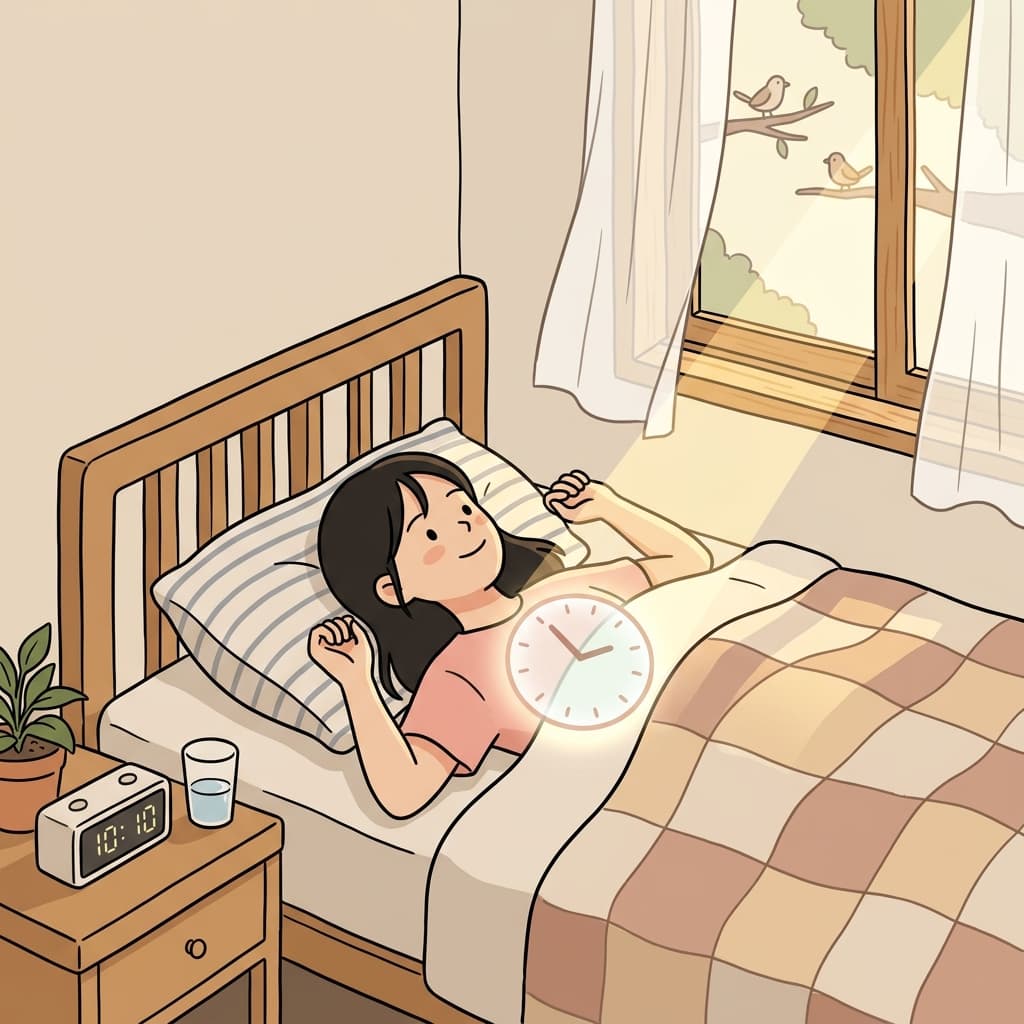
Her circadian clock wakes her at sunrise, even without an alarm.
Got the picture? Now let's practice.
🎤Pronunciation
🌳Etymology
Origin
From Latin 'circa' (about) + 'dies' (day), combined with English 'clock' to describe a roughly 24-hour internal biological cycle.
Breakdown
circa- (about) + di- (day) + -an (adjective suffix) + clock (noun)
🎵Rhyme
🔗Collocations
📝Examples
“My circadian clock is so precise that I wake up at 6 a.m. even without an alarm—unless I stayed up watching dramas until 3.”
“Jet lag happens when your circadian clock is out of sync with the local time zone.”
“Scientists study the circadian clock to understand how light affects our sleep patterns.”
“Working night shifts can seriously mess up your circadian clock, turning you into a very confused vampire.”
📚Related Words
Want to master 27,000+ words?
Sign up free for flashcards & quizzes.