mimic — to copy the way someone speaks, moves, or behaves, especially to make people laugh
Part of speech: VERB
Definition: to copy the way someone speaks, moves, or behaves, especially to make people laugh
Pronunciation (IPA): /ˈmɪmɪk/
Example Sentences
- My parrot can mimic my grandmother's cough so perfectly that I always think she's sick!
- The student learned to mimic native speakers by watching movies.
- He's such a good mimic that he got hired as a voice actor for cartoons.
mimic
VERB[/ˈmɪmɪk/]
to copy the way someone speaks, moves, or behaves, especially to make people laugh
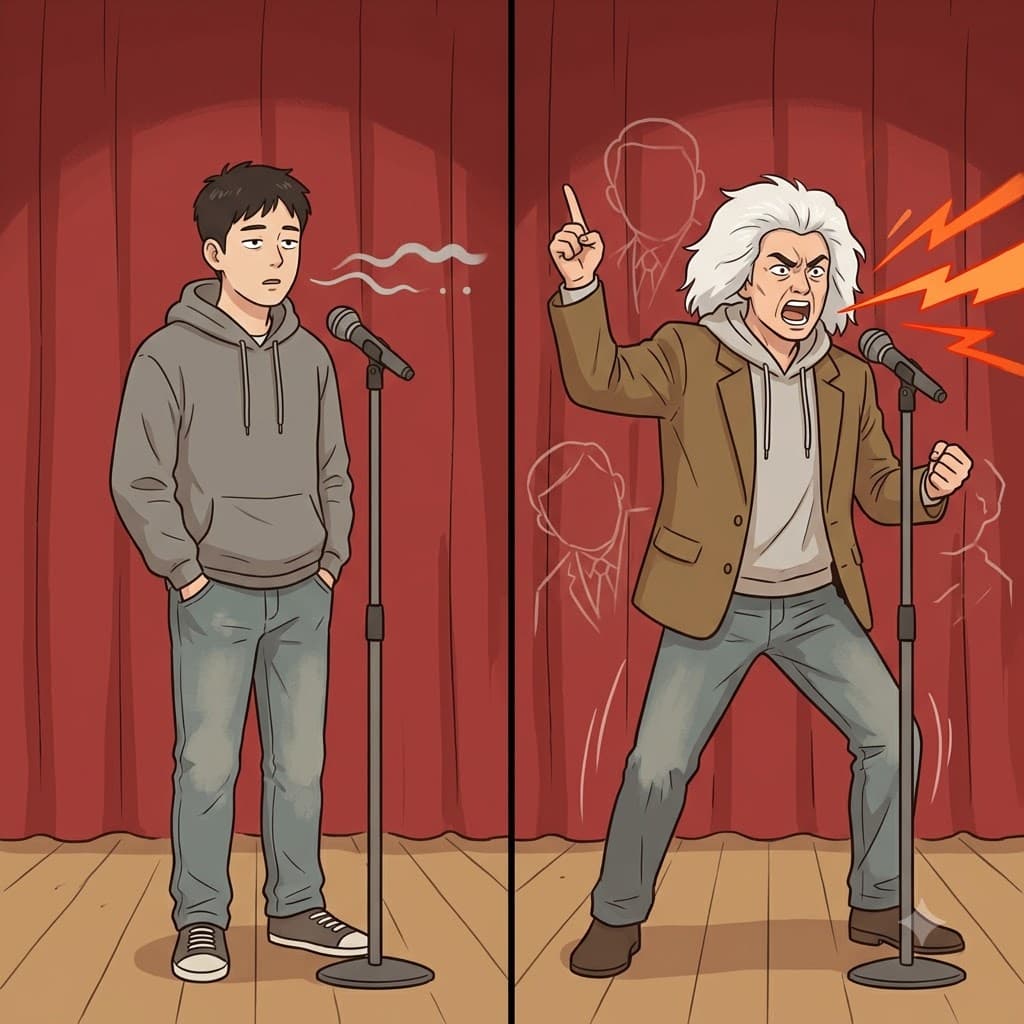
While the man usually spoke in his boring, normal voice, he suddenly changed his tone to perfectly mimic the famous politician.
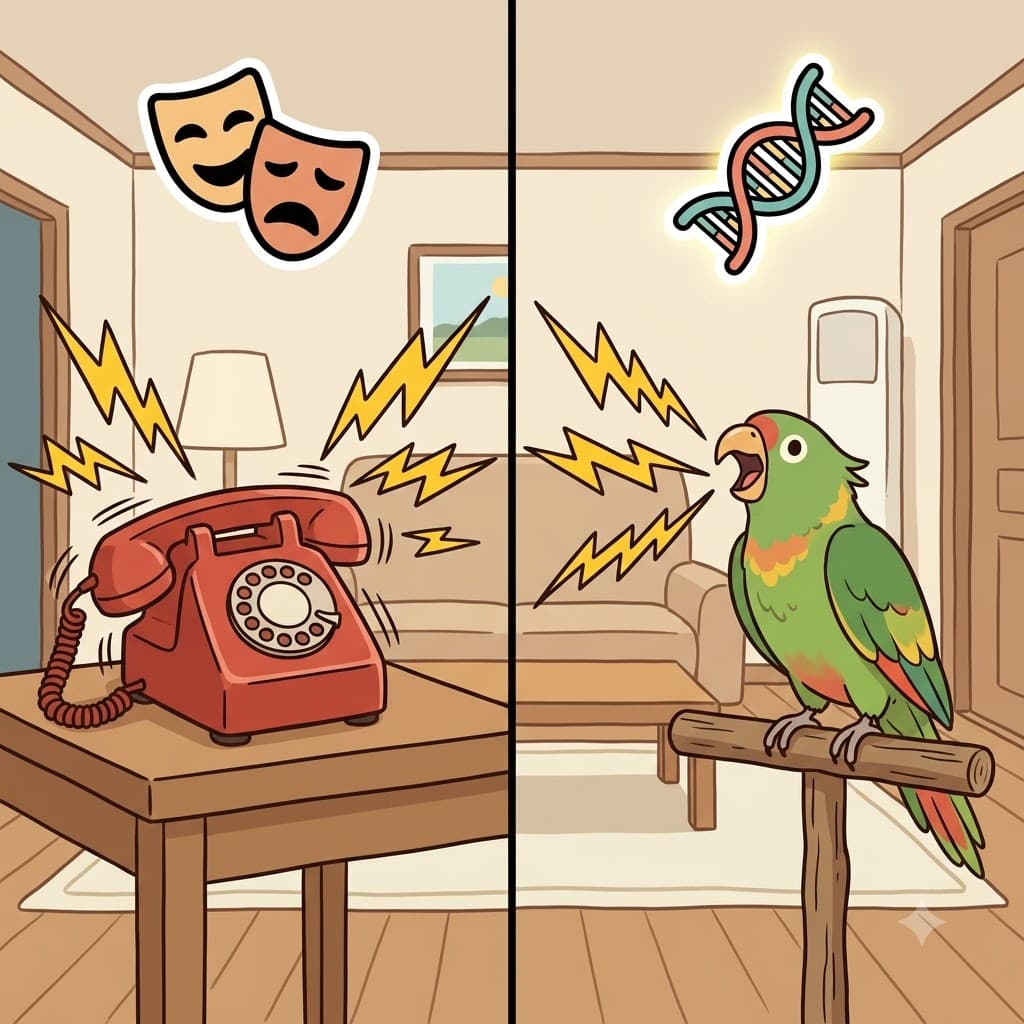
MIM(copy) + IC(nature) — using its natural IC(nature) to perfectly MIM(copy) sounds, the genius parrot loved to mimic the ringing telephone.

Using a cheap plastic magic gimmick, the silly clown tried to precisely mimic the powerful wizard's legendary fire spell.
Got the picture? Now let's practice.
🎤Pronunciation
🌳Etymology
Origin
From Greek 'mimikos' meaning 'imitative' or 'of mimicry', derived from 'mimos' meaning 'mime' or 'actor'. The word entered English through Latin and Greek theatrical traditions.
Breakdown
mim- (imitate, from Greek mimos) + -ic (adjective suffix) = mimic (one who imitates)
🎵Rhyme
🔗Collocations
📝Examples
“My parrot can mimic my grandmother's cough so perfectly that I always think she's sick!”
“The student learned to mimic native speakers by watching movies.”
“He's such a good mimic that he got hired as a voice actor for cartoons.”
“The robot was designed to mimic human movements in manufacturing.”
📚Related Words
Want to master 27,000+ words?
Sign up free for flashcards & quizzes.