understatement — a statement that represents something as smaller, worse, or less important than it actually is
Part of speech: NOUN
Definition: a statement that represents something as smaller, worse, or less important than it actually is
Pronunciation (IPA): /ˈʌndərsteɪtmənt/
Example Sentences
- Calling Einstein 'pretty smart' is a bit of an understatement.
- To say I was 'slightly annoyed' when my phone died during the final exam would be an understatement.
- His comment that the presentation was 'interesting' was clearly an understatement - everyone was amazed.
understatement
NOUN[/ˈʌndərsteɪtmənt/]
a statement that represents something as smaller, worse, or less important than it actually is

Calling the serious damage "a small scratch" was quite an understatement.

Calling the award "a little success" was an understatement. (⬇️ Less + 🗣️ Statement → Understatement)
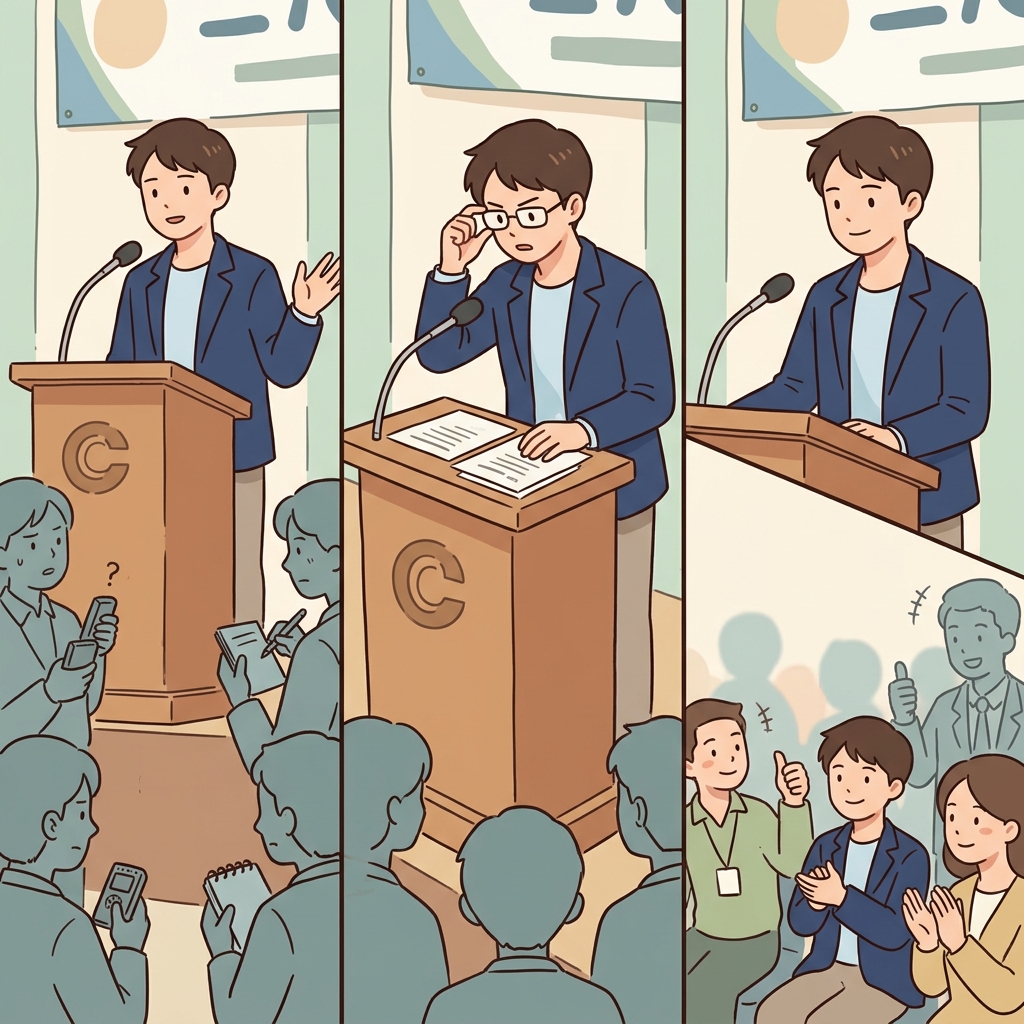
The understatement was corrected before exaggeration, and everyone appreciated the truthful report.
Got the picture? Now let's practice.
🎤Pronunciation
🌳Etymology
Origin
Derived from the prefix 'under-' (meaning below or insufficiently) combined with 'statement' (from Latin 'statum', past participle of 'stare', meaning to stand or state). The word emerged in English during the 17th century to describe the rhetorical practice of deliberately representing something as less significant than it truly is.
Breakdown
under- (below, insufficiently) + state (from Latin statum, to stand/state) + -ment (noun suffix indicating action or result) = understatement
🎵Rhyme
🔗Collocations
📝Examples
“Calling Einstein 'pretty smart' is a bit of an understatement.”
“To say I was 'slightly annoyed' when my phone died during the final exam would be an understatement.”
“His comment that the presentation was 'interesting' was clearly an understatement - everyone was amazed.”
“Saying that winning the lottery would be 'nice' is quite an understatement.”
📚Related Words
Synonyms
Antonyms
Related
Want to master 19,000+ words?
Sign up free for flashcards & quizzes.