melon — A large round sweet fruit with thick skin and juicy flesh
Part of speech: NOUN
Definition: A large round sweet fruit with thick skin and juicy flesh
Pronunciation (IPA): /ˈmelən/
Example Sentences
- The detective realized the suspect wasn't a felon, just someone who stole melons!
- My grandmother grows the sweetest melons in her garden.
- He dropped the melon and it split like a broken heart.
melon
NOUN[/ˈmelən/]
A large round sweet fruit with thick skin and juicy flesh
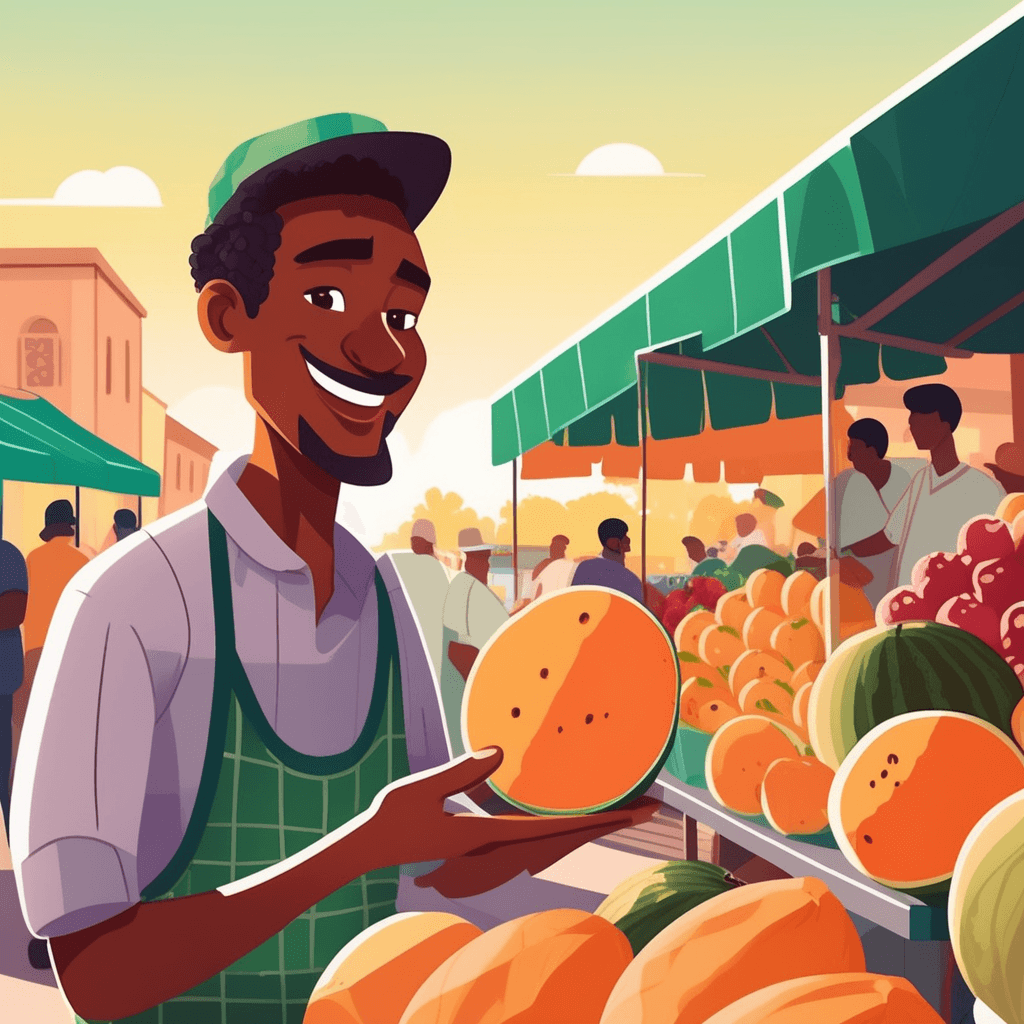
a friendly vendor holds up a large round cantaloupe with thick orange skin and cuts it open with a knife. The melon splits to reveal bright orange juicy flesh with seeds in the center cavity. Sweet juice drips from the cut fruit as the vendor offers a slice to a young customer. The customer's eyes light up with delight as they reach for the fresh piece. Other shoppers nearby admire the display of various melons on the wooden stand. a large round sweet fruit with thick skin and juicy flesh
Got the picture? Now let's practice.
🎤Pronunciation
🌳Etymology
Origin
The word 'melon' derives from Ancient Greek 'melon', which originally meant 'apple'. Over time, this term was semantically broadened to refer to larger, sweeter fruits, eventually becoming associated specifically with the cultivated melon as we know it today.
Breakdown
melon (from Greek melon, originally 'apple') → semantic shift to 'large sweet fruit' → modern 'melon'. The root underwent semantic extension rather than morphological decomposition.
🎵Rhyme
🔗Collocations
📝Examples
“The detective realized the suspect wasn't a felon, just someone who stole melons!”
“My grandmother grows the sweetest melons in her garden.”
“He dropped the melon and it split like a broken heart.”
“The hamster tried to eat a melon bigger than itself!”
📚Related Words
Want to master 27,000+ words?
Sign up free for flashcards & quizzes.