dig — to break up and move earth with a tool or machine
Part of speech: VERB
Definition: to break up and move earth with a tool or machine
Pronunciation (IPA): /dɪɡ/
Example Sentences
- My dog loves to dig holes in the backyard and then forget where he buried his bones.
- I really dig your new haircut - it makes you look like a movie star!
- The treasure hunters spent all day digging but only found an old boot and three bottle caps.
dig
VERB[/dɪɡ/]
to break up and move earth with a tool or machine
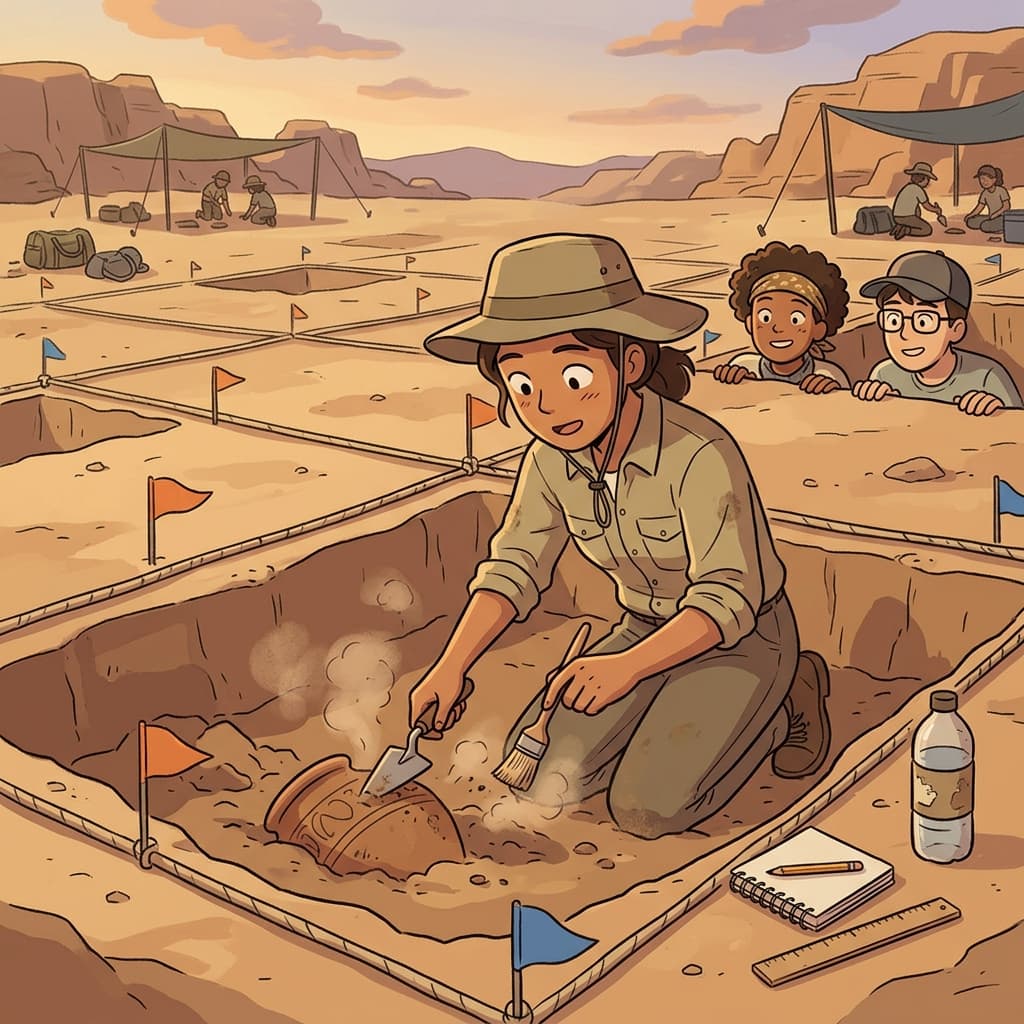
The archaeologist begins to dig carefully around the buried ancient pottery.
Got the picture? Now let's practice.
🎤Pronunciation
🌳Etymology
Origin
The word derives from Middle English 'diggen', meaning 'to break up or turn over earth'. The ultimate origin remains uncertain, though some etymologists suggest possible connections to Old Norse or Proto-Germanic roots. By the mid-20th century, the term acquired figurative slang usage meaning 'to like or appreciate'.
Breakdown
Middle English 'diggen' (to dig, to excavate) reduced to modern English 'dig'. The morphological simplification reflects the phonetic erosion common in Middle to Early Modern English transitions.
🎵Rhyme
🔗Collocations
📝Examples
“My dog loves to dig holes in the backyard and then forget where he buried his bones.”
“I really dig your new haircut - it makes you look like a movie star!”
“The treasure hunters spent all day digging but only found an old boot and three bottle caps.”
“Students need to dig deep into their studies to pass the exam.”
📚Related Words
Want to master 27,000+ words?
Sign up free for flashcards & quizzes.