buffoonery — ridiculous or foolish behavior; clowning
Part of speech: NOUN
Definition: ridiculous or foolish behavior; clowning
Pronunciation (IPA): /bəˈfuːnəri/
Example Sentences
- The CEO's buffoonery during the serious board meeting left everyone speechless.
- His constant buffoonery made it hard for colleagues to take him seriously.
- The politician's buffoonery on social media became a viral sensation.
buffoonery
NOUN[/bəˈfuːnəri/]
ridiculous or foolish behavior; clowning
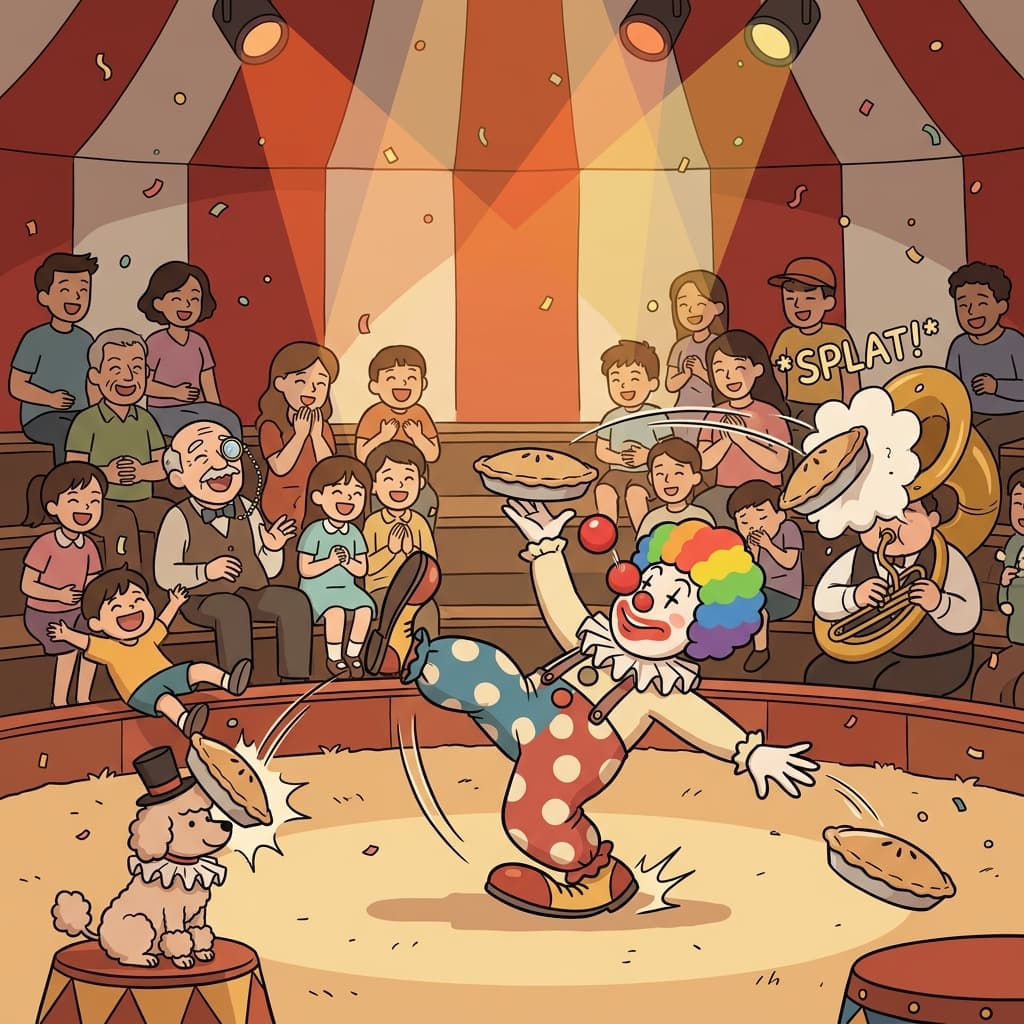
The clown's buffoonery had the entire circus tent roaring with laughter.

His buffoonery with jewelry brings pure tomfoolery!
Got the picture? Now let's practice.
🎤Pronunciation
🌳Etymology
Origin
From Italian 'buffone' meaning court jester or clown, originally referring to performers who puffed out their cheeks while acting comically. The word entered English in the 16th century from Italian comedy traditions.
Breakdown
buffoon (Italian 'buffone' = jester/clown) + -ery (noun suffix meaning 'behavior or practice of')
🎵Rhyme
🔗Collocations
📝Examples
“The CEO's buffoonery during the serious board meeting left everyone speechless.”
“His constant buffoonery made it hard for colleagues to take him seriously.”
“The politician's buffoonery on social media became a viral sensation.”
“What started as innocent buffoonery quickly turned into an embarrassing situation.”
📚Related Words
Want to master 27,000+ words?
Sign up free for flashcards & quizzes.