medieval — relating to the Middle Ages in European history (roughly 5th to 15th century)
Part of speech: ADJECTIVE
Definition: relating to the Middle Ages in European history (roughly 5th to 15th century)
Pronunciation (IPA): /ˌmidiˈivəl/
Example Sentences
- My history teacher's teaching style is so medieval that I expect him to start using a quill pen any day now.
- The medieval manuscript was carefully preserved in the museum.
- She complained that her dorm's internet speed was practically medieval.
medieval
ADJECTIVE[/ˌmidiˈivəl/]
relating to the Middle Ages in European history (roughly 5th to 15th century)
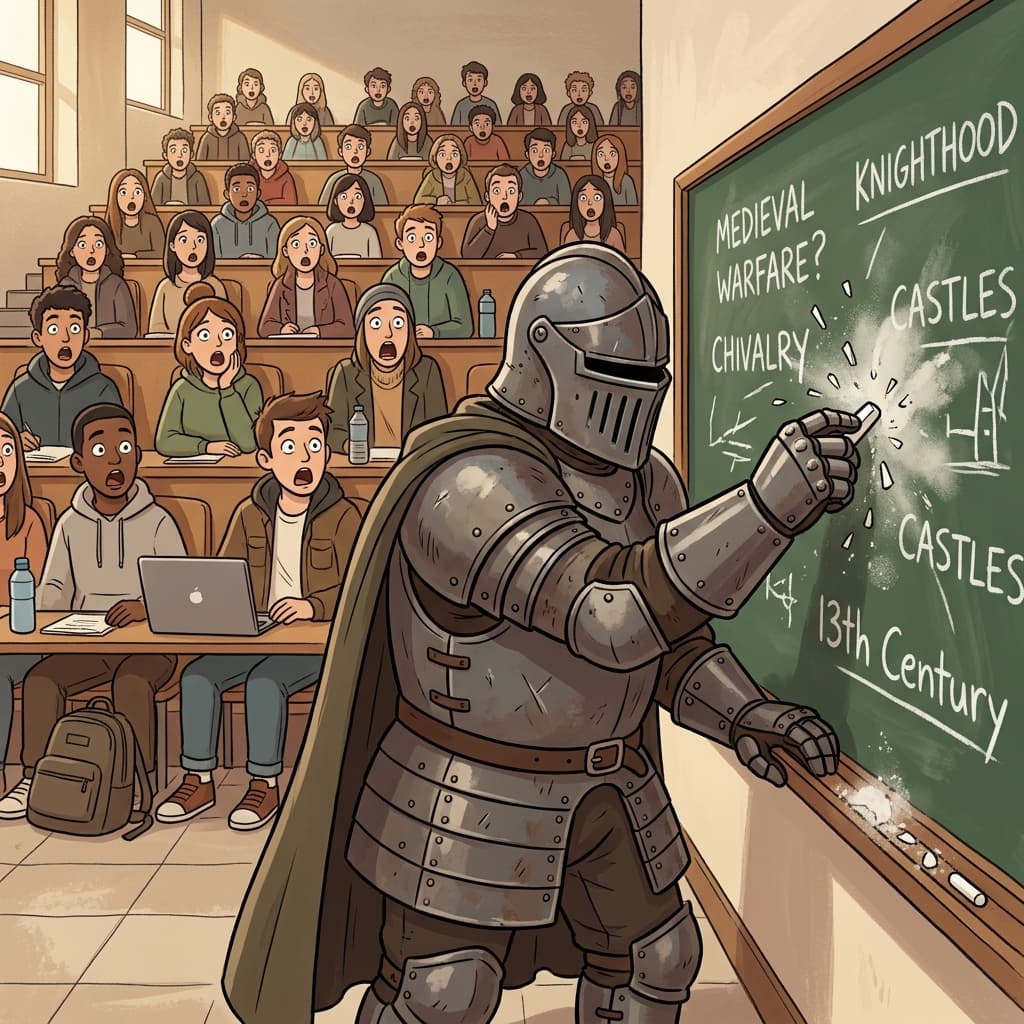
The history professor’s dedication was extreme; he arrived at the lecture wearing a complete set of heavy medieval armor.
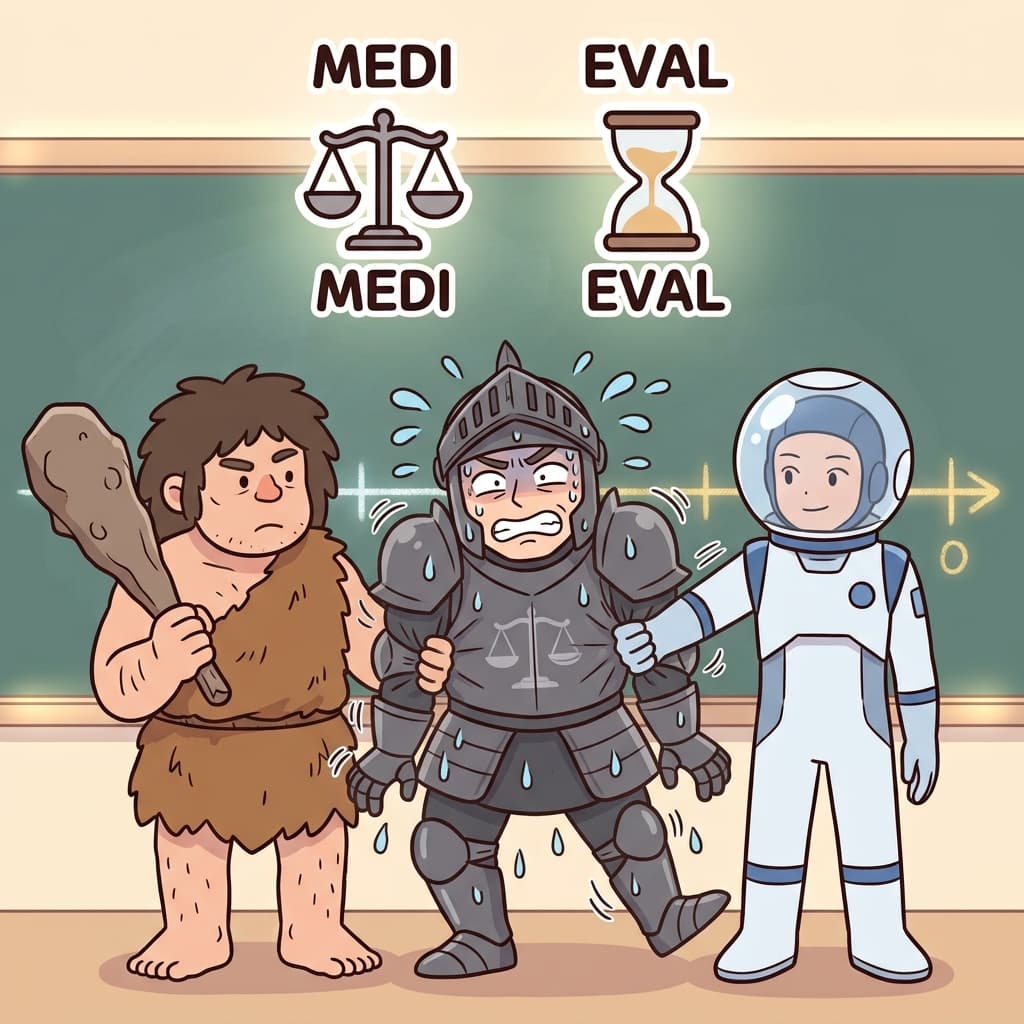
MEDI(middle) + EVAL(age) — the medieval knight was squished directly in the middle of history.

The careful retrieval of the rusted medieval sword accidentally unleashed a terrifying ancient evil.
Got the picture? Now let's practice.
🎤Pronunciation
🌳Etymology
Origin
The word derives from Latin, combining 'medius' (middle) and 'aevum' (age or era). It literally means 'middle age', referring to the period between antiquity and the modern era.
Breakdown
medi- (from Latin medius, meaning middle) + -eval (from Latin aevum, meaning age or era).
🎵Rhyme
🔗Collocations
📝Examples
“My history teacher's teaching style is so medieval that I expect him to start using a quill pen any day now.”
“The medieval manuscript was carefully preserved in the museum.”
“She complained that her dorm's internet speed was practically medieval.”
“Medieval knights wore heavy armor for protection in battle.”
📚Related Words
Want to master 27,000+ words?
Sign up free for flashcards & quizzes.