profit — money gained from business or investment after expenses
Part of speech: NOUN
Definition: money gained from business or investment after expenses
Pronunciation (IPA): /ˈprɑːfɪt/
Example Sentences
- My grandmother's secret recipe finally brought profit to our small restaurant.
- He tried to profit from selling his old comic books, but ended up losing money instead.
- The company's profit doubled after they started selling ice cream to penguins in Antarctica.
profit
NOUN[/ˈprɑːfɪt/]
money gained from business or investment after expenses

After months of hard work, the small bakery finally made a real profit.
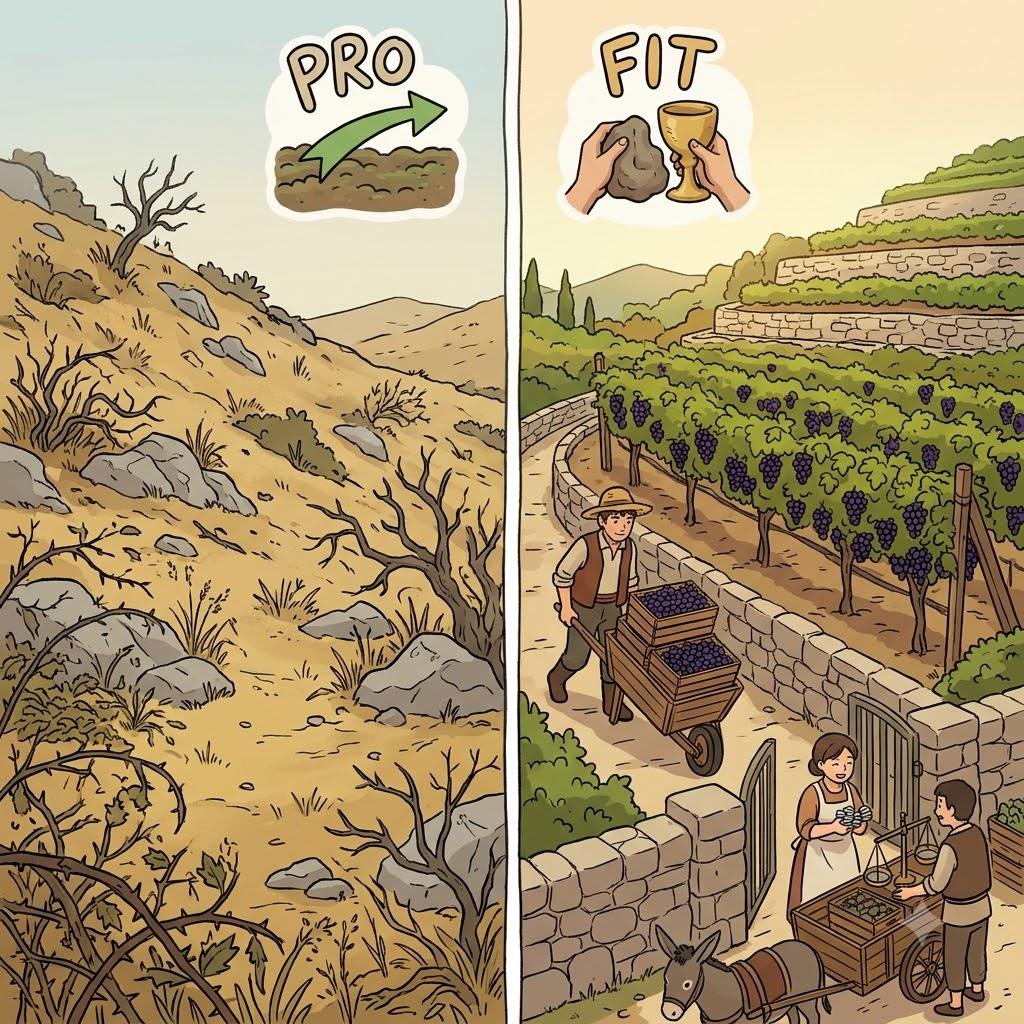
By cultivating the rocky hillside, the farmer turned his hard work into profit, filling crates with grapes to sell at the market. (PROFIT is historically connected to Latin proficere, meaning “to advance” or “to make progress,” from pro- (forward) and facere (to make or do).)

The old bookseller seemed like a prophet when he predicted that the rare first edition would bring the collector a huge profit at auction.
Got the picture? Now let's practice.
🎤Pronunciation
🌳Etymology
Origin
Profit derives from Latin 'profectus', meaning 'advanced' or 'made progress', from the verb 'proficere' (to go forward). The word entered English through Middle French 'profit', originally denoting progress or advancement before evolving to mean economic gain or financial benefit.
Breakdown
pro- (forward) + -fectus (made, from facere, to make). The root combines the prefix indicating forward motion with a past participle form indicating the completed action of advancement.
🎵Rhyme
🔗Collocations
📝Examples
“My grandmother's secret recipe finally brought profit to our small restaurant.”
“He tried to profit from selling his old comic books, but ended up losing money instead.”
“The company's profit doubled after they started selling ice cream to penguins in Antarctica.”
“Students can profit greatly from participating in exchange programs.”
📚Related Words
Want to master 17,000+ words?
Sign up free for flashcards & quizzes.