delirium — A state of mental confusion and excitement, often with hallucinations, typically caused by fever or illness
Part of speech: NOUN
Definition: A state of mental confusion and excitement, often with hallucinations, typically caused by fever or illness
Pronunciation (IPA): /dɪˈlɪriəm/
Example Sentences
- After three days of high fever, grandpa started talking to his deceased cat in complete delirium.
- The doctor explained that delirium is common in elderly patients after surgery.
- In her delirium, she insisted that the nurses were actually dancing penguins.
delirium
NOUN[/dɪˈlɪriəm/]
A state of mental confusion and excitement, often with hallucinations, typically caused by fever or illness

The fevered patient mumbles in delirium, seeing dragons on the hospital ceiling.
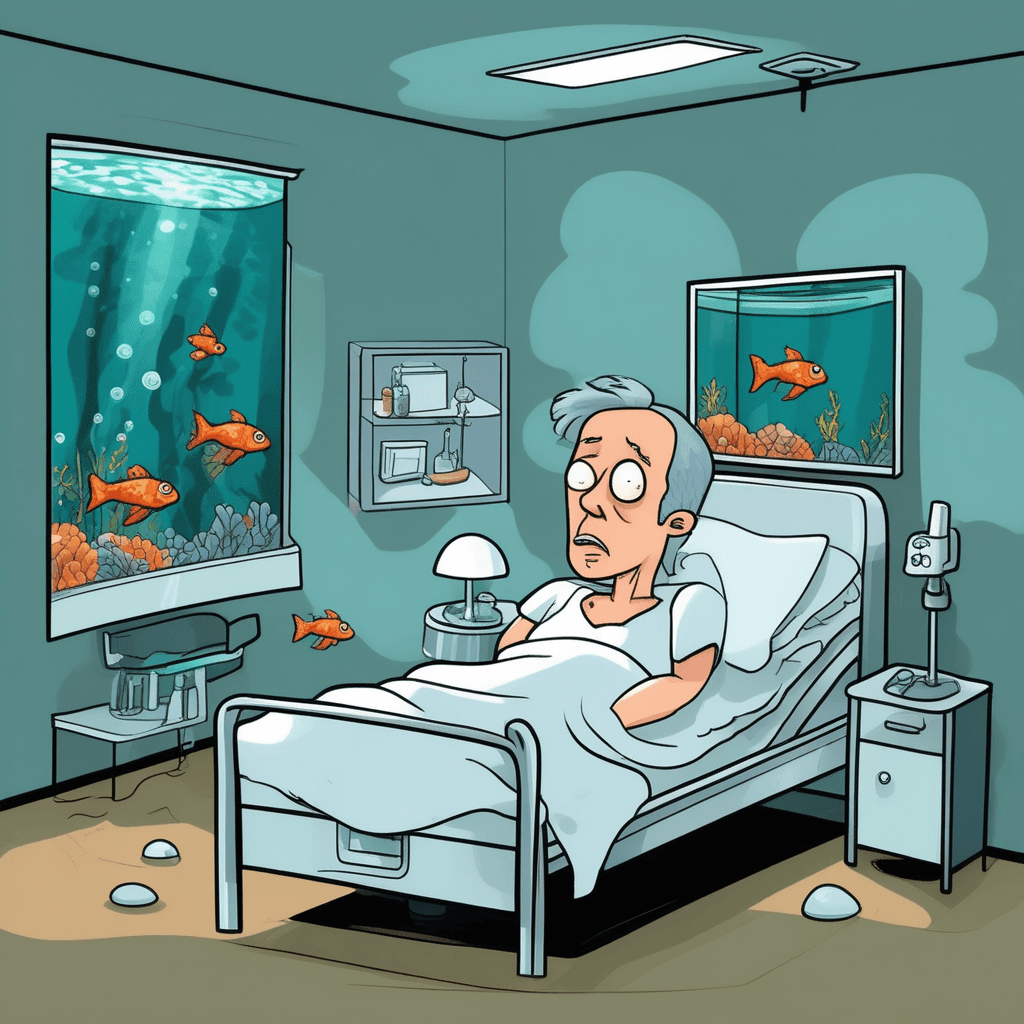
In delirium, fish escape the aquarium
Got the picture? Now let's practice.
🎤Pronunciation
🌳Etymology
Origin
From Latin delirium, derived from delirare meaning 'to go out of the furrow' or 'to deviate from a straight line.' The term originated from the image of a ploughman losing his mental composure and veering off course while ploughing a field, metaphorically representing mental disturbance or confusion.
Breakdown
de- (away, out) + lira (furrow, ridge) + -ium (noun suffix). The root lira refers to the straight furrows made by ploughing, while the prefix de- indicates departure or deviation from the normal path.
🎵Rhyme
🔗Collocations
📝Examples
“After three days of high fever, grandpa started talking to his deceased cat in complete delirium.”
“The doctor explained that delirium is common in elderly patients after surgery.”
“In her delirium, she insisted that the nurses were actually dancing penguins.”
“The medication helped reduce his delirium within 24 hours.”
📚Related Words
Want to master 27,000+ words?
Sign up free for flashcards & quizzes.