depart — to leave a place, especially to start a journey
Part of speech: VERB
Definition: to leave a place, especially to start a journey
Pronunciation (IPA): /dɪˈpɑːrt/
Example Sentences
- My flight departs so early that even the roosters are still sleeping.
- She decided to depart from her usual coffee routine and try tea instead.
- The bus departed without me, leaving me standing there like a forgotten statue.
depart
VERB[/dɪˈpɑːrt/]
to leave a place, especially to start a journey
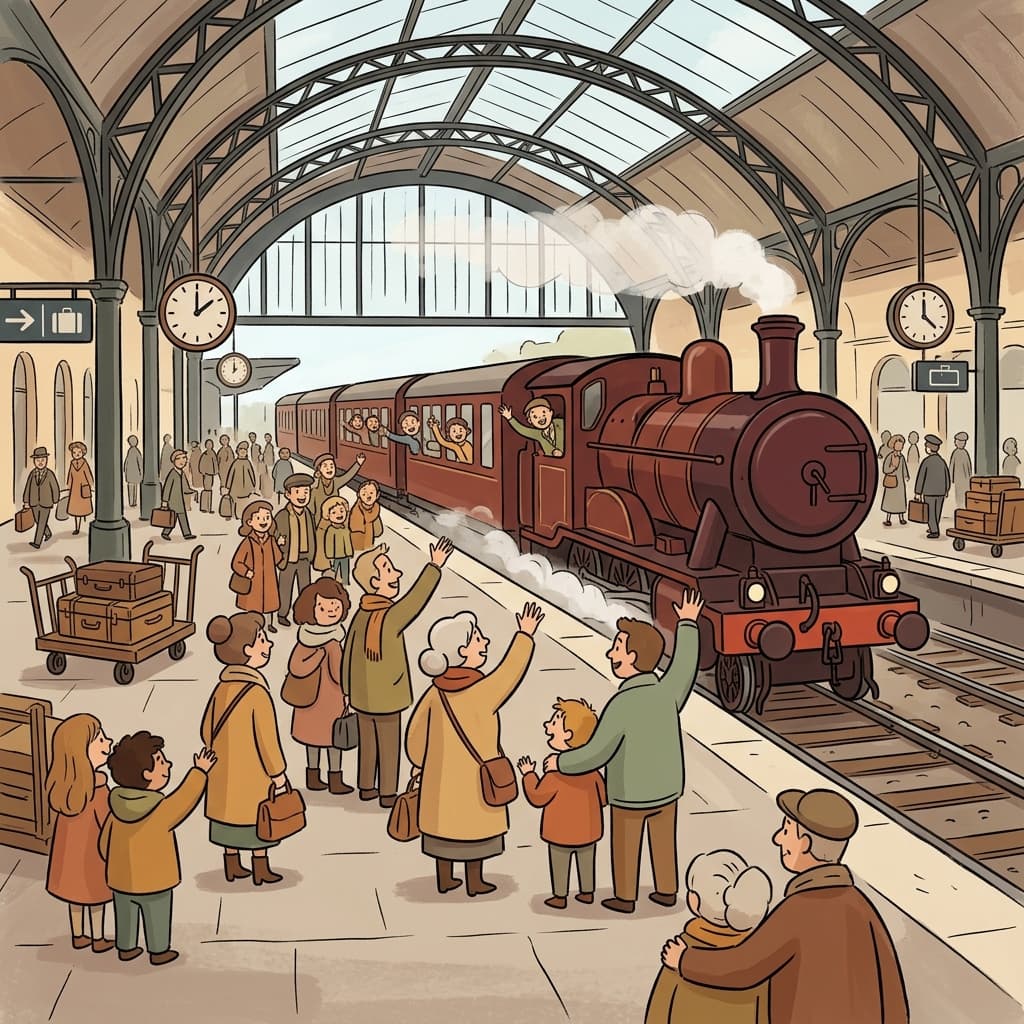
The train departed the station right on time.

The ship departed before sunrise. (DE + PART = DEPART → to leave your current part or place behind)

Depart for a new start and follow your heart.
Got the picture? Now let's practice.
🎤Pronunciation
🌳Etymology
Origin
From Old French 'departir', composed of the prefix 'de-' (away, from) and 'partir' (to divide, to leave), which comes from Latin 'partire' (to divide or share).
Breakdown
de- (away, from) + part (divide, go) + -ure (act or process) = depart
🎵Rhyme
🔗Collocations
📝Examples
“My flight departs so early that even the roosters are still sleeping.”
“She decided to depart from her usual coffee routine and try tea instead.”
“The bus departed without me, leaving me standing there like a forgotten statue.”
“We must depart from Seoul by 8 AM to catch the connecting flight.”
📚Related Words
Want to master 27,000+ words?
Sign up free for flashcards & quizzes.