innovate — to introduce new ideas, methods, or products
Part of speech: VERB
Definition: to introduce new ideas, methods, or products
Pronunciation (IPA): /ˈɪnəveɪt/
Example Sentences
- My grandmother tried to innovate her kimchi recipe by adding pineapple, but the family nearly staged a revolt.
- Tech companies must constantly innovate or risk becoming as outdated as flip phones.
- Steve Jobs was known for his ability to innovate products that people didn't even know they needed.
innovate
VERB[/ˈɪnəveɪt/]
to introduce new ideas, methods, or products

The company innovated by creating a robot that could sort recycling automatically.

The young inventor innovated by creating a new way to water plants automatically. (IN + NEW + CREATE → innovate means creating something new)
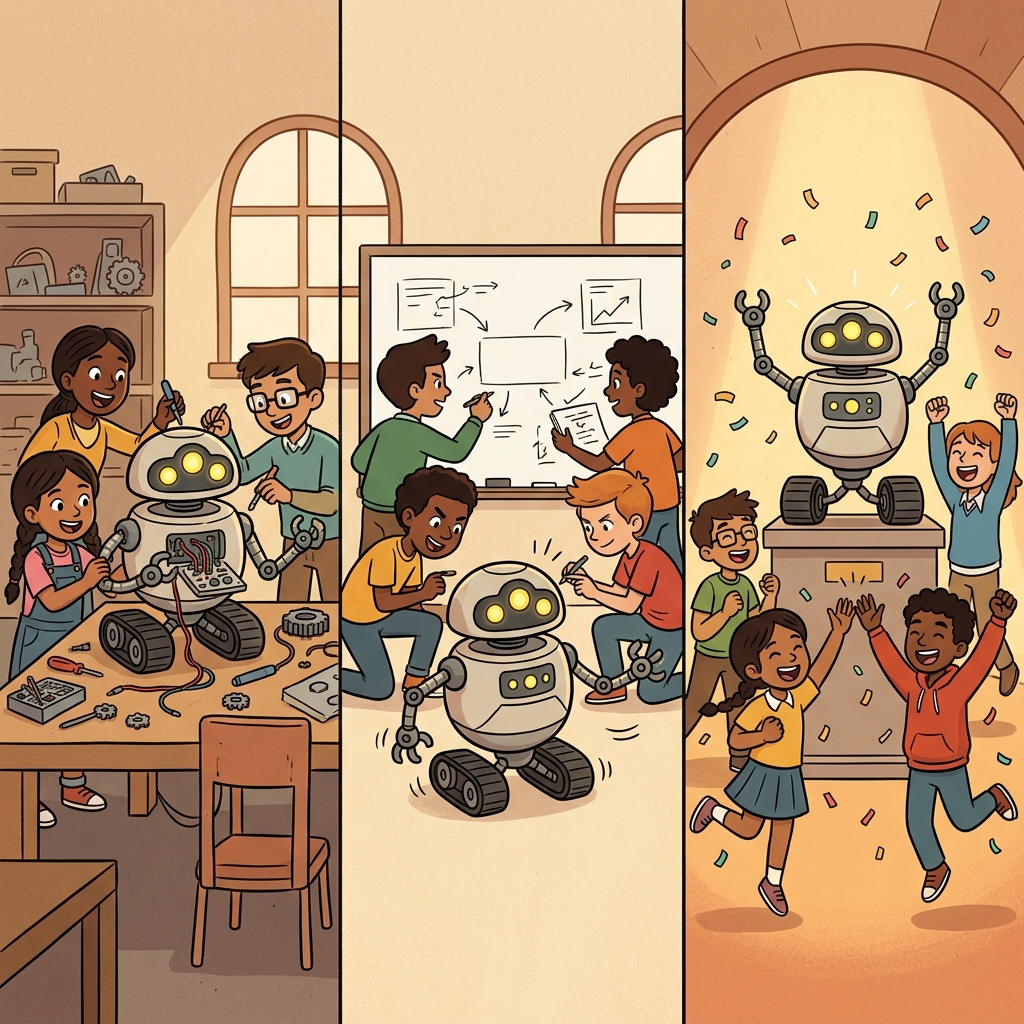
The students innovated by building a new robot, which motivated the team and gave them a reason to celebrate.
Got the picture? Now let's practice.
🎤Pronunciation
🌳Etymology
Origin
The word derives from Latin 'innovatus', the past participle of 'innovare', formed from 'in-' (into) and 'novus' (new), literally meaning 'to bring something new into being'. It entered English usage in the 16th century with the sense of introducing novelty or change.
Breakdown
in- (into) + nov- (new, from Latin novus) + -ate (verb-forming suffix). The morphemes combine to express the action of introducing or creating something new.
🎵Rhyme
🔗Collocations
📝Examples
“My grandmother tried to innovate her kimchi recipe by adding pineapple, but the family nearly staged a revolt.”
“Tech companies must constantly innovate or risk becoming as outdated as flip phones.”
“Steve Jobs was known for his ability to innovate products that people didn't even know they needed.”
“The restaurant decided to innovate by serving ice cream with chopsticks - it was a cool idea but a messy execution.”
📚Related Words
Synonyms
Antonyms
Related
Want to master 19,000+ words?
Sign up free for flashcards & quizzes.