null and void — having no legal validity or effect; completely invalid
Part of speech: ADJECTIVE
Definition: having no legal validity or effect; completely invalid
Pronunciation (IPA): /nʌl ænd vɔɪd/
Example Sentences
- The marriage was null and void because he was already married to someone else.
- My diet plan became null and void the moment I saw the chocolate cake.
- The warranty is null and void if you open the device yourself.
null and void
ADJECTIVE[/nʌl ænd vɔɪd/]
having no legal validity or effect; completely invalid
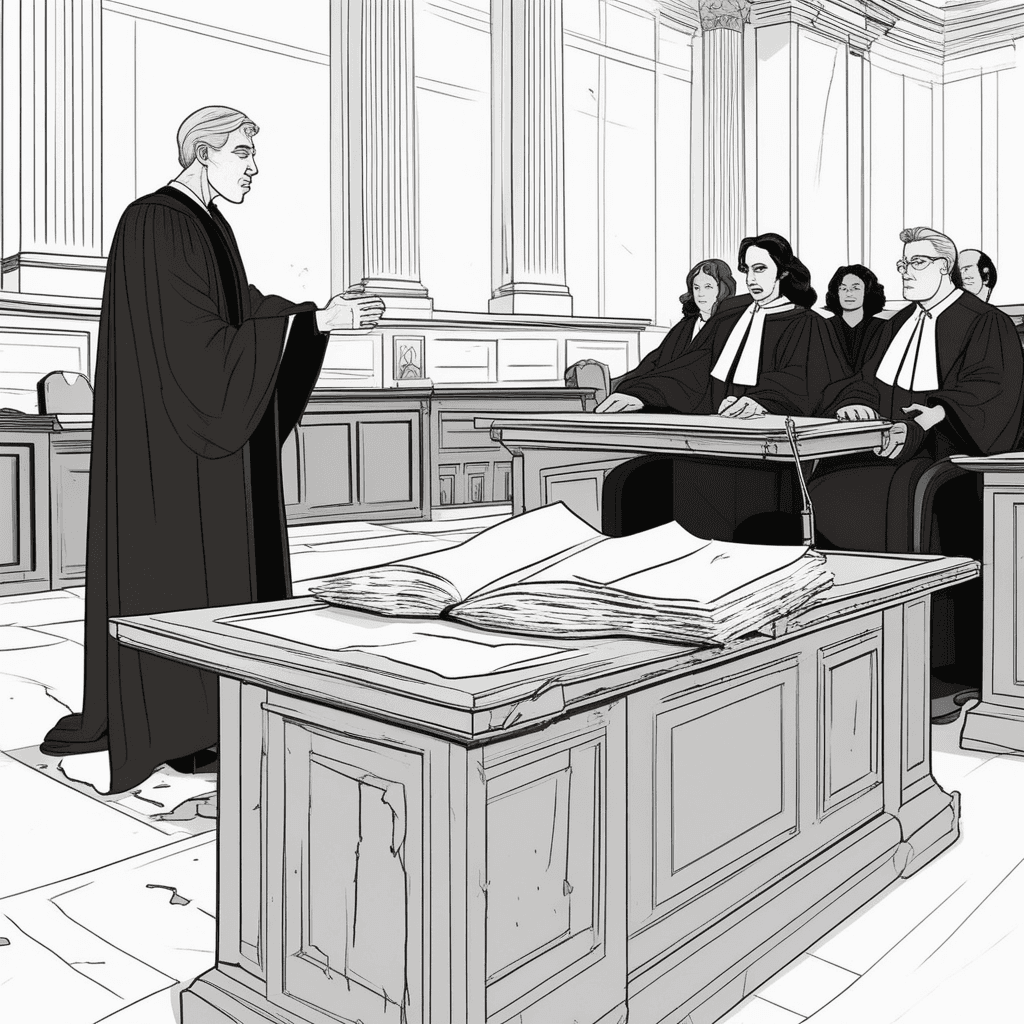
a stern judge in black robes holds up a torn contract with both hands, showing it has been ripped in half. The judge's expression shows authority as they demonstrate the document's worthlessness. The torn pieces clearly show the contract cannot be used anymore because it has lost all legal power. A disappointed businessman in a suit watches from below as his agreement becomes completely useless. Other courtroom observers lean forward to witness the contract being officially invalidated. the document having no legal validity or effect and being completely invalid

Once employed, now destroyed - the contract null and void!
Got the picture? Now let's practice.
🎤Pronunciation
🌳Etymology
Origin
This legal phrase combines Latin 'nullus' (nothing, of no account) and Old French 'voide' (empty, vacant), both expressing the concept of nothingness. The pairing emerged in medieval legal terminology to emphasize complete invalidity or non-existence of legal effect.
Breakdown
null (from Latin nullus, meaning 'nothing' or 'of no account') + void (from Old French voide, meaning 'empty' or 'vacant'). The redundant pairing emphasizes absolute nullification in legal contexts.
🎵Rhyme
🔗Collocations
📝Examples
“The marriage was null and void because he was already married to someone else.”
“My diet plan became null and void the moment I saw the chocolate cake.”
“The warranty is null and void if you open the device yourself.”
“His excuse became null and void when we found the empty pizza box in his room.”
📚Related Words
Want to master 27,000+ words?
Sign up free for flashcards & quizzes.