pillage — to steal goods violently from a place, especially during war or civil disorder
Part of speech: VERB
Definition: to steal goods violently from a place, especially during war or civil disorder
Pronunciation (IPA): /ˈpɪlɪdʒ/
Example Sentences
- The pirates didn't just steal treasure; they pillaged the buffet too!
- My teenage brother pillaged the refrigerator again.
- The ancient army pillaged the conquered cities for gold and silver.
pillage
VERB[/ˈpɪlɪdʒ/]
to steal goods violently from a place, especially during war or civil disorder

Vikings pillage the coastal village, hauling away gold and grain.
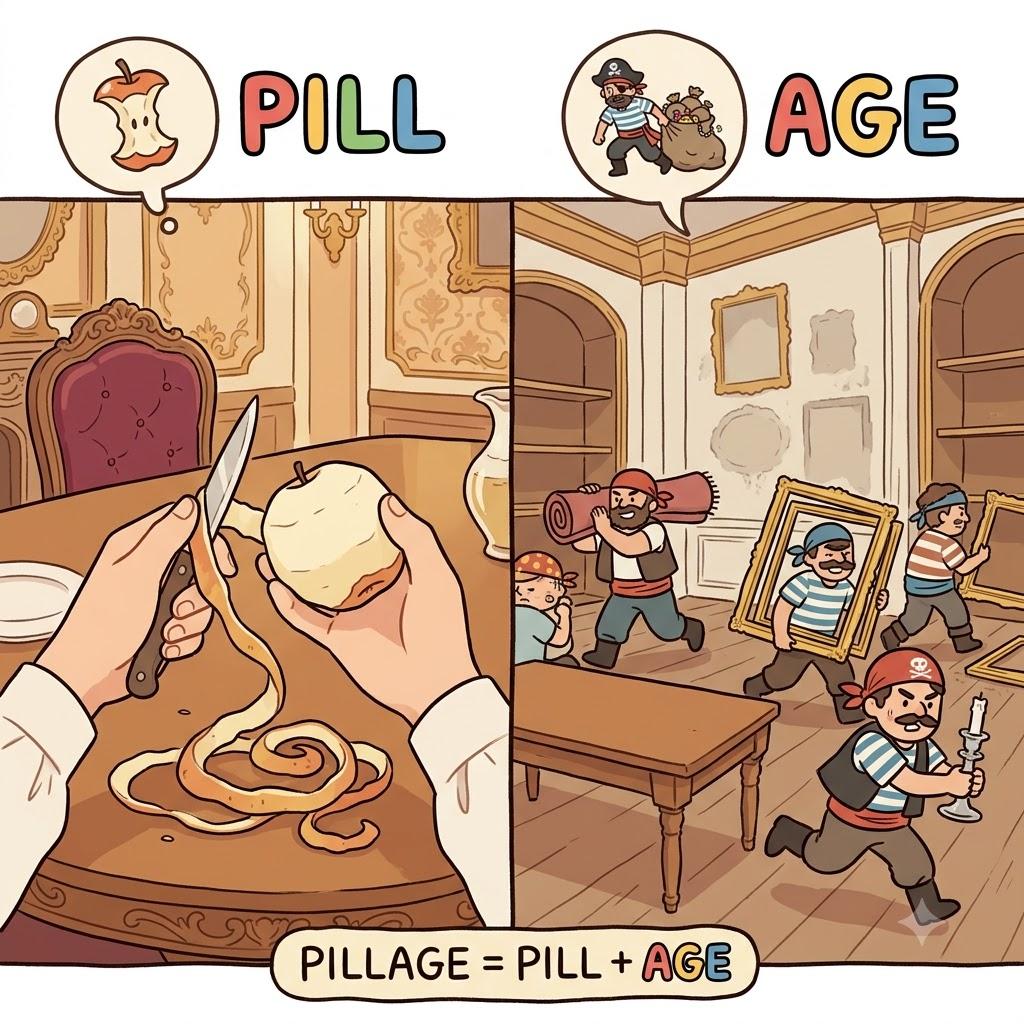
PILL (strip bare) + AGE (act of) — by committing the brutal act (AGE) of violently stripping (PILL) the treasury of every last coin, the pirates finished their pillage.

After destroying the peaceful green tillage and setting fire to the quiet village, the ruthless invaders continued to pillage.
Got the picture? Now let's practice.
🎤Pronunciation
🌳Etymology
Origin
Derived from 14th-century Old French 'pillier', meaning 'to strip or rob'. The word evolved from the literal sense of stripping cloth or materials to the broader meaning of plundering or robbing someone of all possessions.
Breakdown
pillier (Old French: to plunder, strip) + -age (suffix denoting action or process).
🎵Rhyme
🔗Collocations
📝Examples
“The pirates didn't just steal treasure; they pillaged the buffet too!”
“My teenage brother pillaged the refrigerator again.”
“The ancient army pillaged the conquered cities for gold and silver.”
“Environmental activists protest against the pillage of natural resources.”
📚Related Words
Want to master 17,000+ words?
Sign up free for flashcards & quizzes.