dejection — a state of being sad and depressed; low spirits
Part of speech: NOUN
Definition: a state of being sad and depressed; low spirits
Pronunciation (IPA): /dɪˈdʒekʃən/
Example Sentences
- His dejection was so obvious that even his pet goldfish looked concerned.
- The team's dejection after losing the championship was understandable.
- She tried to hide her dejection with a forced smile.
dejection
NOUN[/dɪˈdʒekʃən/]
a state of being sad and depressed; low spirits
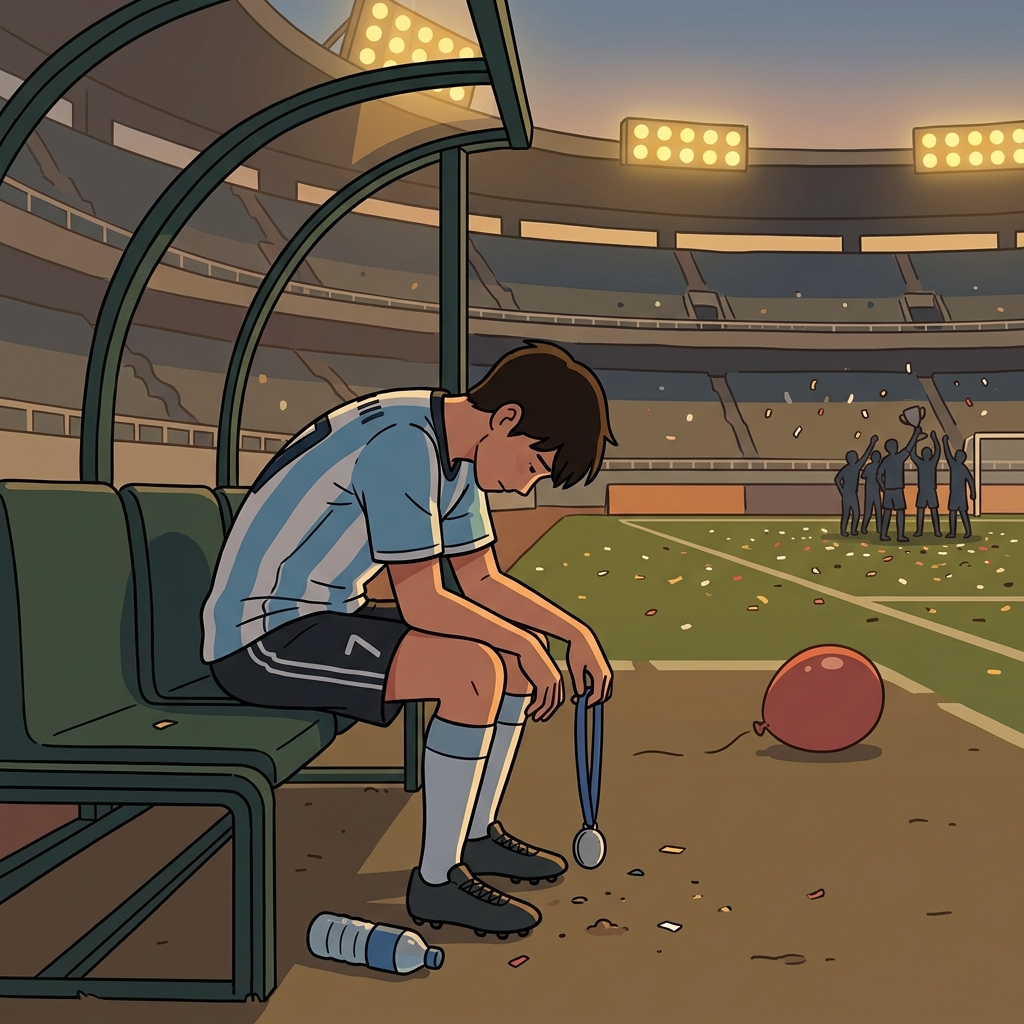
After losing the final match, the player sat alone in deep dejection.

Dejection from rejection distorts the reflection.
Got the picture? Now let's practice.
🎤Pronunciation
🌳Etymology
Origin
Derived from Latin, where the word originates from the root meaning 'to throw down.' The term metaphorically describes a state of low spirits, as if one's mood has been cast downward.
Breakdown
de- (down) + jacere (to throw) + -tion (noun suffix), literally meaning 'a throwing down,' which evolved to denote mental or emotional lowness.
🎵Rhyme
🔗Collocations
📝Examples
“His dejection was so obvious that even his pet goldfish looked concerned.”
“The team's dejection after losing the championship was understandable.”
“She tried to hide her dejection with a forced smile.”
“The dejection on his face when he realized he'd been eating tofu instead of chicken was priceless.”
📚Related Words
Synonyms
Antonyms
Related
Want to master 19,000+ words?
Sign up free for flashcards & quizzes.