limited to — restricted or confined to a particular thing, group, or amount; not extending beyond a specific scope
Part of speech: ADJECTIVE
Definition: restricted or confined to a particular thing, group, or amount; not extending beyond a specific scope
Pronunciation (IPA): /ˈlɪmɪtɪd tuː/
Example Sentences
- My cooking skills are limited to boiling water and burning toast.
- The government's response should not be limited to short-term measures.
- His vocabulary is limited to about five English words, but he uses them very confidently.
limited to
ADJECTIVE[/ˈlɪmɪtɪd tuː/]
restricted or confined to a particular thing, group, or amount; not extending beyond a specific scope
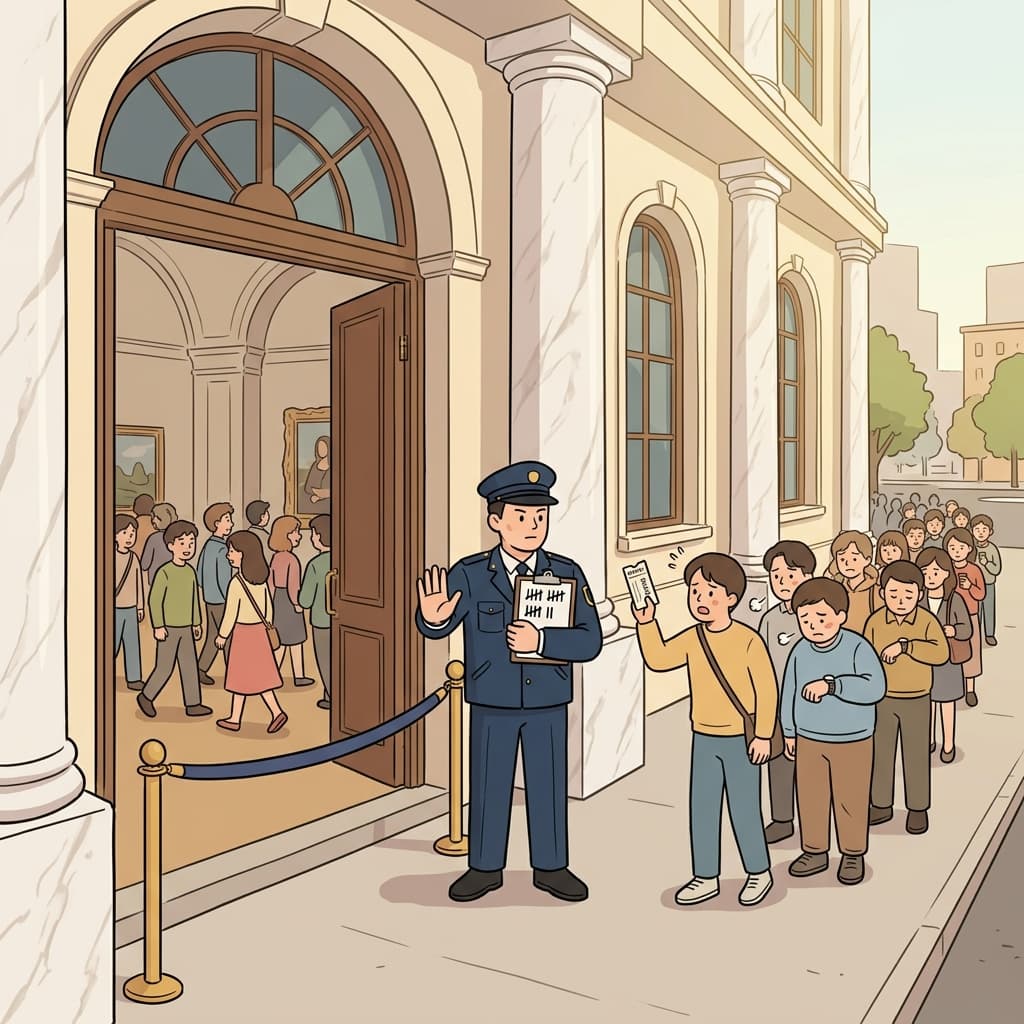
Museum entry is limited to twenty visitors per hour to protect the paintings.
Got the picture? Now let's practice.
🎤Pronunciation
🌳Etymology
Origin
The word 'limited' derives from Latin 'limes', meaning boundary or frontier. The Romans established physical boundaries (limes) to demarcate their territorial limits, and this concept evolved into the modern sense of restricting or confining something within set boundaries.
Breakdown
limes (Latin: boundary, frontier) → limit (to confine or restrict) → limited (confined, restricted) + to (preposition indicating scope or extent).
🎵Rhyme
🔗Collocations
📝Examples
“My cooking skills are limited to boiling water and burning toast.”
“The government's response should not be limited to short-term measures.”
“His vocabulary is limited to about five English words, but he uses them very confidently.”
“Eligibility for this scholarship is limited to students with a GPA above 3.5.”
📚Related Words
Want to master 27,000+ words?
Sign up free for flashcards & quizzes.