immure — to enclose or confine someone against their will, especially within walls
Part of speech: VERB
Definition: to enclose or confine someone against their will, especially within walls
Pronunciation (IPA): /ɪˈmjʊr/
Example Sentences
- The vampire count decided to immure himself in his castle after falling in love with a morning person.
- She immured herself in the library during exam week, emerging only for coffee and snacks.
- The evil stepmother immured Cinderella in the attic, forgetting that Netflix existed in the modern world.
immure
VERB[/ɪˈmjʊr/]
to enclose or confine someone against their will, especially within walls
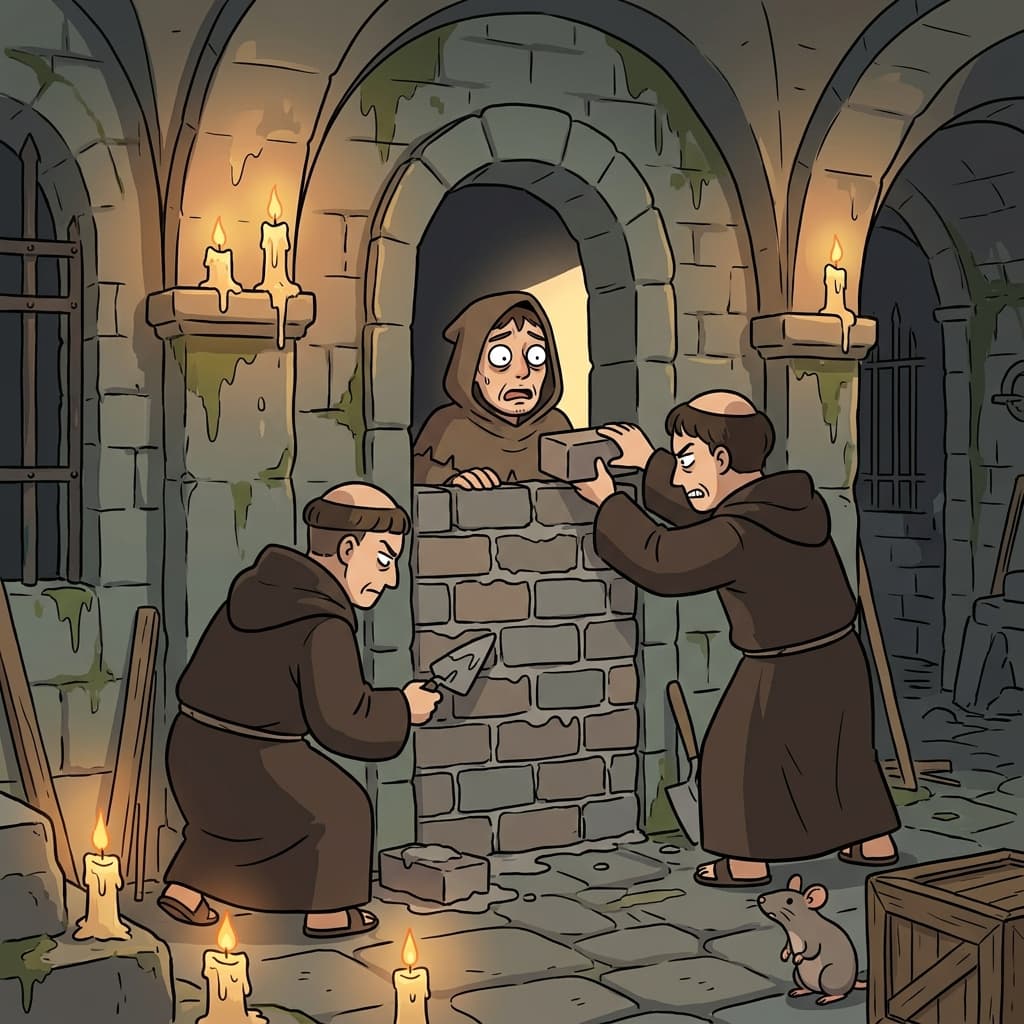
The monks immure the traitor behind a fresh stone wall in the abbey crypt.

Though they immure, I will endure and find my cure
Got the picture? Now let's practice.
🎤Pronunciation
🌳Etymology
Origin
From Latin 'immurare', composed of the prefix 'in-' (in, into) and 'murare' (to wall), which derives from 'murus' meaning wall. The word entered English in the 16th century with the literal sense of enclosing within walls.
Breakdown
im- (in, into) + mur (wall, from Latin murus) + -e (verb infinitive) = immure
🎵Rhyme
🔗Collocations
📝Examples
“The vampire count decided to immure himself in his castle after falling in love with a morning person.”
“She immured herself in the library during exam week, emerging only for coffee and snacks.”
“The evil stepmother immured Cinderella in the attic, forgetting that Netflix existed in the modern world.”
“The monk chose to immure himself in a mountain cave for spiritual meditation.”
📚Related Words
Want to master 27,000+ words?
Sign up free for flashcards & quizzes.