aberrance — a departure from what is normal, usual, or expected; deviation from the right path
Part of speech: NOUN
Definition: a departure from what is normal, usual, or expected; deviation from the right path
Pronunciation (IPA): /ˈæbərəns/
Example Sentences
- His sudden interest in collecting rubber ducks was considered an aberrance by his serious academic colleagues.
- The aberrance in the data suggested experimental errors.
- My grandmother's decision to dye her hair purple at age 85 was a delightful aberrance from her usual conservative style.
aberrance
NOUN[/ˈæbərəns/]
a departure from what is normal, usual, or expected; deviation from the right path
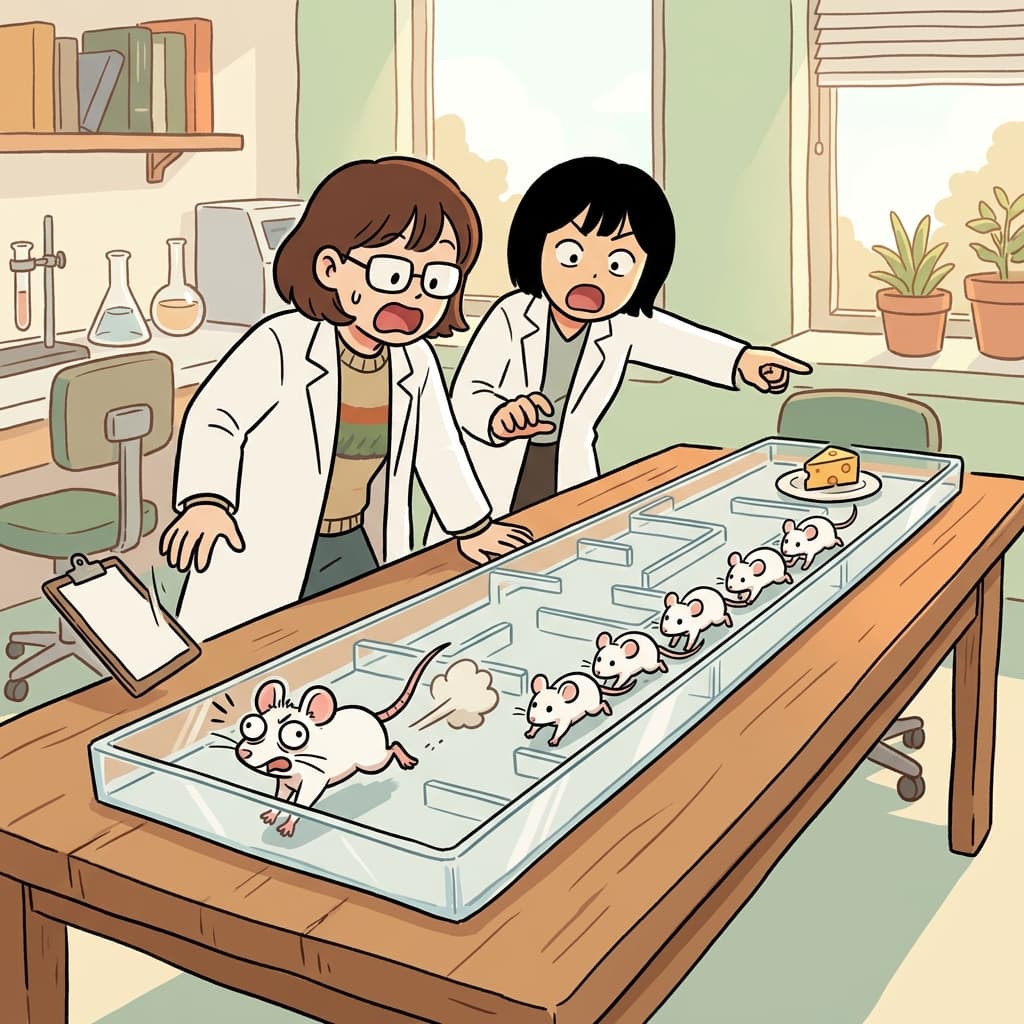
The lab mouse showed clear aberrance, running backward while the others ran forward.

Suspicious appearance means no clearance!
Got the picture? Now let's practice.
🎤Pronunciation
🌳Etymology
Origin
From Latin aberrare, composed of ab- (away) and errare (to wander, to stray). Originally meaning to deviate from a path, the term evolved to denote a departure from normal or expected standards, behavior, or conditions.
Breakdown
ab- (away) + errare (to wander, to stray) + -ance (noun suffix denoting a state or condition). The morphemes combine to express the state of wandering away from the norm.
🎵Rhyme
🔗Collocations
📝Examples
“His sudden interest in collecting rubber ducks was considered an aberrance by his serious academic colleagues.”
“The aberrance in the data suggested experimental errors.”
“My grandmother's decision to dye her hair purple at age 85 was a delightful aberrance from her usual conservative style.”
📚Related Words
Want to master 27,000+ words?
Sign up free for flashcards & quizzes.