disinter — To dig up something that has been buried, especially a dead body; to uncover or bring to light something that was hidden or forgotten.
Part of speech: VERB
Definition: To dig up something that has been buried, especially a dead body; to uncover or bring to light something that was hidden or forgotten.
Pronunciation (IPA): /ˌdɪsɪnˈtɜr/
Example Sentences
- The detective decided to disinter the old case files that had been gathering dust for decades.
- My grandmother loves to disinter embarrassing childhood stories whenever we have family gatherings.
- The court ordered to disinter the body for a second autopsy to solve the mysterious case.
disinter
VERB[/ˌdɪsɪnˈtɜr/]
To dig up something that has been buried, especially a dead body; to uncover or bring to light something that was hidden or forgotten.
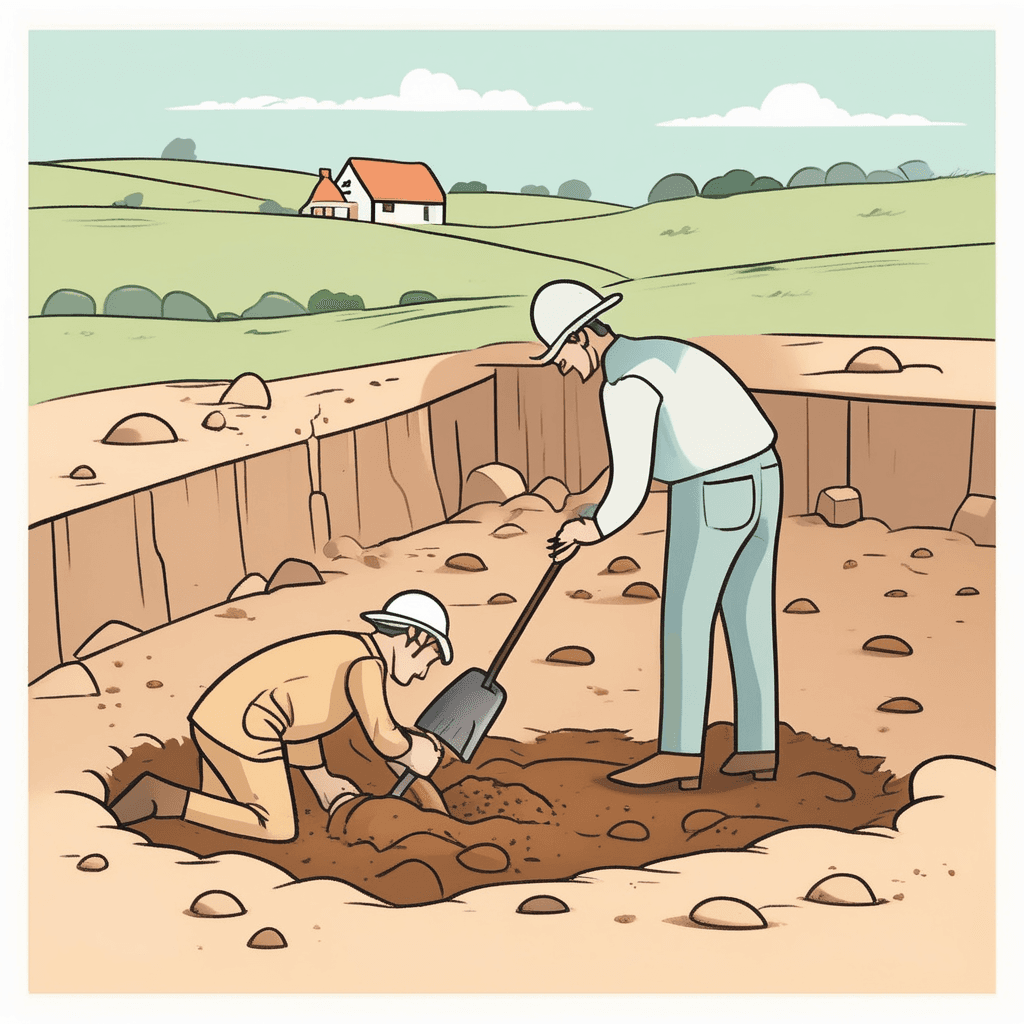
To dig up something that has been buried, especially a dead body; to uncover or bring to light something that was hidden or forgotten.

As we disinter the past, the minister grows sinister!
Got the picture? Now let's practice.
🎤Pronunciation
🌳Etymology
Origin
From Latin 'dis-' meaning 'apart/away' and 'interrare' meaning 'to bury in the earth,' from 'in-' (in) + 'terra' (earth).
Breakdown
dis- (apart/away) + inter- (in/between) + -r- (earth root) = to take out from burial
🎵Rhyme
📝Examples
“The detective decided to disinter the old case files that had been gathering dust for decades.”
“My grandmother loves to disinter embarrassing childhood stories whenever we have family gatherings.”
“The court ordered to disinter the body for a second autopsy to solve the mysterious case.”
“Every time I clean my room, I somehow disinter snacks I forgot I had hidden.”
📚Related Words
Want to master 27,000+ words?
Sign up free for flashcards & quizzes.