riddle — A puzzling question or problem that requires clever thinking to solve. A mysterious or confusing situation.
Part of speech: NOUN
Definition: A puzzling question or problem that requires clever thinking to solve. A mysterious or confusing situation.
Pronunciation (IPA): /ˈrɪdəl/
Example Sentences
- The Sphinx asked travelers a deadly riddle before letting them pass.
- My dad's jokes are like riddles - nobody gets them except him.
- The old building was riddled with so many holes, it looked like Swiss cheese.
riddle
NOUN[/ˈrɪdəl/]
A puzzling question or problem that requires clever thinking to solve. A mysterious or confusing situation.

While the strong knight failed to break the stone gate, the smart wizard easily opened it by solving the Sphinx's tricky riddle.

RID(get rid of) + DLE(middle) — managing to completely RID(get rid of) the DLE(middle) of the target, the archers began to riddle the wooden shield with arrows.
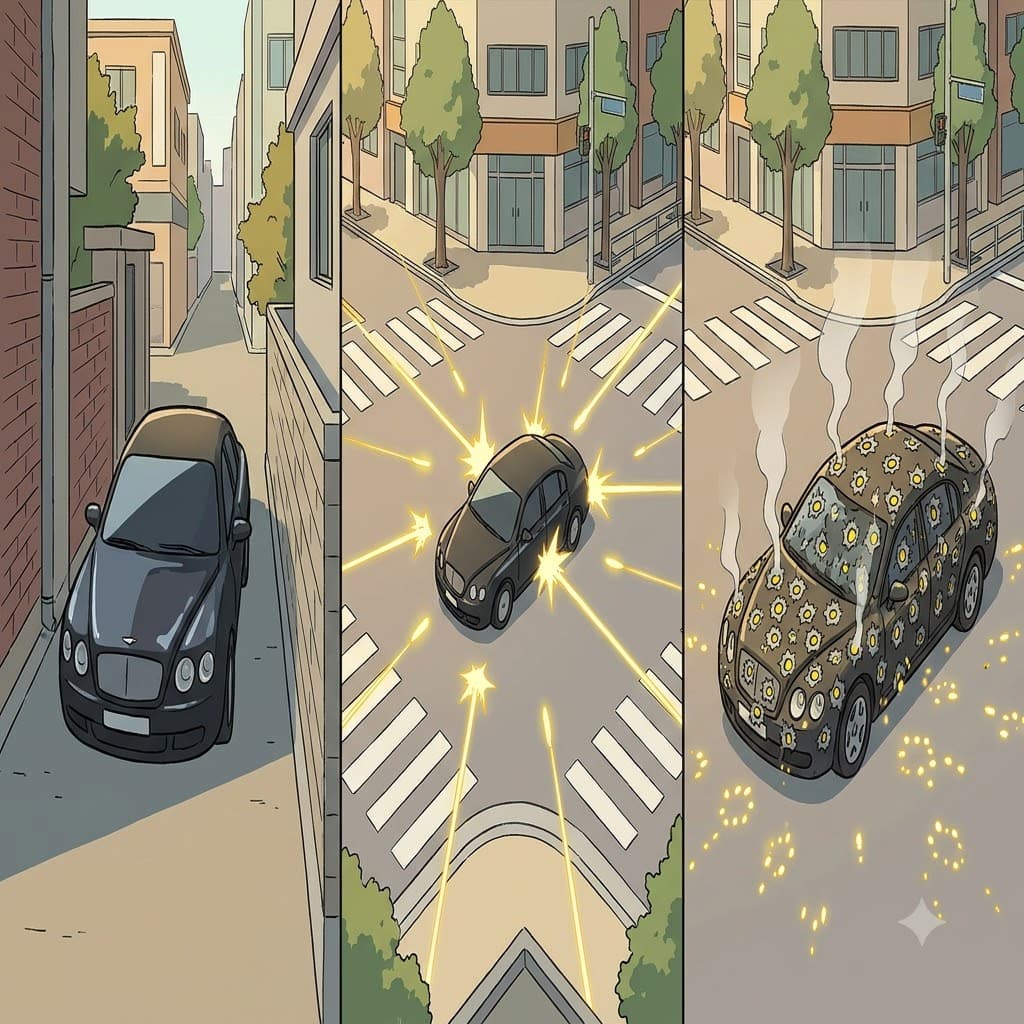
Parking his shiny car directly in the middle of the ambush, he watched the enemies completely riddle the metal doors with bullets.
Got the picture? Now let's practice.
🎤Pronunciation
🌳Etymology
Origin
From Old English 'rǣdelse' meaning 'advice' or 'interpretation,' derived from 'rǣdan' meaning 'to advise' or 'to interpret.' The word evolved to mean a puzzling question during medieval times when riddle contests were popular entertainment in royal courts.
Breakdown
rǣd- (to advise/interpret) + -else (noun suffix indicating action or result)
🎵Rhyme
📝Examples
“The Sphinx asked travelers a deadly riddle before letting them pass.”
“My dad's jokes are like riddles - nobody gets them except him.”
“The old building was riddled with so many holes, it looked like Swiss cheese.”
“Her explanation was a riddle wrapped in a mystery inside an enigma.”
📚Related Words
Want to master 27,000+ words?
Sign up free for flashcards & quizzes.