widower — a man whose wife has died and who has not married again
Part of speech: NOUN
Definition: a man whose wife has died and who has not married again
Pronunciation (IPA): /ˈwɪdoʊər/
Example Sentences
- The 80-year-old widower decided to learn TikTok dances to impress the ladies at the senior center.
- After becoming a widower, he discovered he couldn't even make instant noodles without burning them.
- The widower joined a cooking class and surprisingly became the most popular student.
widower
NOUN[/ˈwɪdoʊər/]
a man whose wife has died and who has not married again
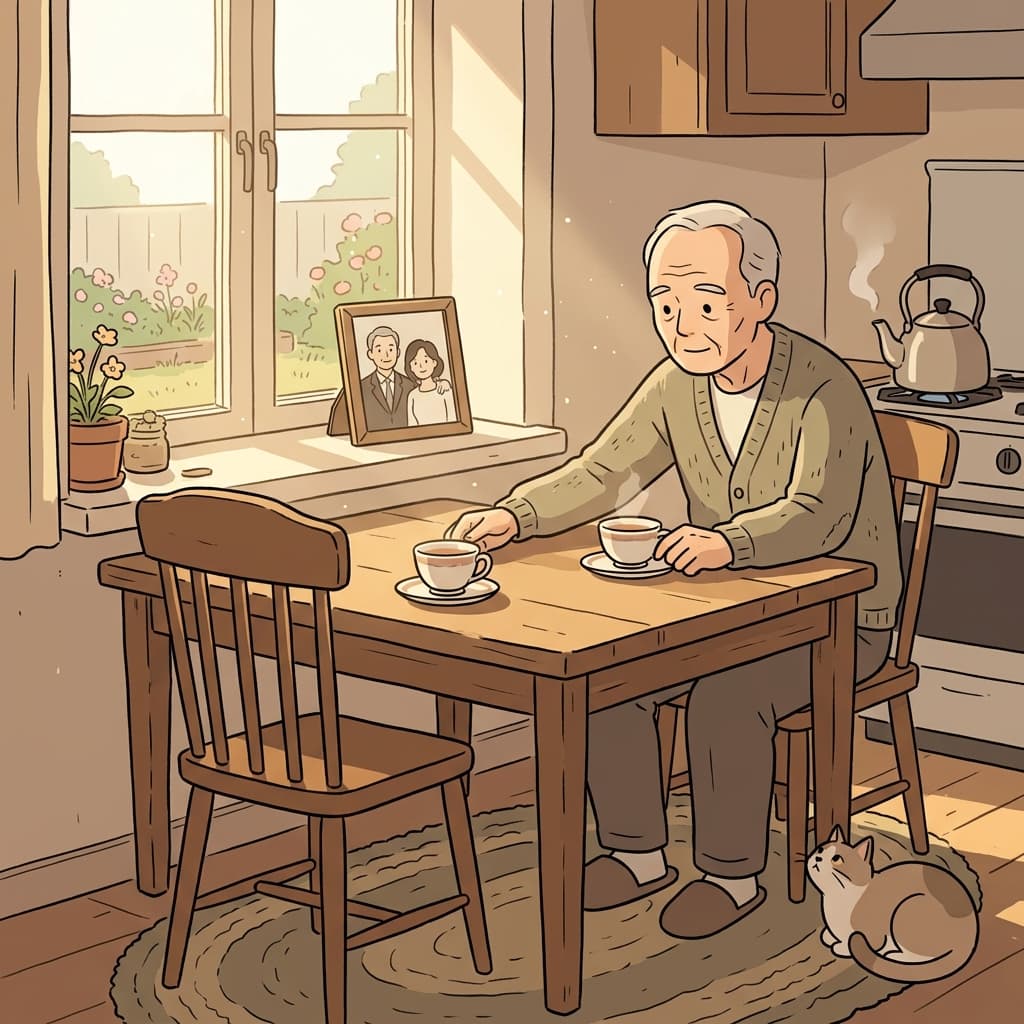
The elderly widower sits alone at breakfast, still setting two cups out of habit.

The widower leaves a flower by the tower.
Got the picture? Now let's practice.
🎤Pronunciation
🌳Etymology
Origin
Widower derives from Middle English 'widewe' (widow), which originates from Germanic roots meaning 'empty' or 'separated'. The word was formed by adding the masculine agent suffix '-er' to the feminine form 'widow' to denote a man whose wife has died.
Breakdown
widow (from Germanic root meaning 'separated, bereft') + -er (masculine agent suffix, indicating a man in a particular condition).
🎵Rhyme
🔗Collocations
📝Examples
“The 80-year-old widower decided to learn TikTok dances to impress the ladies at the senior center.”
“After becoming a widower, he discovered he couldn't even make instant noodles without burning them.”
“The widower joined a cooking class and surprisingly became the most popular student.”
“The wealthy widower's dating profile received 500 messages in one day.”
📚Related Words
Synonyms
Antonyms
Want to master 27,000+ words?
Sign up free for flashcards & quizzes.