lizard — a small to medium-sized reptile that typically has a long body and tail, four legs, movable eyelids, and a rough, scaly, or spiny skin
Part of speech: NOUN
Definition: a small to medium-sized reptile that typically has a long body and tail, four legs, movable eyelids, and a rough, scaly, or spiny skin
Pronunciation (IPA): /ˈlɪzərd/
Example Sentences
- The pet store owner said his iguana was a 'luxury lizard' with a taste for expensive lettuce.
- Scientists study lizard behavior to understand reptilian adaptation to climate change.
- My grandmother refuses to enter the garden because she thinks every lizard is a tiny dragon plotting revenge.
lizard
NOUN[/ˈlɪzərd/]
a small to medium-sized reptile that typically has a long body and tail, four legs, movable eyelids, and a rough, scaly, or spiny skin
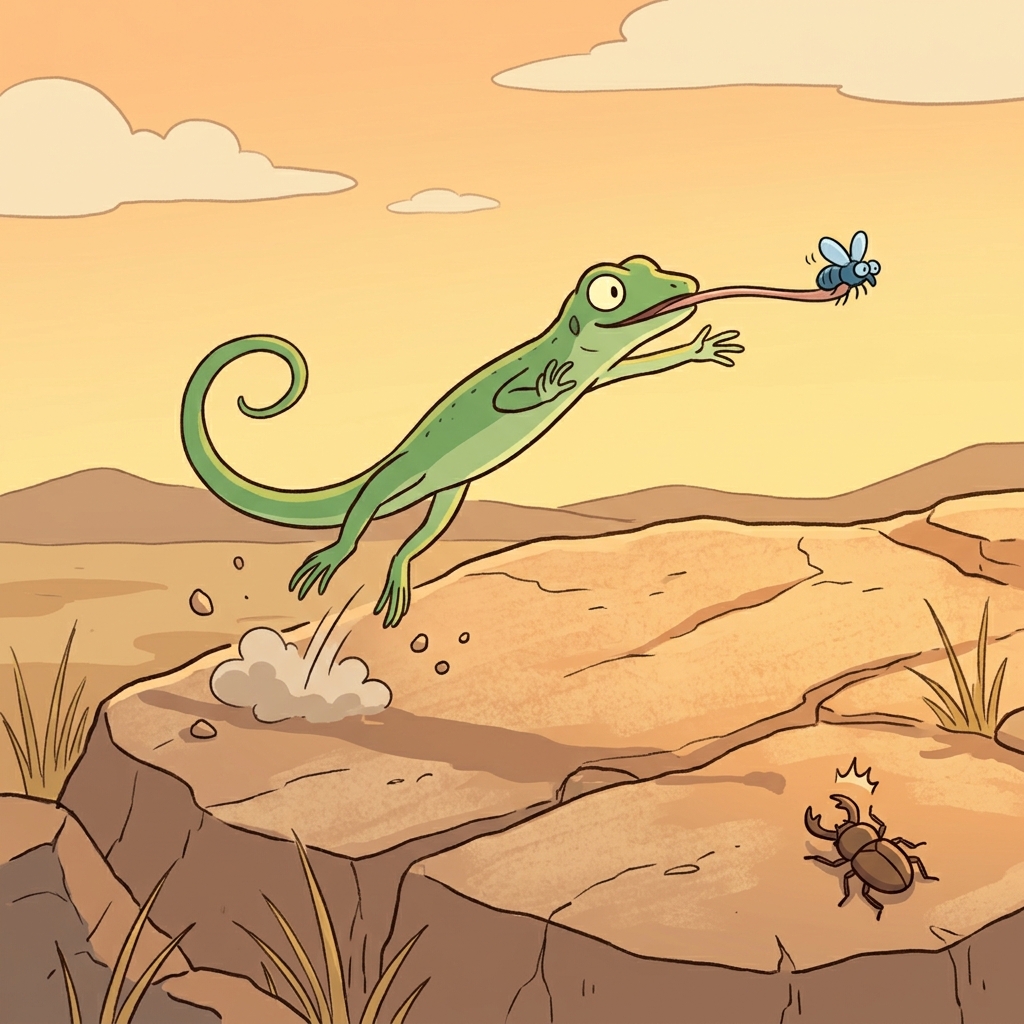
A small green lizard darts across the sunlit rock, catching a fly mid-leap.

The wise wizard befriends the little lizard!
Got the picture? Now let's practice.
🎤Pronunciation
🌳Etymology
🎵Rhyme
🔗Collocations
📝Examples
“The pet store owner said his iguana was a 'luxury lizard' with a taste for expensive lettuce.”
“Scientists study lizard behavior to understand reptilian adaptation to climate change.”
“My grandmother refuses to enter the garden because she thinks every lizard is a tiny dragon plotting revenge.”
“The chameleon is a type of lizard known for its ability to change colors.”
📚Related Words
Synonyms
Antonyms
Related
Want to master 19,000+ words?
Sign up free for flashcards & quizzes.