stop — to cease moving or operating; to come to an end
Part of speech: VERB
Definition: to cease moving or operating; to come to an end
Pronunciation (IPA): /stɑːp/
Example Sentences
- My mom told me to stop eating ice cream, but I couldn't stop myself!
- The teacher said 'Stop!' so loudly that even the sleeping student woke up.
- Please stop at the grocery store on your way home.
stop
VERB[/stɑːp/]
to cease moving or operating; to come to an end
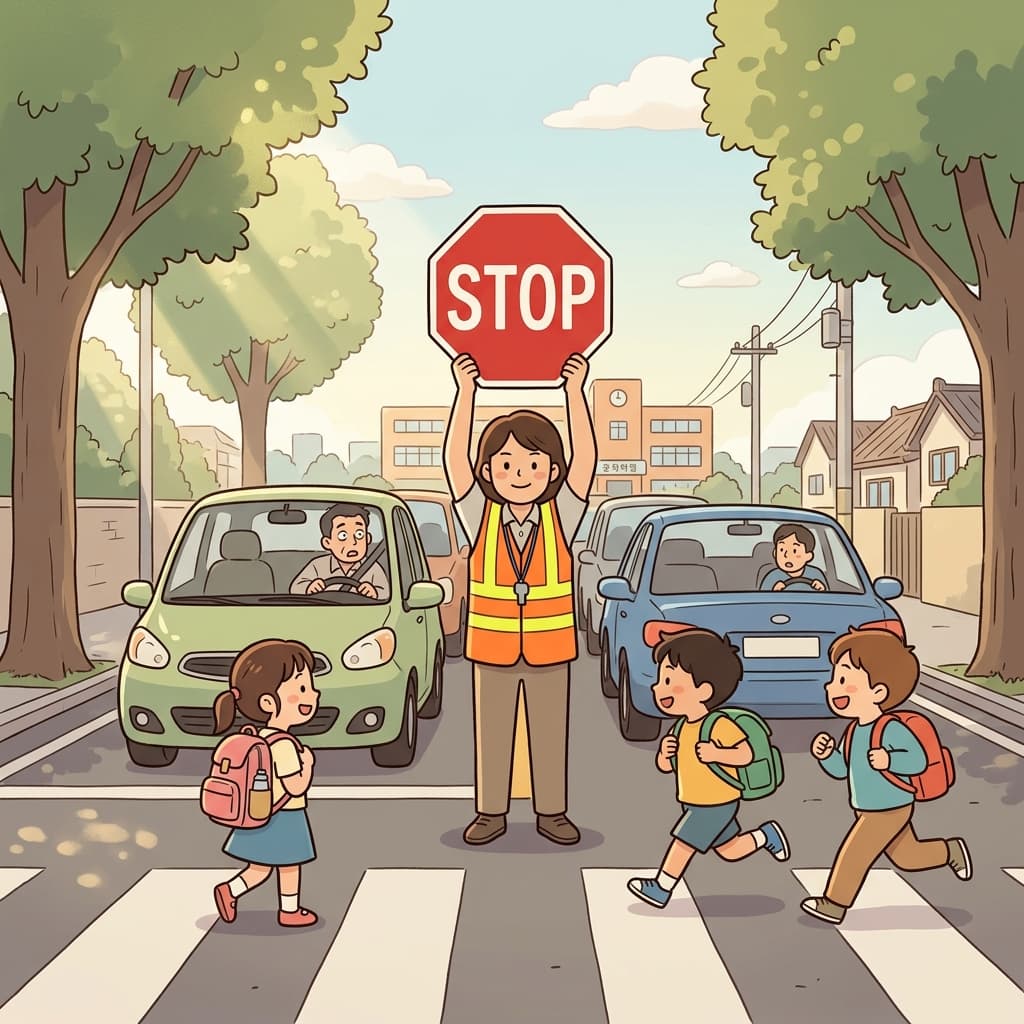
The crossing guard raises her sign to stop traffic for the kids.
Got the picture? Now let's practice.
🎤Pronunciation
🌳Etymology
Origin
The word derives from Old English 'stoppian', originally meaning 'to block up' or 'to plug'. The sense gradually evolved from the physical act of blocking or obstructing to the more general meaning of 'to cease motion' or 'to halt', which became the dominant modern usage.
Breakdown
Old English 'stoppian' (to block, plug) developed into the modern verb 'stop'. The root likely relates to the concept of physical obstruction, with the -ian suffix indicating a verbal form in Old English that was simplified to 'stop' in Modern English.
🎵Rhyme
🔗Collocations
📝Examples
“My mom told me to stop eating ice cream, but I couldn't stop myself!”
“The teacher said 'Stop!' so loudly that even the sleeping student woke up.”
“Please stop at the grocery store on your way home.”
“The rain finally stopped after three days.”
📚Related Words
Want to master 27,000+ words?
Sign up free for flashcards & quizzes.