boorish — rude, ill-mannered, and unrefined in behavior
Part of speech: ADJECTIVE
Definition: rude, ill-mannered, and unrefined in behavior
Pronunciation (IPA): /ˈbʊrɪʃ/
Example Sentences
- His boorish habit of eating pizza with a fork at McDonald's confused the staff.
- She found his boorish jokes about her cooking deeply offensive.
- The movie's boorish protagonist somehow became lovable by the end.
boorish
ADJECTIVE[/ˈbʊrɪʃ/]
rude, ill-mannered, and unrefined in behavior

His boorish behavior at the elegant dinner made every guest cringe.
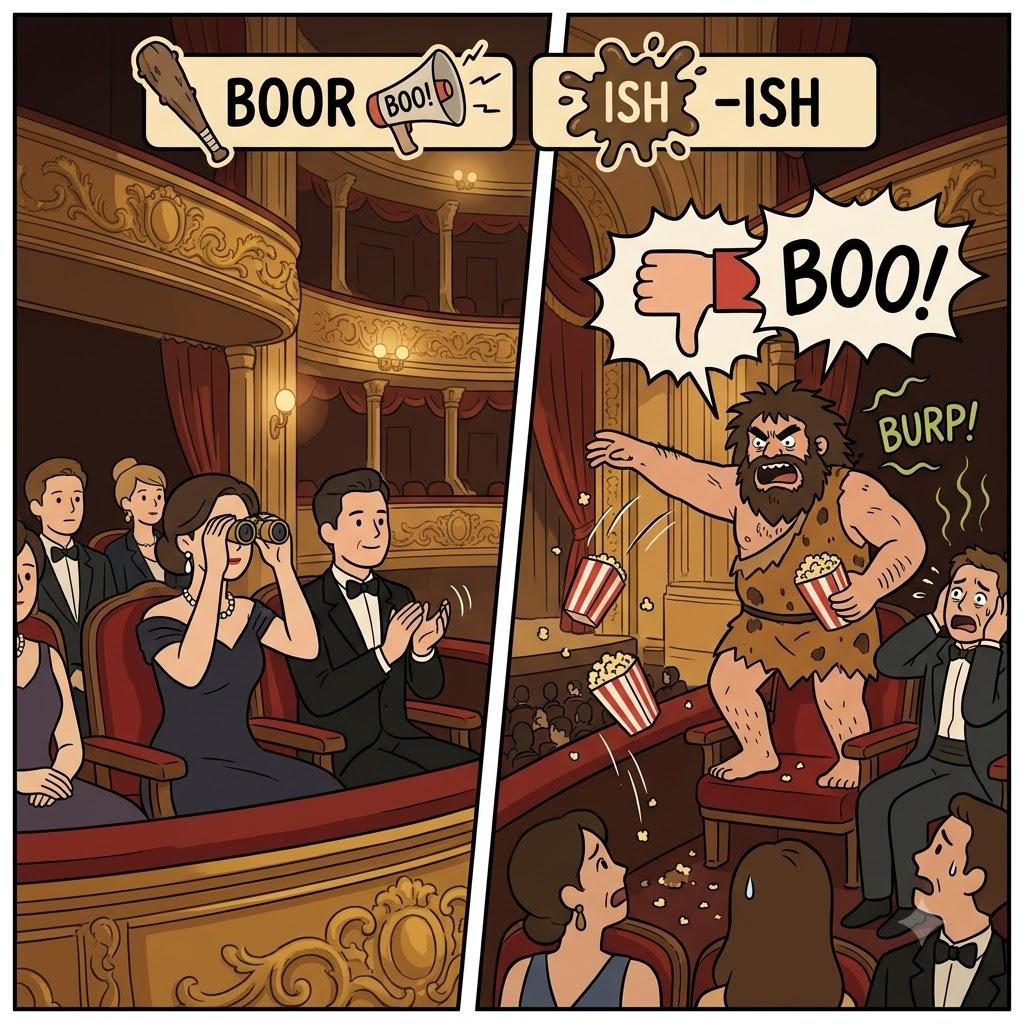
BOOR (an ill-mannered brute shouting "BOO!") + ISH (acting like) — acting in an ISH (crude) way like a loud BOOR (brute) at the opera, the boorish heckler ruined the soprano's solo.

Built to help local art flourish and nourish young minds, the gallery banned the boorish visitor who touched the wet paintings and mocked the artist.
Got the picture? Now let's practice.
🎤Pronunciation
🌳Etymology
Origin
From Dutch 'boer' meaning farmer or peasant, which entered English in the 16th century. The word developed a negative meaning as city dwellers viewed rural farmers as crude and unsophisticated.
Breakdown
boer (Dutch: farmer/peasant) + -ish (adjective suffix meaning 'having the qualities of')
🎵Rhyme
🔗Collocations
📝Examples
“His boorish habit of eating pizza with a fork at McDonald's confused the staff.”
“She found his boorish jokes about her cooking deeply offensive.”
“The movie's boorish protagonist somehow became lovable by the end.”
“The CEO's boorish interruptions during meetings made everyone avoid speaking up.”
📚Related Words
Want to master 17,000+ words?
Sign up free for flashcards & quizzes.