slavish — showing no originality; blindly copying or imitating
Part of speech: ADJECTIVE
Definition: showing no originality; blindly copying or imitating
Pronunciation (IPA): /ˈsleɪvɪʃ/
Example Sentences
- The student's slavish copying of Wikipedia made the professor laugh and cry at the same time.
- His slavish worship of celebrities was so extreme that he even copied their breakfast menus.
- The company's slavish adherence to outdated policies prevented any innovation.
slavish
ADJECTIVE[/ˈsleɪvɪʃ/]
showing no originality; blindly copying or imitating
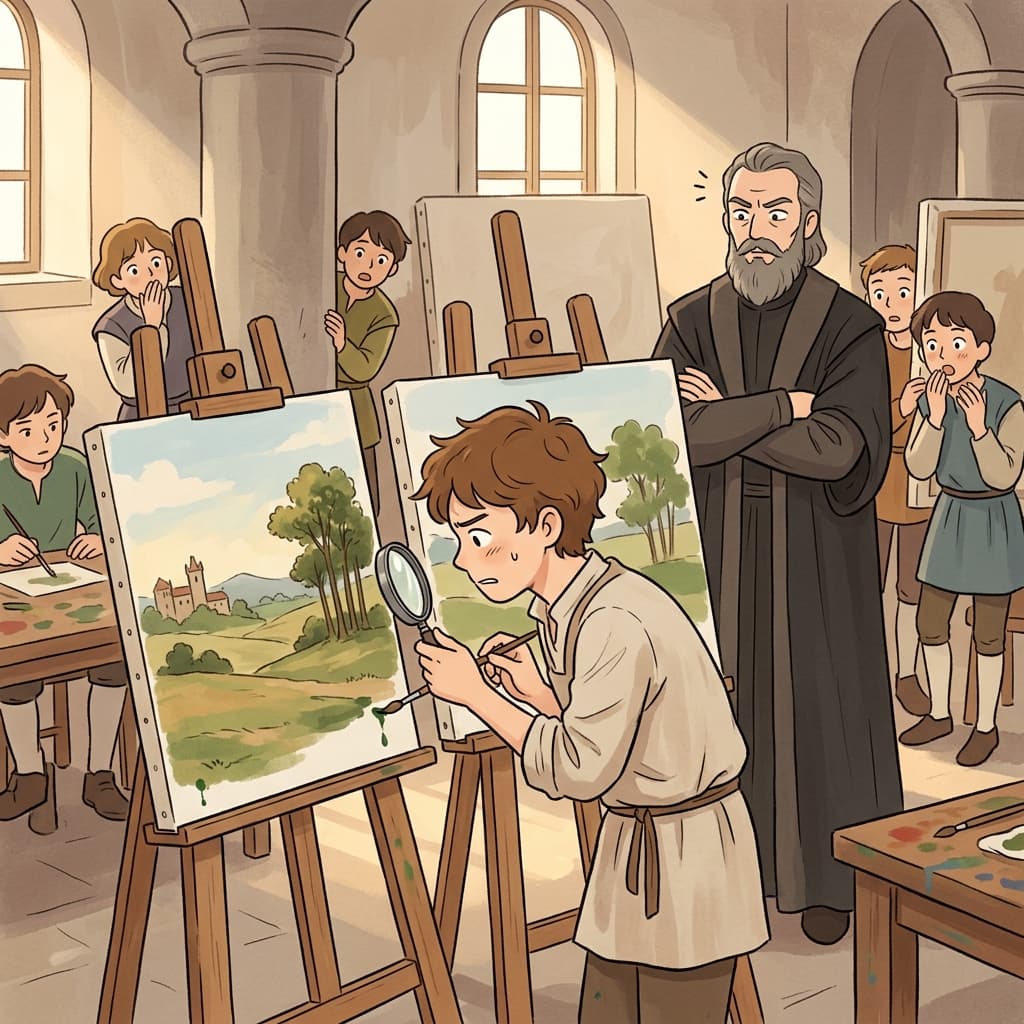
The apprentice made a slavish copy of the master's painting, matching every single brushstroke.

Slavish copying looks poor, while lavish creativity can ravish and allure!
Got the picture? Now let's practice.
🎤Pronunciation
🌳Etymology
Origin
From Middle English 'slave' (meaning a person owned by another) combined with the suffix '-ish'. The word 'slave' itself came from Medieval Latin 'sclavus', originally referring to Slavic peoples who were often enslaved in medieval Europe.
Breakdown
slave (a person in bondage) + -ish (having the quality of, resembling)
🎵Rhyme
🔗Collocations
📝Examples
“The student's slavish copying of Wikipedia made the professor laugh and cry at the same time.”
“His slavish worship of celebrities was so extreme that he even copied their breakfast menus.”
“The company's slavish adherence to outdated policies prevented any innovation.”
“She showed slavish obedience to every rule, even the one about not wearing purple on Tuesdays.”
📚Related Words
Want to master 27,000+ words?
Sign up free for flashcards & quizzes.