stagnant — Not flowing or moving; showing no activity, growth, or development. Used to describe water that is still and often impure, or situations lacking progress or vitality.
Part of speech: ADJECTIVE
Definition: Not flowing or moving; showing no activity, growth, or development. Used to describe water that is still and often impure, or situations lacking progress or vitality.
Pronunciation (IPA): /ˈstæɡnənt/
Example Sentences
- My career has been stagnant since I started watching Netflix all day.
- The stagnant pond behind our house smells worse than my gym socks.
- The company's profits remained stagnant for three consecutive years.
stagnant
ADJECTIVE[/ˈstæɡnənt/]
Not flowing or moving; showing no activity, growth, or development. Used to describe water that is still and often impure, or situations lacking progress or vitality.
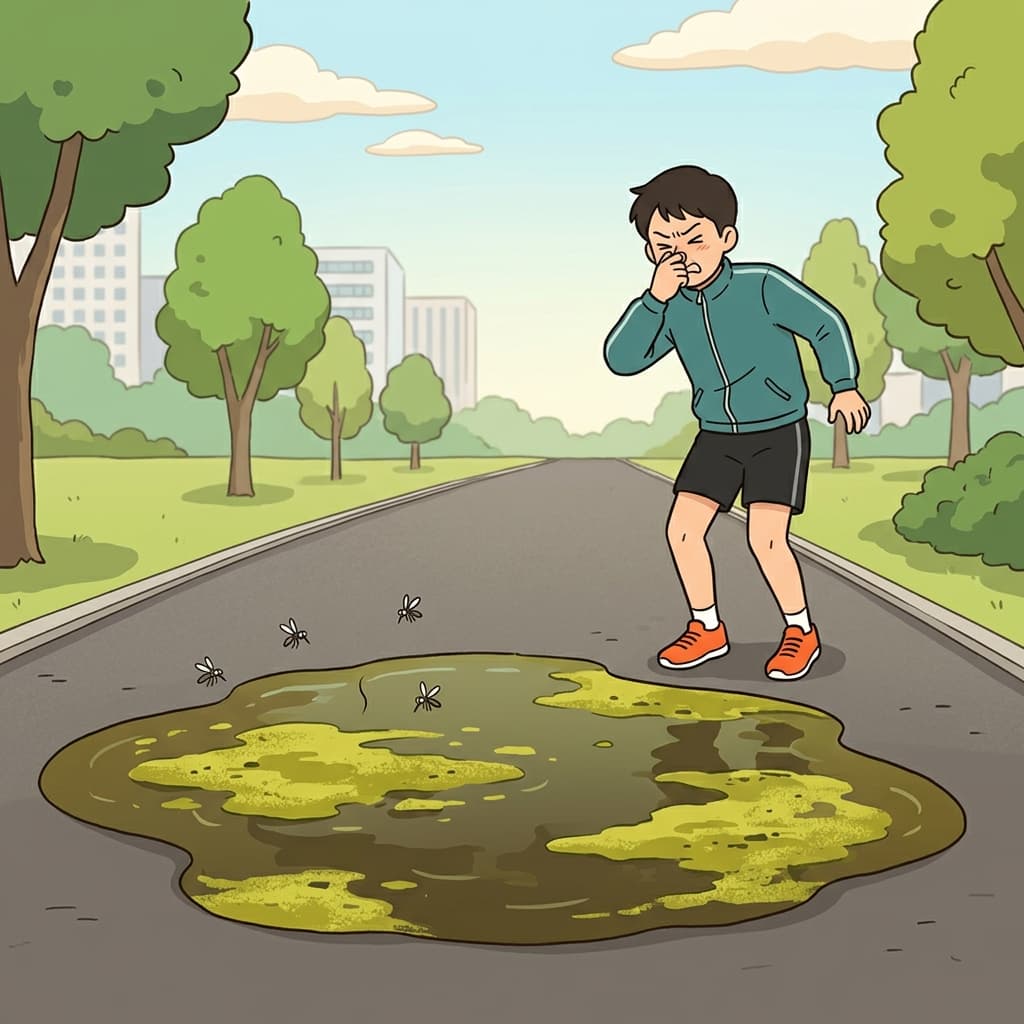
The park path was completely blocked by a massive puddle of green, stagnant water.

STA(stand) + GNANT(state) — a stagnant business is simply trapped in a state of standing completely still.

The pregnant woman was highly indignant that the broken fan left the waiting room air completely stagnant.
Got the picture? Now let's practice.
🎤Pronunciation
🌳Etymology
Origin
From Latin 'stagnare' meaning 'to form a pool of standing water.' The word evolved from the image of water that stands still in a pond, becoming motionless and potentially stagnant.
Breakdown
stagn- (standing water, pool) + -ant (adjective suffix meaning 'characterized by')
🎵Rhyme
📝Examples
“My career has been stagnant since I started watching Netflix all day.”
“The stagnant pond behind our house smells worse than my gym socks.”
“The company's profits remained stagnant for three consecutive years.”
“Her relationship became stagnant after they ran out of things to argue about.”
📚Related Words
Want to master 27,000+ words?
Sign up free for flashcards & quizzes.