leftover — food remaining after a meal
Part of speech: NOUN
Definition: food remaining after a meal
Pronunciation (IPA): /ˈleftˌoʊvər/
Example Sentences
- My mom's leftover kimchi is actually better than when it's fresh.
- The office party had so much leftover cake that we ate it for a week.
- She always packs leftovers for lunch the next day.
leftover
NOUN[/ˈleftˌoʊvər/]
food remaining after a meal

She packs the leftover pasta into a container for tomorrow's lunch.
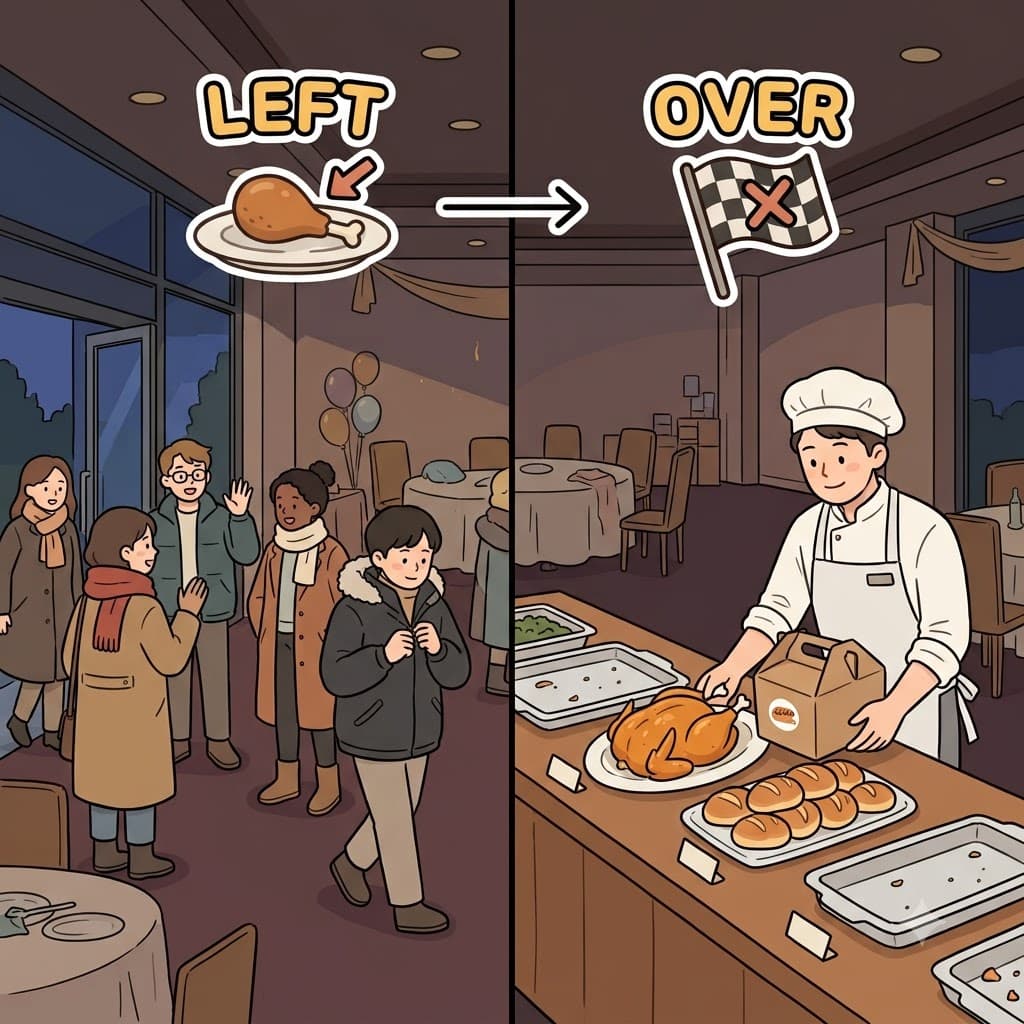
LEFT (remaining) + OVER (after it ends) — by collecting the roasted chicken that remained LEFT after the party was OVER, the cook packed a hearty leftover.

Crushing the wild patch of sweet clover with a yellow bulldozer, the garden crew scraped away every scattered leftover.
Got the picture? Now let's practice.
🎤Pronunciation
🌳Etymology
Origin
From Middle English 'left' (remaining, not taken) combined with 'over' (surplus, excess). Both elements have Old English roots, with 'left' from 'læfan' (to leave) and 'over' from 'ofer' (above, beyond).
Breakdown
left (remaining) + over (surplus, excess) = leftover
🎵Rhyme
🔗Collocations
📝Examples
“My mom's leftover kimchi is actually better than when it's fresh.”
“The office party had so much leftover cake that we ate it for a week.”
“She always packs leftovers for lunch the next day.”
“The construction project used leftover bricks from another building.”
📚Related Words
Want to master 27,000+ words?
Sign up free for flashcards & quizzes.